
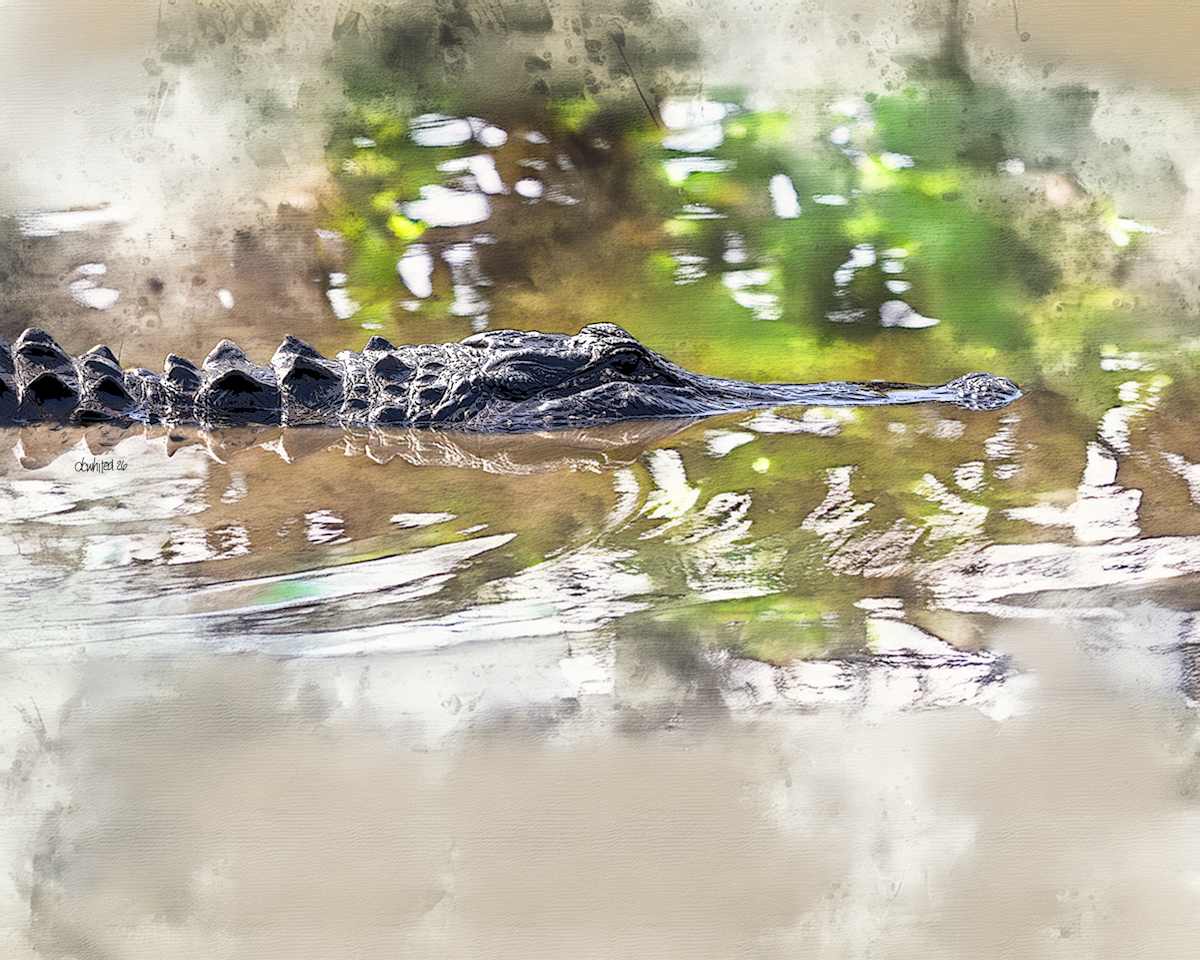
The American alligator (*Alligator mississippiensis*) is a massive, ancient reptile native to the freshwater wetlands, swamps, rivers, and marshes of the southeastern United States, ranging from North Carolina down through Florida and west to Texas. Adults are powerfully built, typically reaching 8 to 12 feet in length, though large males can exceed 14 feet and weigh over 1,000 pounds, with females being considerably smaller. Their bodies are armored with tough, keeled scales called osteoderms, and their coloration is dark olive to nearly black, helping them blend seamlessly into murky water. They are apex predators with one of the most powerful bites in the animal kingdom, capable of taking prey ranging from fish, turtles, and birds to deer and wild boar, typically ambushing victims at the water's edge with explosive speed. One of their most ecologically important behaviors is the construction of "alligator holes" — depressions they excavate that retain water during dry seasons and provide critical habitat for numerous other species. Once severely depleted by hunting and habitat loss, the American alligator became a landmark conservation success story after being listed as endangered in 1967; following strict protections, populations rebounded so dramatically that the species was removed from the endangered list by 1987 and remains a thriving symbol of the American South today.
- Subject Matter: Wildlife
- Collections: Digital photography , Mixed Media , Wildlife