
-
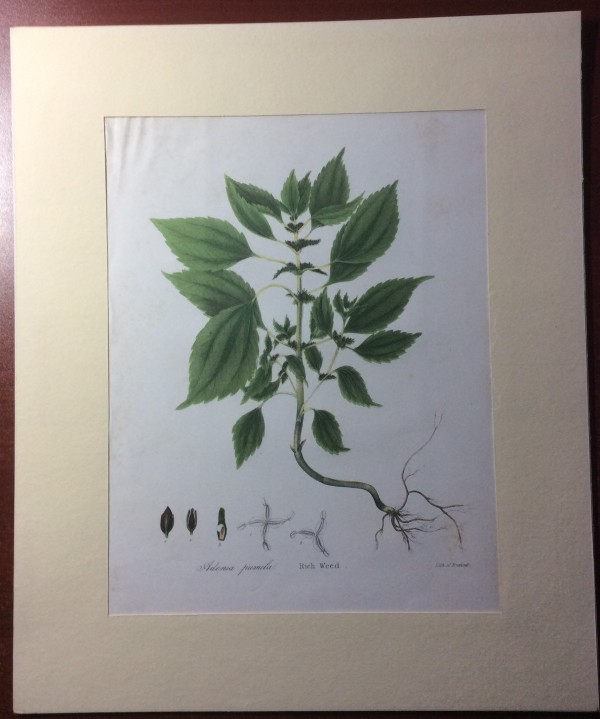
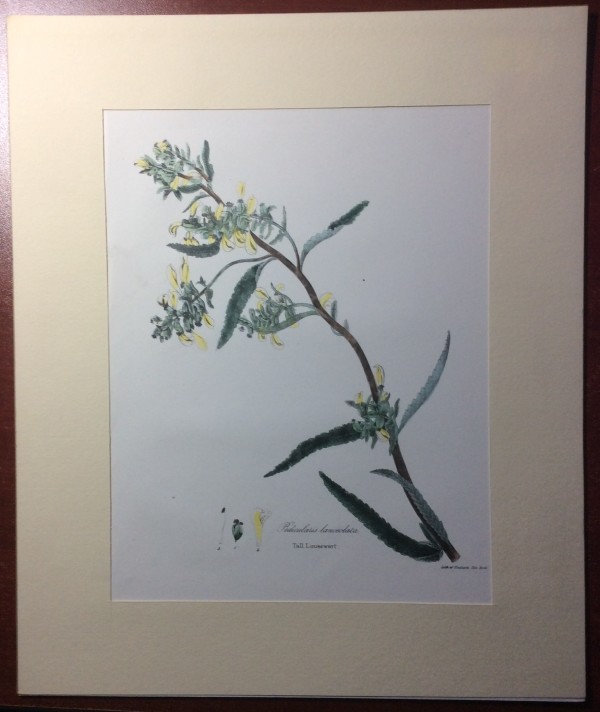
Artist: John Torrey (1796-1873)
John Torrey as a young man
In 1817, he became one of the founders of the New York Lyceum of Natural History (now the New York Academy of Science), and one of his first contributions to this body was his Catalogue of Plants growing spontaneously within Thirty Miles of the City of New York (Albany, 1819). Its publication gained for him the recognition of foreign and native botanists. In 1824 he issued the only volume of his Flora of the Northern and Middle States.[3] This used John Lindley's system of classifying flora, a way of classifying that was not commonly used in the United States.
He found the medical profession uncongenial, and on August 5, 1824, he entered the United States Army as an assistant surgeon and became acting professor of chemistry and geology at West Point military academy. Three years later, he became professor of chemistry and botany in the College of Physicians and Surgeons, New York (the medical school of Columbia University), where he stayed until 1855, when he was made professor emeritus. He was also professor of chemistry at Princeton 1830–1854, and of chemistry, mineralogy, and botany at the University of the City of New York 1832/3. He resigned from his Army position on August 31, 1828.[3] In 1835, he was elected a member of the American Philosophical Society.[4]
In 1836 he was appointed botanist to the state of New York and produced his Flora of that state in 1843; while from 1838 to 1843 he carried on the publication of the earlier portions of Flora of North America, with the assistance of his pupil, Asa Gray.[5] From 1853 he was chief assayer to the United States assay office in New York City when that office was established, but he continued to take an interest in botanical teaching until his death. He was frequently consulted by the treasury department on matters pertaining to the coinage and currency, and was sent on special missions at various times to visit the different mints. He was elected an Associate Fellow of the American Academy of Arts and Sciences in 1856.[3][6]
In 1856, Torrey was chosen a trustee of Columbia College, and in 1860, having presented the college with his herbarium, numbering about 50,000 specimens, he was made emeritus professor of chemistry and botany. On the consolidation of the College of Physicians and Surgeons with Columbia in 1860, he was chosen one of its trustees. His advice was frequently sought on scientific subjects by various corporations.[3]
He was the first president of the Torrey Botanical Club in 1873. Besides being the last surviving charter member of the Lyceum of Natural History, he held its vice presidency for several years, and was president in 1824–26 and 1838, holding the same office in the American Association for the Advancement of Science in 1855, and he was one of the original members of the National Academy of Sciences of the United States, being named as such by act of the United States Congress in 1863. The degree of A.M. was conferred on him by Yale in 1823, and that of LL.D. by Amherst in 1845.[3]
John Torrey in 1869
Torrey died at his home in New York City on March 10, 1873; he was buried in the family plot at Long Hill Cemetery, Stirling, New Jersey.[2]