

When people first see a piece from The Forge at Creatively Cutz, their eyes usually lock onto the bold silhouette or the intricate cut design. That makes sense: the foreground feels like the “star of the show.” But in reality, the star is often the quiet partner behind it—the background. The background is what decides whether your piece whispers, shouts, or tells a completely different story.
Why the Background Matters More Than You Think
Foregrounds are about “what” you’re looking at. Backgrounds are about “how” you feel about it. A single shape can suggest strength, calm, chaos, or celebration, depending entirely on what’s happening behind it.
In The Forge, you get to choose both your design and your background, which means you’re not just selecting art—you’re directing a scene. A samurai, a skyline, a symbol: all of them become more personal once you decide the colors, patterns, and energy swirling behind them.
One Samurai, Three Different Stories
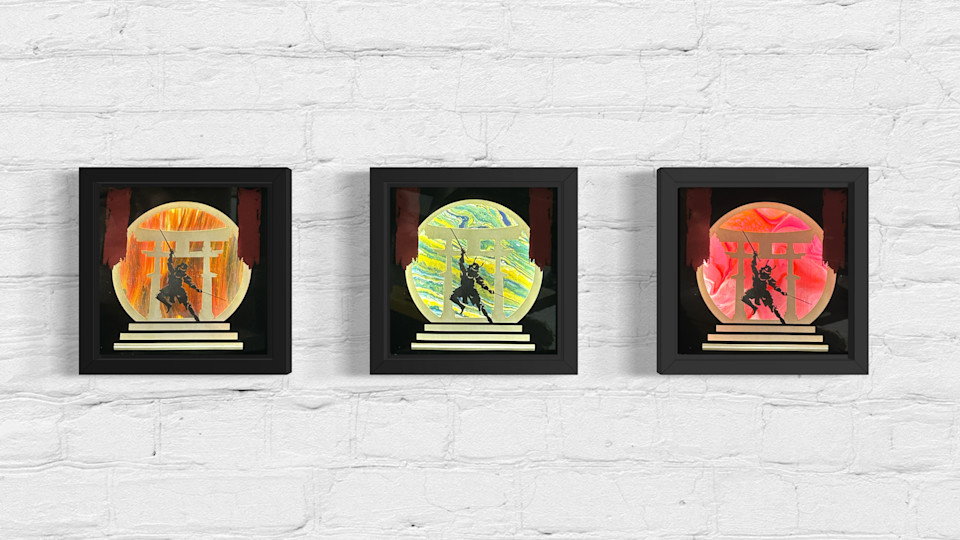
Let’s talk about the samurai piece in the photos you’re seeing. The silhouette and layout stay the same, but the backgrounds transform the mood so dramatically they almost feel like three different characters.
1. The Fiery Samurai
In the first piece, the background is a pulled, upward pattern of deep reds, oranges, yellows, and browns, almost like flames licking toward the sky. The movement feels vertical and intense, as if heat is rising around the warrior.
This background turns the samurai into a figure of battle and resilience. You can read it as:
• A warrior stepping through fire and refusing to back down.
• A moment of high stakes, tension, and raw power.
• A scene at sunrise or sunset where the world is burning with possibility or conflict.
Same silhouette, but now it’s about courage in the middle of chaos.
2. The Elemental Samurai
The second piece swaps those hot hues for a background of blues, yellows, and hints of green swirling together. The effect is more fluid and wave-like, almost like water and sky folding into each other.
Here, the samurai feels calmer and more balanced, like a guardian of the elements rather than a fighter in the flames. This kind of background suggests:
• Movement and flow instead of sheer heat and pressure.
• A sense of harmony—storm and stillness coexisting.
• A story about discipline, focus, and inner peace in motion.
Same pose, same sword, but the scene now leans toward clarity and calm power rather than sheer intensity.
3. The Radiant Samurai
In the final piece, the background glows with pinks, oranges, and white, creating a softer but still energetic field of color. It feels like a sky at dawn or a celebration of light.
Under this warm, luminous backdrop, the samurai becomes a symbol of transformation and hope. This background can read as:
• A new beginning or rebirth after the battle.
• A more romantic or uplifting energy—less about conflict, more about journey.
• A story of growth, healing, and forward motion.
Again: same cut, same silhouette, totally different emotional destination.
How This Connects to The Forge
The Forge exists for exactly this reason: to let you steer the feeling of the piece, not just the subject. When you choose a design from the library, you’re picking the “who” or “what.” When you choose your background, you’re choosing the “why” and the “mood.”
A few ways you can think about it when you build your own:
• Want drama and intensity? Lean into high-contrast colors, strong directional patterns, or flame-like pulls.
• Want calm and clarity? Try cooler tones, smooth blends, or water-like swirls.
• Want joy or uplift? Reach for bright pinks, oranges, light-filled cells, and airy movement.
Your background can echo your story, your favorite season, your team colors, or the vibe of the room where the piece will live. The foreground design gives the eye its focus, but the background gives your piece its voice.
Choosing Your Background Like a Director
When you step into The Forge, imagine you’re directing a scene:
• Ask yourself: “What do I want this piece to feel like every time I walk past it?”
• Think about the person it’s for: “Do they need a battle cry, a calm reminder, or a quiet sunrise?”
• Let the background answer those questions before you lock in the design.
Because in the end, it really is all about the background. The same samurai can stand in fire, in water, or in radiant light—just like you can stand in different seasons of your own story. The Forge simply gives you the tools to choose which one you want on your wall.