Carlos A. Rivera Villafañe
Visual artist and educator with 30 years of experience, creator of "Conjunto Escultórico PONCE," and activist for human rights and the environment.
MessageLocal Paintings
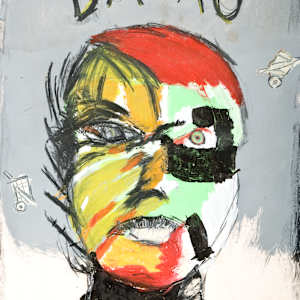
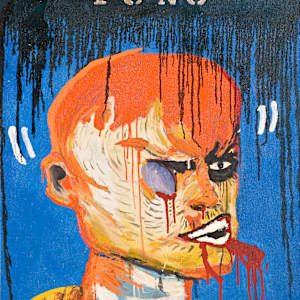
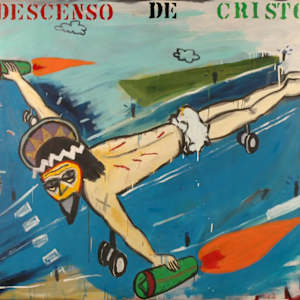
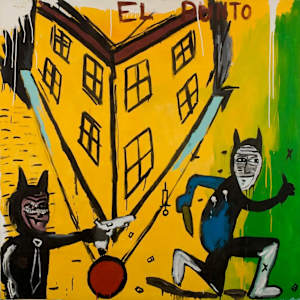
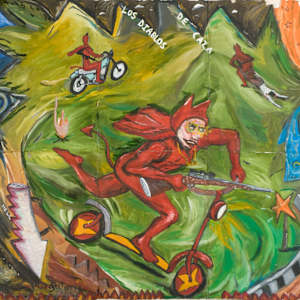
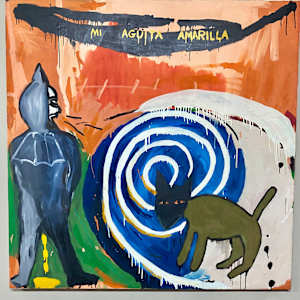
"Local Painting" (1990) marked Carlos A. Rivera Villafañe’s first solo exhibition, organized by Puerto Rican curator Ivette Sala Rivera, director of the Zeitgeist Gallery in San Juan, Puerto Rico. The exhibition drew critical acclaim from Puerto Rican art critics who recognized the social and political depth of Rivera Villafañe’s work. José A. Pérez Ruiz, in his review titled Habitat of Carlos Rivera, noted that Rivera was “a promising young painter” who adeptly evaluated the social context of his surroundings. Similarly, critic Myrna Rodríguez highlighted Rivera Villafañe’s neo-expressionist style, marked by distorted human figures and dramatic color contrasts that intensified the emotional and political weight of his subjects. Rodríguez observed, “Carlos Rivera...follows the neo-expressionist style, with distorted human figures. He employs color effectively, which, combined with high-contrast values, creates intense drama and a sense of struggle.
Sombras rojas y negras
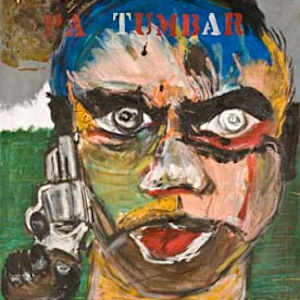
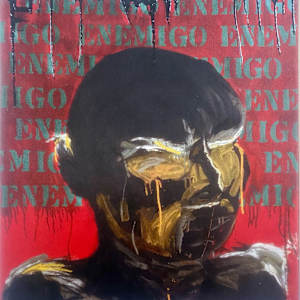
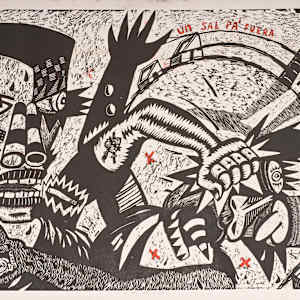
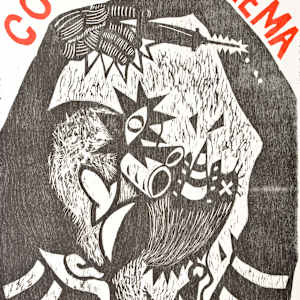
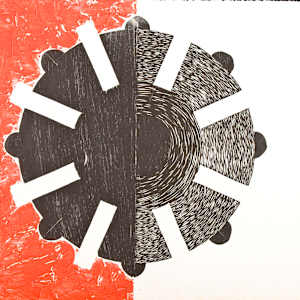
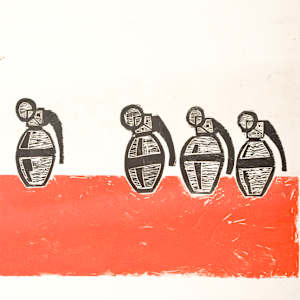
"Sombras Rojas y Negras" (1991) was Carlos A. Rivera Villafañe’s second solo exhibition, organized by the Zeitgeist Gallery in tribute to the X San Juan Biennial of Latin American and Caribbean Printmaking in 1990. Puerto Rican art critic Samuel B. Cherson highlighted Rivera Villafañe’s prints, noting that upon arriving at the exhibition, the impression received was that of encountering a kind of neo-Fauvism, not so much for the intensity of color as for the strength of the images, especially in the wood and linoleum prints displayed in the first room. Cherson added that these were "the most powerful and raw visual commentaries we have seen recently on the violence afflicting our society.


De Cacería
"De Cacería" (1992) is the third solo exhibition of Carlos A. Rivera Villafañe, organized by Puerto Rican Leonora Vega, director of the Galería Leonora Vega in San Juan, Puerto Rico. The opening night was attended by Puerto Rican art critic José Antonio Pérez Ruiz, Puerto Rican art historian Ingrid Jiménez, Puerto Rican artists Aaron Salabarrías, Aixa Requena, Roy Kavetsky, Edgard Rodríguez Luiggi, and Puerto Rican poet Andrés Castro Ríos from the "Grupo Guajana" poetry guild, along with his family.
Full Metal Jacket
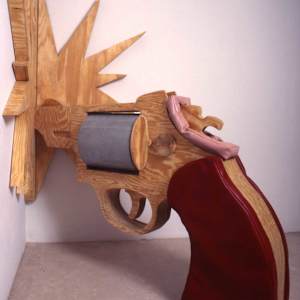
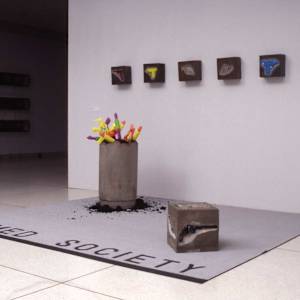
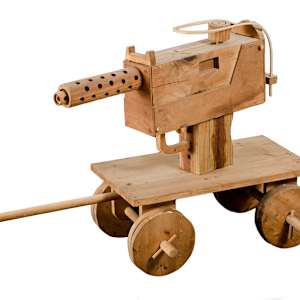
“Full Metal Jacket” (1996) (Villfañe, 1997) is Rivera Villafañe’s fourth solo exhibition, held at the Antiguo Arsenal de la Marina del Instituto de Cultura Puertorriqueña in San Juan, Puerto Rico, and organized by the Luigi Marrozzini Gallery. Cuban art critic Manuel Álvarez Lezama dedicates a full critique to this exhibition, highlighting it as “an extremely challenging spectacle that addresses violence and how this alarming social disease has permeated all aspects of our distrust in life.” He adds, “Rivera Villafañe’s exhibition is a balanced combination of paintings, sculptures, installations, and ‘games’ that force us to confront the ever-present reality of violence.”
Manifestaciones de lo humano
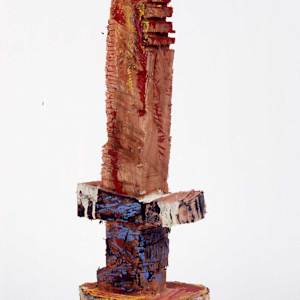
"Manifestaciones de lo humano" (2012) showcased approximately 50 works across a variety of media, including painting, sculpture, installation, photography, and printmaking. This exhibition constituted a mid-career retrospective of Carlos A. Rivera Villafañe. Curated by esteemed art critic, writer, professor, and curator Dr. Kevin Power, the exhibition explored Rivera Villafañe’s profound concerns, shaped by his experiences as an artist, educator and father. Power emphasized Rivera Villafañe’s aim to provoke dialogues toward understanding and empathy, ultimately seeking to break cycles of violence affecting families and society at large.


De Ponce a San Juan
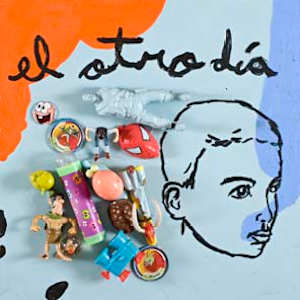
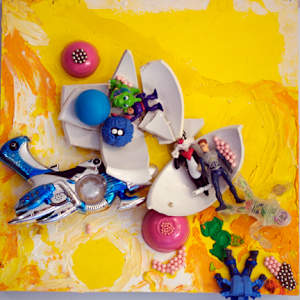
"De Ponce a San Juan" (2009) presented a vibrant collection of paintings, mixed media, sculptures, installations, and photographs in which Rivera-Villafañe integrated the iconography that had defined his career since the late 1980s. Skillfully using graffiti and Pop art, he conveyed a complex message about Puerto Rican identity—a land of beauty and contradictions, materially affluent but spiritually challenged by consumerism. As a dedicated art teacher, he empathized with his community’s struggles. Key elements in the work included La Virgen de Guadalupe, the Ponce letters—an iconic public art project—and the Vejigante, a carnival figure symbolizing both darkness and kindness.
Conjunto Escultórico PONCE
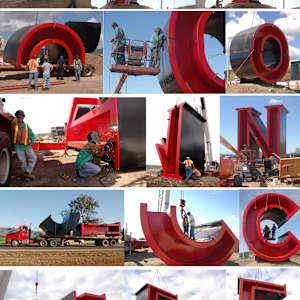
Conjunto Escultórico PONCE, widely known as Las Letras de Ponce, is a monumental corten steel sculpture composed of five large-scale letters—P, O, N, C, and E—installed in 2005. This iconic public artwork stands as a powerful symbol for Puerto Ricans both on the island and throughout the diaspora.