
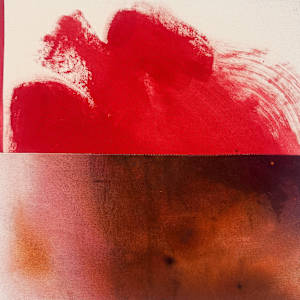

The Reckoning
The Reckoning speaks to an ongoing account, both personal and collective. It
considers how systems imprint themselves onto lived experience, and how individuals
navigate complacency, resistance, and vulnerability within those structures.
Conditions shaped by political instability and cultural fracture are made visible, open
to personal interpretation.
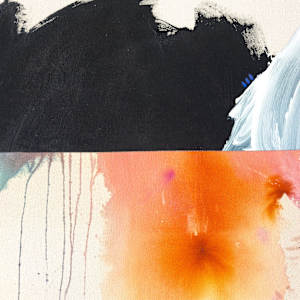
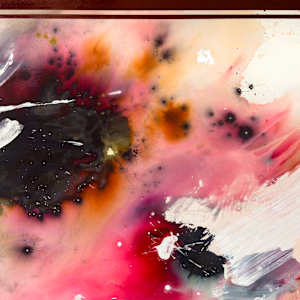
Each mark becomes a site where emotion surfaces and spills onto the canvas — none
completely ordered or explained. Gestures of resistance are embedded in the process:
marks that interrupt, push back, or refuse to be absorbed. Moments where a stroke
asserts itself against a surrounding color field, or opacity cuts through transparency,
suggest that even within systems that feel overwhelming, acts of disruption and
agency remain possible.
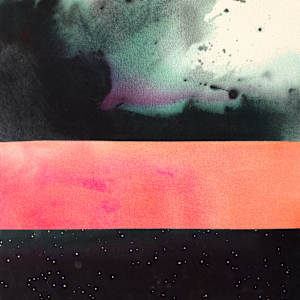
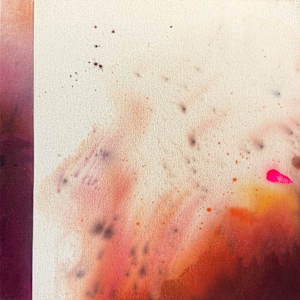
Color operates as both emotion and atmosphere. Vibrant, intense hues sit beside
muted tones, creating tension between urgency and stillness. This contrast echoes
the dissonance between public discourse and personal experience. The compositions
allude to something building, breaking apart, resolving, or boiling over. Edges,
borders, and subtle linear frameworks interrupt the organic movement of paint,
introducing containment and stabilization that echoes institutional boundaries
shaping our lived experience. At times they hold the composition together; at others,
they feel fragile, as if they may collapse under the pressure of their own containment.
Some paintings are completely deconstructed and stitched back together —
reorganized into something entirely new. Torn, destroyed, and made whole again,
these works speak to the beauty that can endure devastation.
Ultimately, the work asks for a different kind of looking. Not one that seeks to decode
meaning, but one that remains present with tension, ambiguity, and contradiction.
With sustained attention, a reckoning unfolds — not as resolution, but as recognition.
Perhaps witnessing is the beginning of change.
considers how systems imprint themselves onto lived experience, and how individuals
navigate complacency, resistance, and vulnerability within those structures.
Conditions shaped by political instability and cultural fracture are made visible, open
to personal interpretation.
Each mark becomes a site where emotion surfaces and spills onto the canvas — none
completely ordered or explained. Gestures of resistance are embedded in the process:
marks that interrupt, push back, or refuse to be absorbed. Moments where a stroke
asserts itself against a surrounding color field, or opacity cuts through transparency,
suggest that even within systems that feel overwhelming, acts of disruption and
agency remain possible.
Color operates as both emotion and atmosphere. Vibrant, intense hues sit beside
muted tones, creating tension between urgency and stillness. This contrast echoes
the dissonance between public discourse and personal experience. The compositions
allude to something building, breaking apart, resolving, or boiling over. Edges,
borders, and subtle linear frameworks interrupt the organic movement of paint,
introducing containment and stabilization that echoes institutional boundaries
shaping our lived experience. At times they hold the composition together; at others,
they feel fragile, as if they may collapse under the pressure of their own containment.
Some paintings are completely deconstructed and stitched back together —
reorganized into something entirely new. Torn, destroyed, and made whole again,
these works speak to the beauty that can endure devastation.
Ultimately, the work asks for a different kind of looking. Not one that seeks to decode
meaning, but one that remains present with tension, ambiguity, and contradiction.
With sustained attention, a reckoning unfolds — not as resolution, but as recognition.
Perhaps witnessing is the beginning of change.