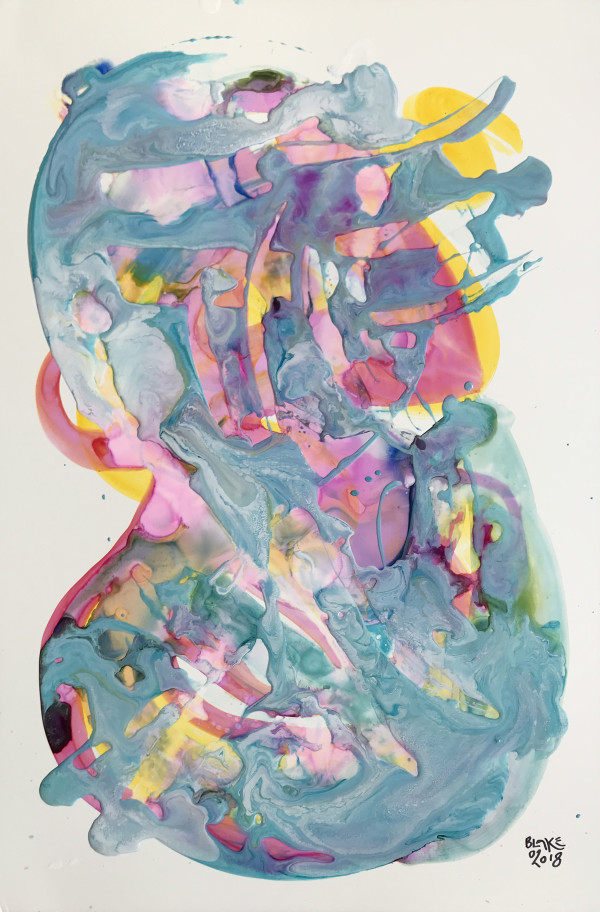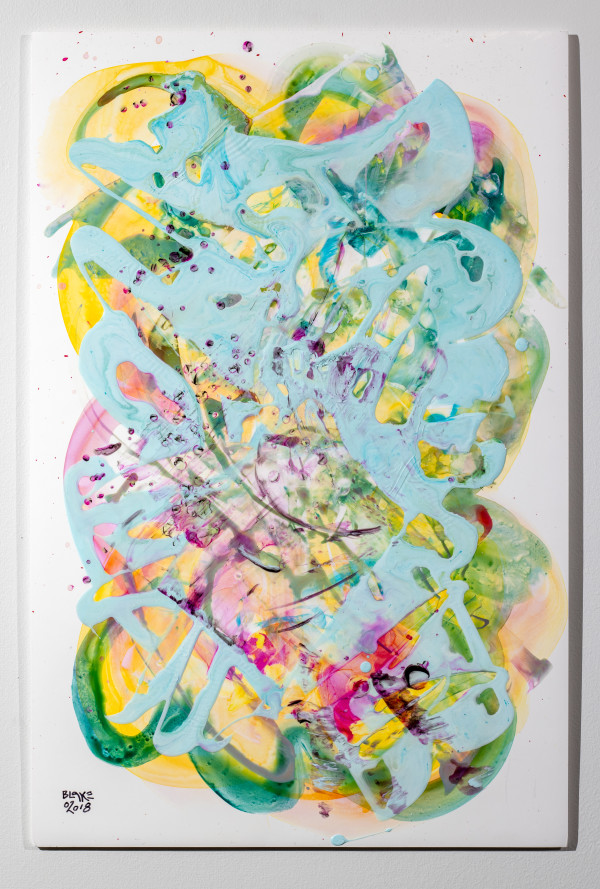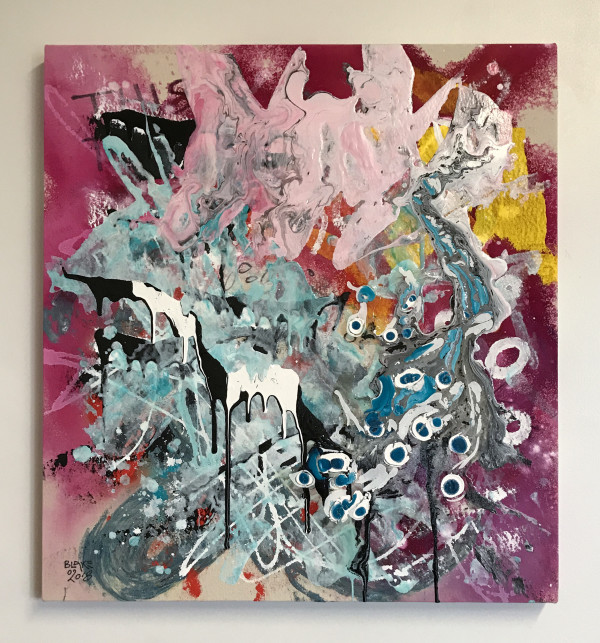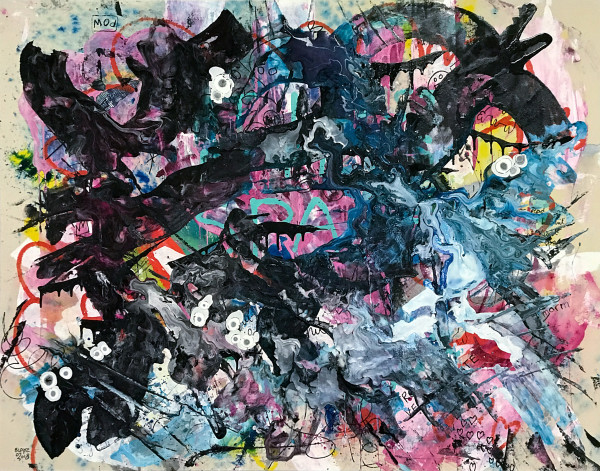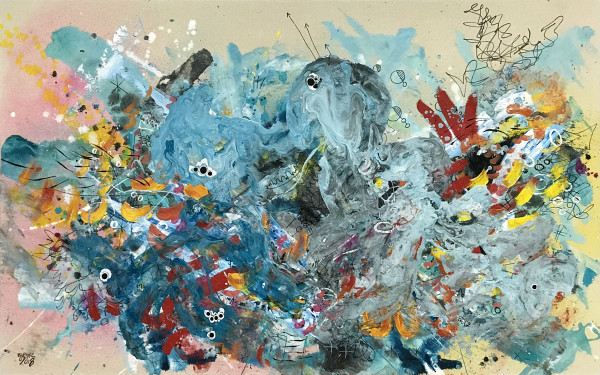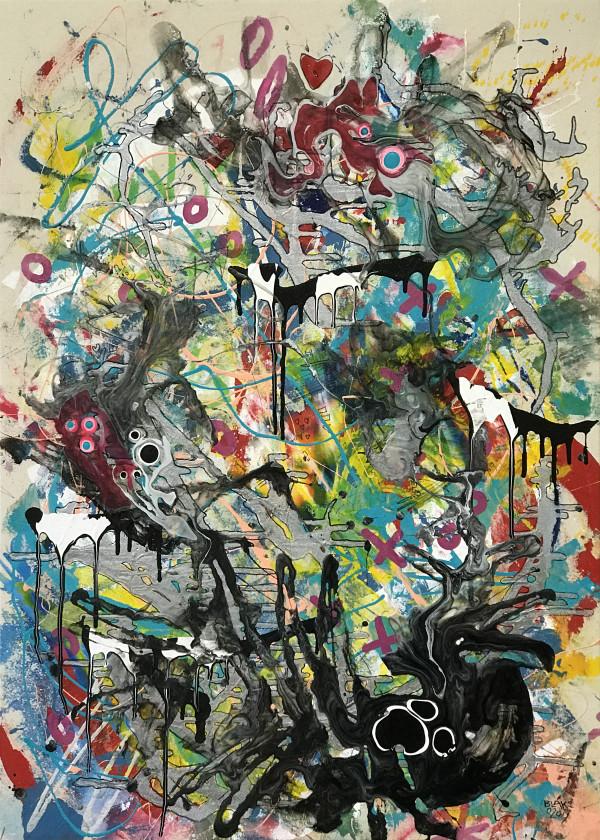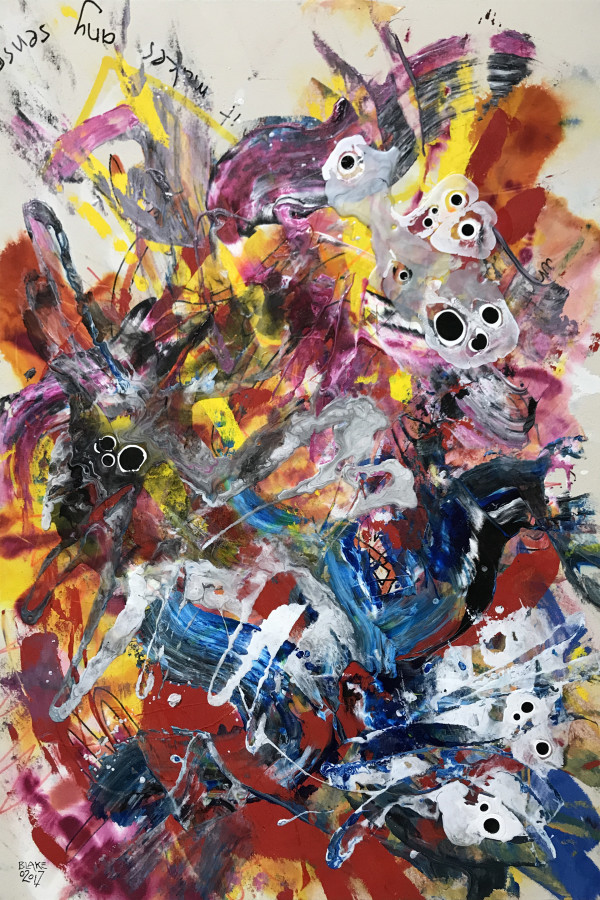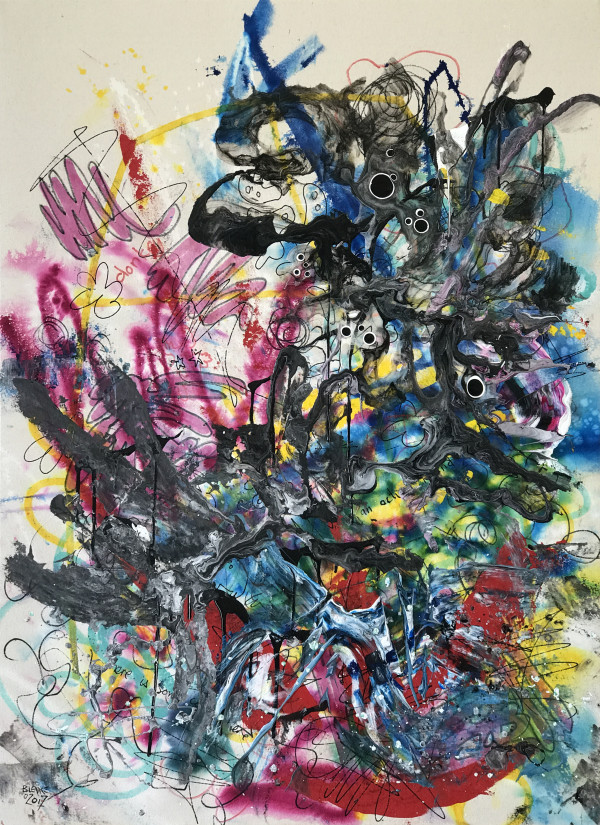
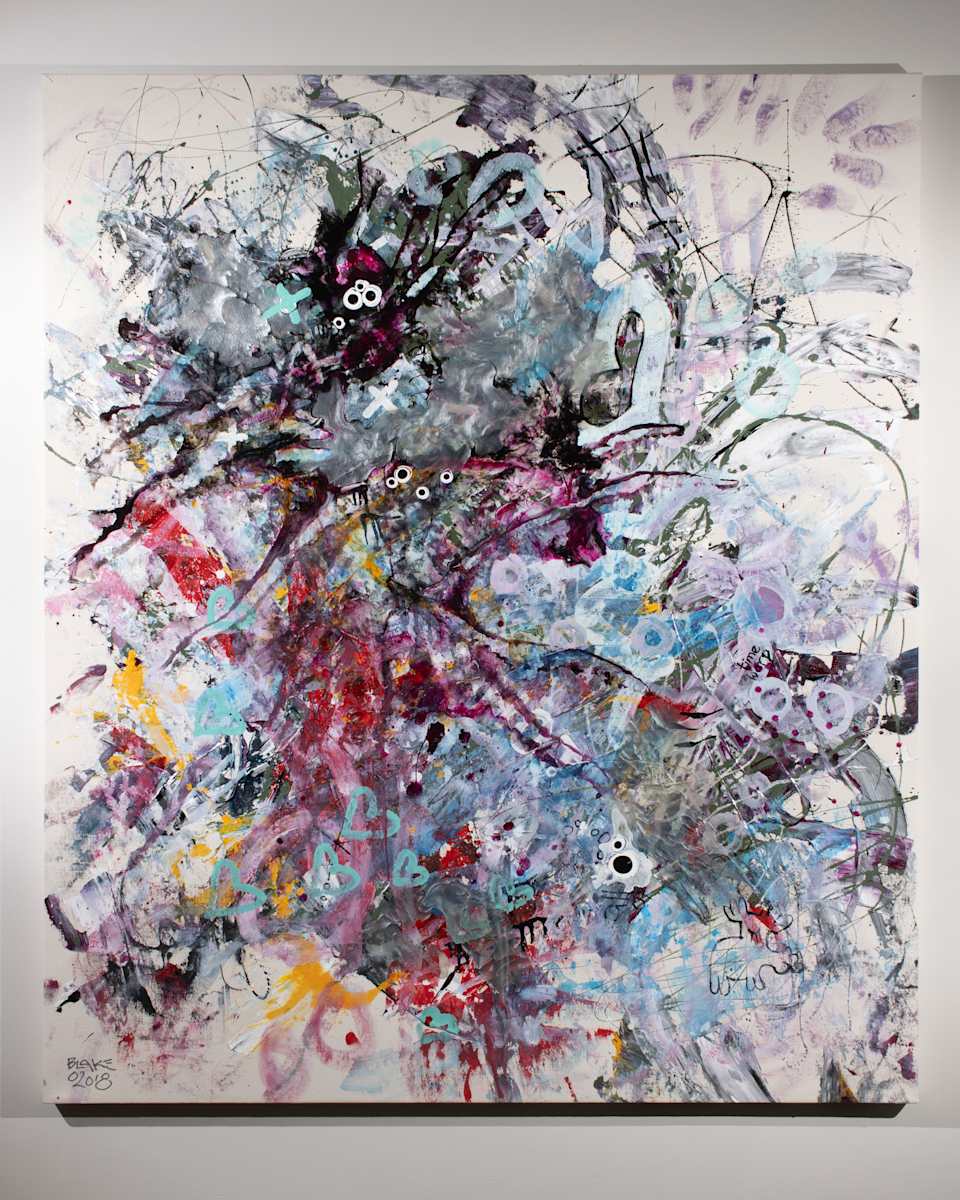





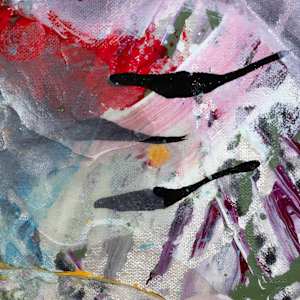

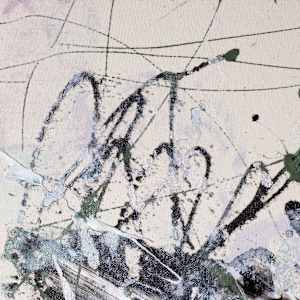

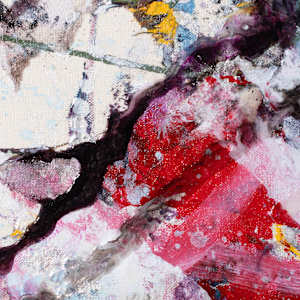
A Wolf that Laughs, but not at You sits at a pivot point in my work. Paintings from this period often leaned on a set of moves—layering, patterning, and mark-making that could be pushed and recombined. This one breaks away from that. It feels less controlled, less interested in resolving itself cleanly. There’s a willingness here to let things pile up, collide, and stay a little unstable.
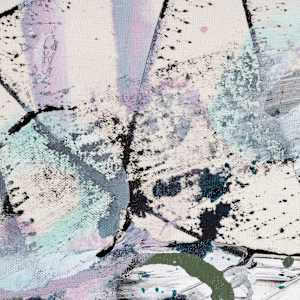
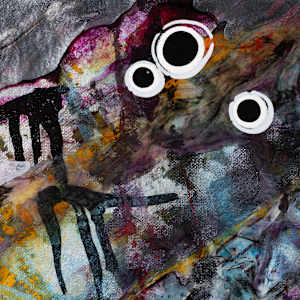
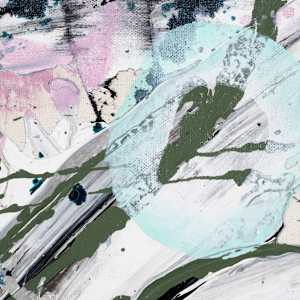
The surface is dense and worked over, with competing systems of marks—gestural brushwork, drawn lines, loops, crosses, and fragments that interrupt each other rather than settling into a hierarchy. Some areas feel built up and intentional, others feel like they’re barely holding together. There are moments that read as figures or faces, but they don’t quite resolve. They flicker in and out, more like suggestions than statements. The painting doesn’t organize itself around a single center; it spreads outward, accumulating energy across the whole field.
Looking back, this piece feels a little unhinged in a way I still value. It’s not trying to be efficient or elegant. It’s pushing past a comfort zone without fully knowing what replaces it. That tension—between control and letting go, between structure and overload—drives the painting. It marks a point where the work starts to open up, even if it doesn’t yet know exactly where it’s going.
- Subject Matter: abstract
- Collections: 2018, Epiphenomenal Qualia (2017 - 2018)