
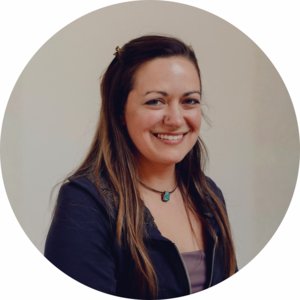

Annie Tull (b. 1990, Wilmington, Delaware, USA) is an award-winning contemporary artist whose work explores how humans attempt to define, preserve, and belong within the natural world.
Drawing from training in fine art and architectural design, her work investigates materiality and the dialogue between human gesture and the living world. Her projects have taken shape across galleries, forests, and public spaces in the U.S. and Europe, from large-scale corporate installations to quietly thematic collections and site-specific works rooted in ecology and myth. In every form, her practice seeks a sense of balance: the meeting point of structure and surrender, art and environment, self and landscape.
Notable public works include those for EmberStomp Wildfire Prevention Festival in Northern California, East Cork’s May Sunday Festival, and National Night of Culture in Ireland. She has twice been awarded the prestigious Helene Wurlitzer Foundation of New Mexico’s Visual Arts Residency Grant, and received the Women’s Caucus for Art Northern California Mentorship Award in 2024. She currently lives and works nomadically between the American West and Western Europe, pursuing an ongoing inquiry into the relationship between material, landscape, and cultural memory.
Statement
My work explores the shifting boundary between the human body and the natural world. Through figurative painting and materially layered surfaces, I create images in which the figure becomes porous to landscape, atmosphere, memory, and time.
In recent years, my practice has moved away from simply observing nature and toward a slower, more embodied relationship with place. Time spent living and working across Ireland, France, Sweden, and the American Southwest has deeply influenced this evolution, encouraging a way of working rooted in attention, stillness, and sustained presence within the landscape itself. Rather than depicting nature as backdrop or scenery, the work emerges through an attempt to experience the body as continuous with the living world around it.
The paintings often draw on ecological, mythic, and devotional imagery, where branches, stone, water, and weather become intertwined with the figure. These elements are not symbolic in a fixed sense, but part of an ongoing inquiry into transformation, belonging, and the possibility of grace within the natural world itself.
Material process is central to this language. Layers of oil, cold wax, earth, and gilding are built, obscured, and revealed over time, creating surfaces that carry a sense of erosion, luminosity, and quiet emergence. The resulting works inhabit a space between portrait, landscape, and relic—reflecting on the ways personal identity might soften, dissolve, and re-form through relationship with place.