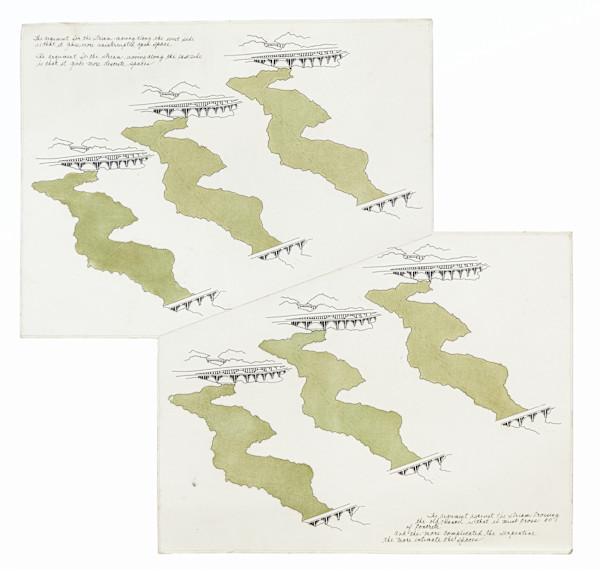
Series Title: Arroyo Seco Release (full subtitle: Arroyo Seco Release / A Serpentine for Pasadena)
Timeframe: 1985 to 1989
Exhibitions:
- Feb 13 – Mar 30, 1985, Arroyo Seco Release: A Serpentine for Pasadena, Baxter Art Gallery, California Institute of Technology, Pasadena, CA
- Oct 13 – Nov 12, 1985, Helen and Newton Harrison: Arroyo Seco Release, Wenger Gallery, San Diego, CA
- Sept 19, 2024 – Jan 19, 2025, Helen and Newton Harrison: California Work, La Jolla Historical Society / San Diego Public Library, San Diego, CA
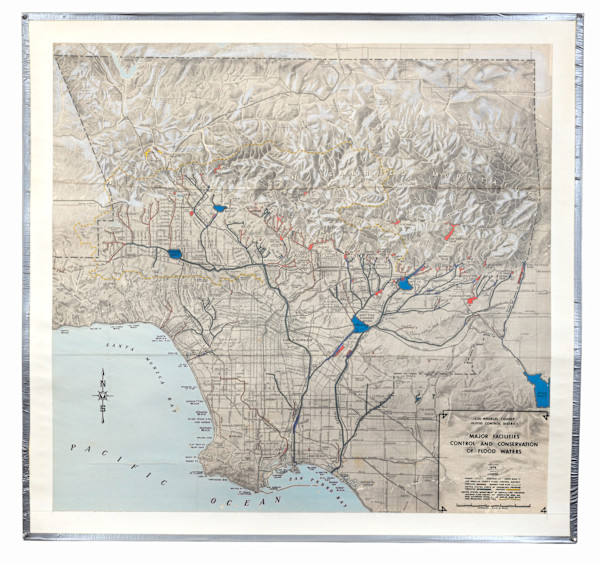
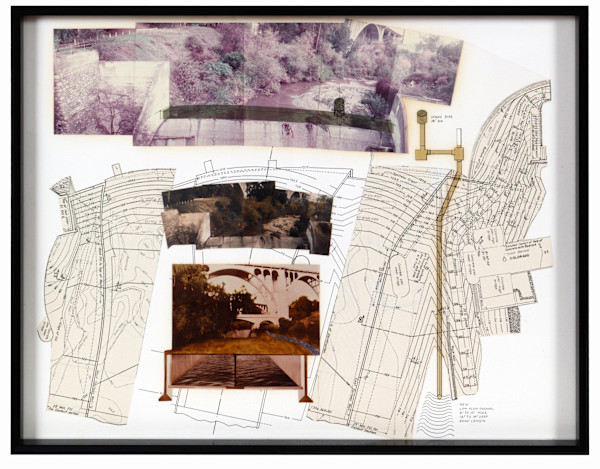
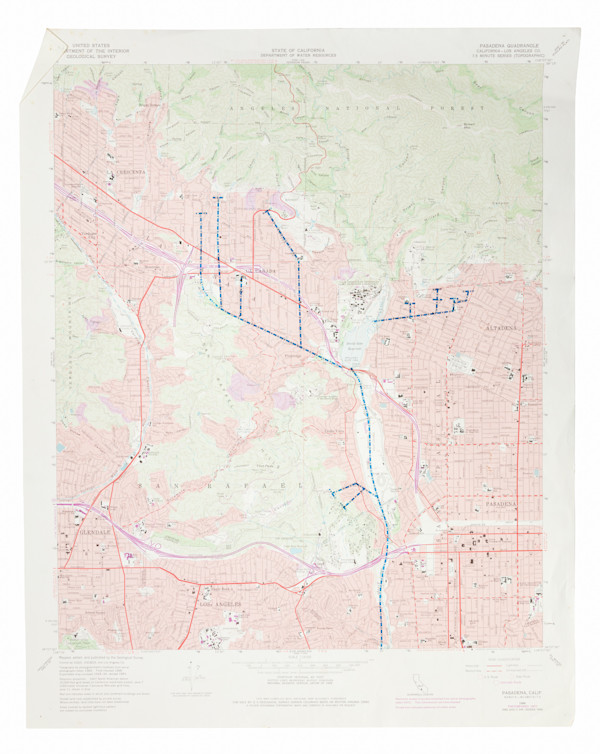
It was 1984; several ladies from the headquarters of the Garden Club of America called from Pasadena. They had seen our Sacramento Meditations at the Ronald Feldman Gallery in New York some years earlier. They invited us to come to Pasadena; maybe we could do a work there. We had associated the Garden Club with the Daughters of the American Revolution, thinking of them as a rightwing political body as much as promoters of gardens. They assured us that they were the “Western” Garden Club, which, as everyone knew, was quite different from the “Eastern” Garden Club. It turned out that they were genuinely and ecologically concerned for their community, not just for the use of pretty plants and gardens. They immediately took us to the edge of the lower Arroyo. Looking east, one could see the Devil’s Gate Dam; looking west, one could make out Los Angeles.
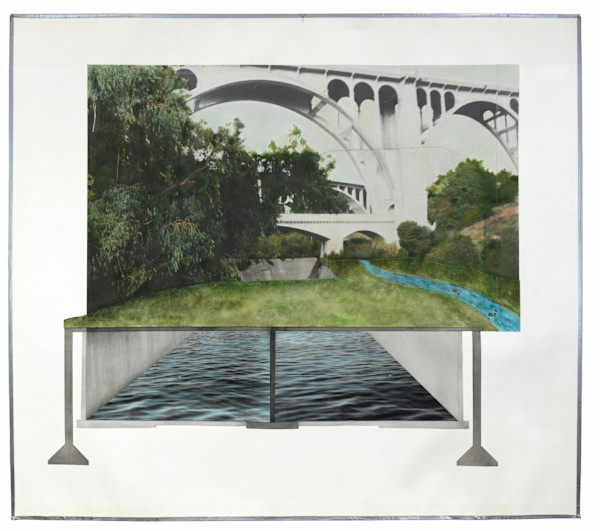
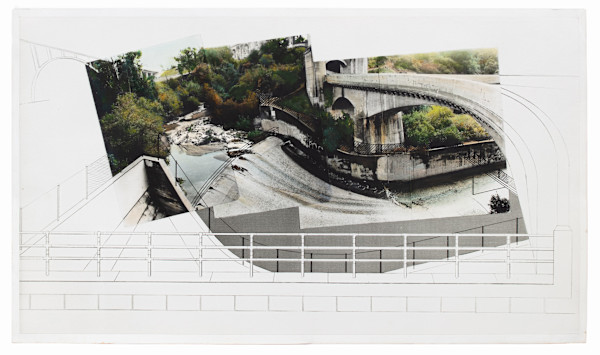
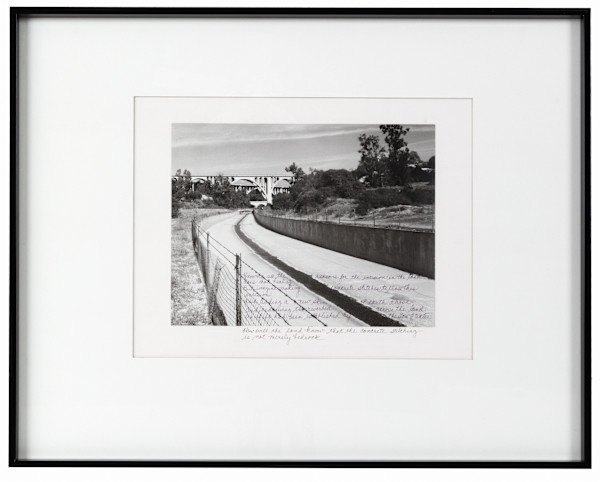
Looking down, however, one could see the 15-meter-wide, three-meter-deep, well-fenced flood control channel literally cutting the Arroyo in half. They looked down and saw something entirely different than we did. They said, “Isn’t it beautiful?” Evidently,
they had gotten so used to looking at the Arroyo and the beautiful canyon slopes that surrounded it that they had erased the flood control channel in their minds. “No,” I replied or you replied, “it’s not beautiful, it’s appalling! The Army Corps and California
Flood Control have chopped the Arroyo in half!” They said, “But that’s the flood control system,” as if it were inevitable and normal, a necessary state of affairs for this once beautiful canyon. And you said, or I said, “Who is speaking for the Arroyo?”
Almost immediately, we made a decision not to grant that the canyon’s flood control channel was either a good idea or a necessary condition. It was a revelation in a way.
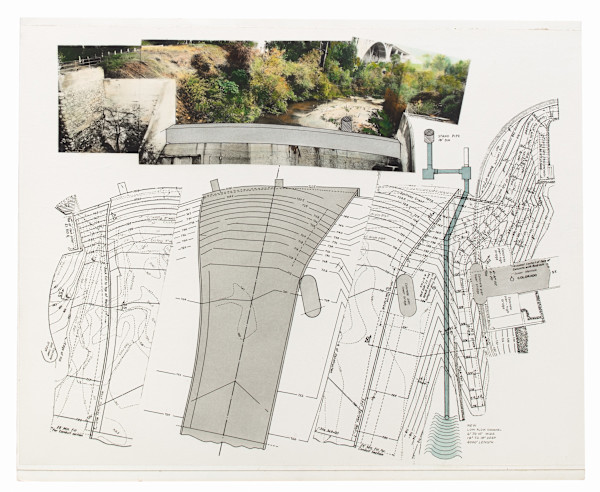
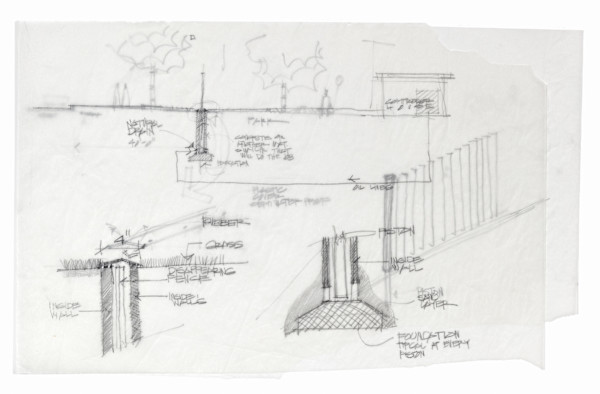
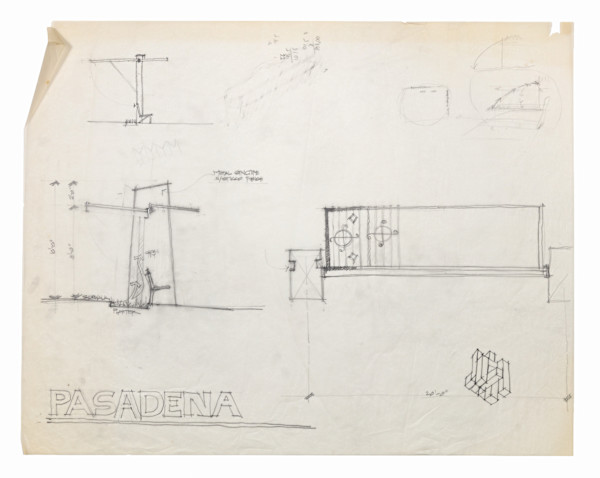
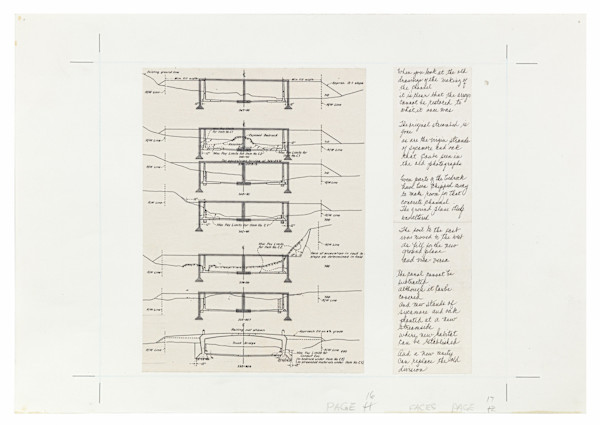
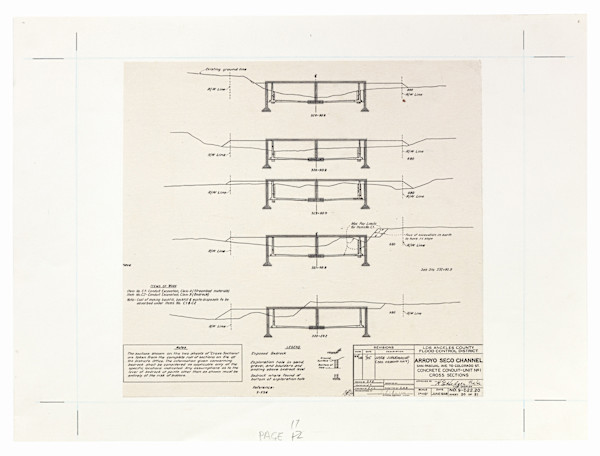
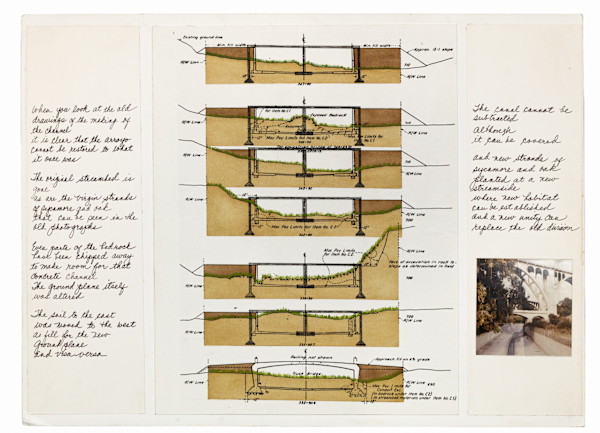
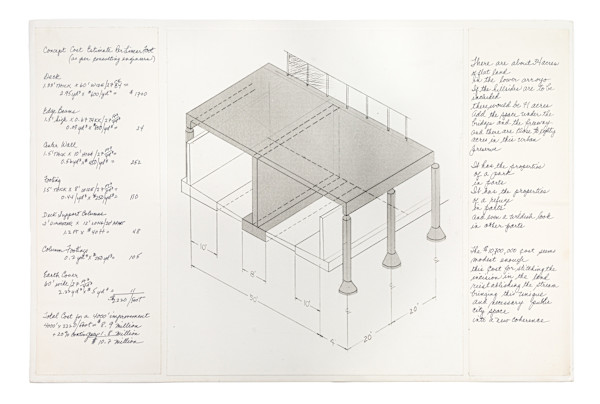
There was a metaphor embedded in the structure, or rather, a metaphor that had an array of entailments (to use George Lakoff’s terminology). Apparently, to the designers, flood control meant the destruction of rivers. Thus, an entailment was, “Flood control is the fragmentation (or at least division) of arroyos.” So we began to reflect on how one might decouple flood control on the lower Arroyo from the destruction of the river that wished to flow through it. After all, the powers that be were looking after everything but the well-being of this arroyo. There are about 14 hectares of flatland in the lower arroyo; if the hillsides are included, it becomes 29 hectares. If you add the space under the bridges and the freeway, it is close to 32 hectares, this urban reserve. In the mind’s eye, if you remove the channel, then a fragmented domain of almost 32 hectares becomes continuous and has the properties of a park in parts, the properties of a refugia in other parts, and even a wildish look on the hillsides. Yet there is no way to restore the canyon to its original state. When you look at the old drawings of the making of the channel it is clear that the original stream bed is gone, as are the virgin stands of sycamore and oak that can be seen in old photographs; parts of the bedrock were even chipped away to make room for the concrete channel. Further investigation shows that the soil to the east was moved to the west as fill for the new ground plane, and vice versa. The canal could not be subtracted—but it could be covered, making a tunnel for excess waters to flow through and new stands of sycamore and oak planted at a new streamside, where new habitat could be established and a new unity could replace the old division.
So we decided to be the voice of the canyon as best as we could and wrote the following text. (Later, in 1987, it was read on the radio to an audience of several million people; we were told that some people took permission to begin restoring the Los Angeles River from this impassioned moment.)
There was a metaphor embedded in the structure, or rather, a metaphor that had an array of entailments (to use George Lakoff’s terminology). Apparently, to the designers, flood control meant the destruction of rivers. Thus, an entailment was, “Flood control is the fragmentation (or at least division) of arroyos.” So we began to reflect on how one might decouple flood control on the lower Arroyo from the destruction of the river that wished to flow through it. After all, the powers that be were looking after everything but the well-being of this arroyo. There are about 14 hectares of flatland in the lower arroyo; if the hillsides are included, it becomes 29 hectares. If you add the space under the bridges and the freeway, it is close to 32 hectares, this urban reserve. In the mind’s eye, if you remove the channel, then a fragmented domain of almost 32 hectares becomes continuous and has the properties of a park in parts, the properties of a refugia in other parts, and even a wildish look on the hillsides. Yet there is no way to restore the canyon to its original state. When you look at the old drawings of the making of the channel it is clear that the original stream bed is gone, as are the virgin stands of sycamore and oak that can be seen in old photographs; parts of the bedrock were even chipped away to make room for the concrete channel. Further investigation shows that the soil to the east was moved to the west as fill for the new ground plane, and vice versa. The canal could not be subtracted—but it could be covered, making a tunnel for excess waters to flow through and new stands of sycamore and oak planted at a new streamside, where new habitat could be established and a new unity could replace the old division.
So we decided to be the voice of the canyon as best as we could and wrote the following text. (Later, in 1987, it was read on the radio to an audience of several million people; we were told that some people took permission to begin restoring the Los Angeles River from this impassioned moment.)
What has been done can be undone
One Arroyo is every Arroyo
One dam is every dam
One channel is every channel
What has been done can be questioned
What has been done can be redone
Let a grand restitution take place
Let the process of flood control
Be separated from the destruction of rivers
Imagine every channel in the LA Basin
Covered
And land remade green
And low-flow streambeds established
Where the logic and the will exist
Then new walkways to the sea could be developed
Land added easing crowded terrain
And new public space engendered
Then ribbons of green will run down to the sea
And birds and small life return
As sanctuaries are formed here and there
If you stand on the Colorado Street Bridge
You can image this restitution for the Arroyo
If you fly high enough
You can image the same
For every stream and river in the basin