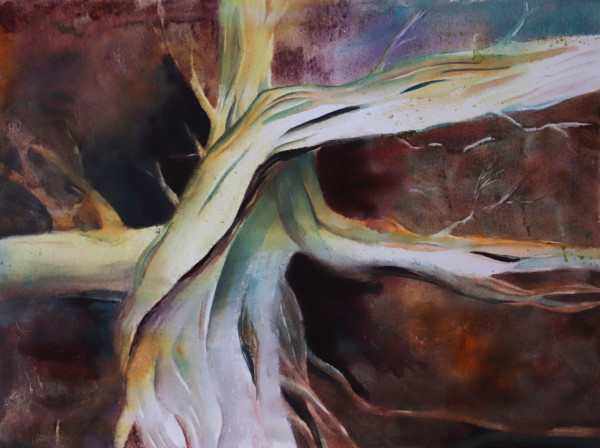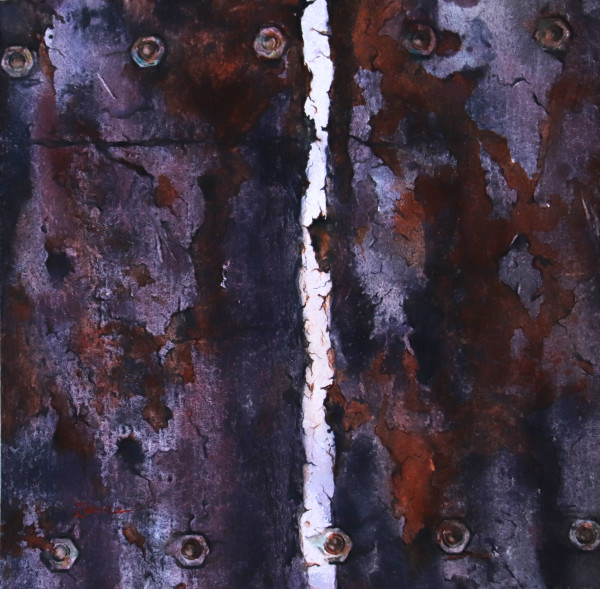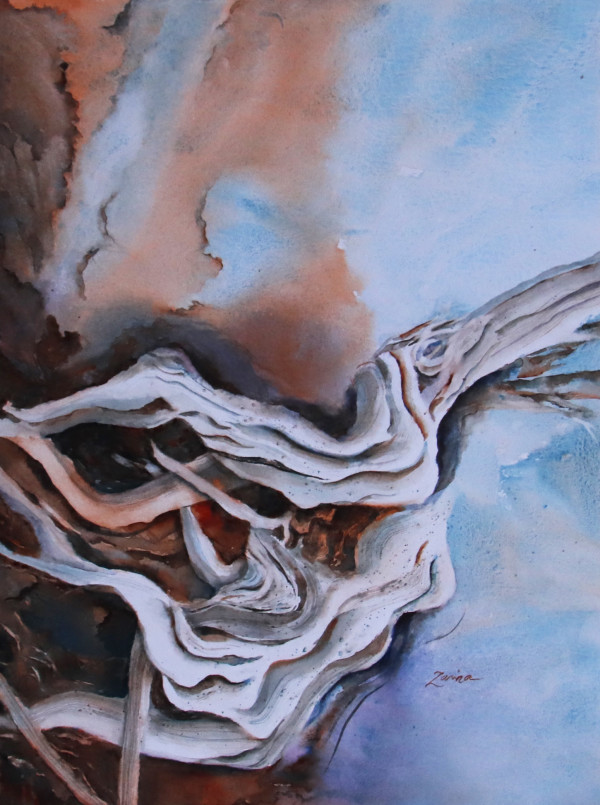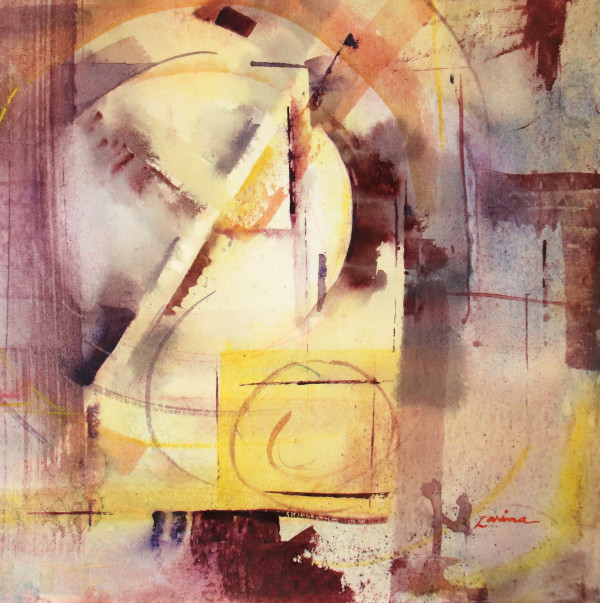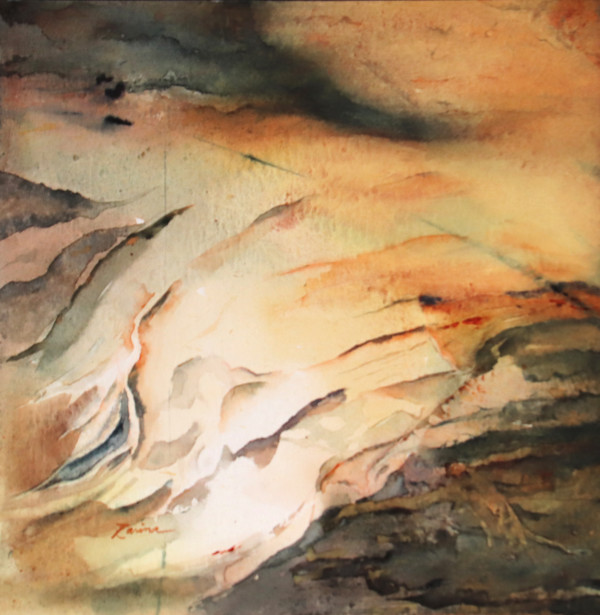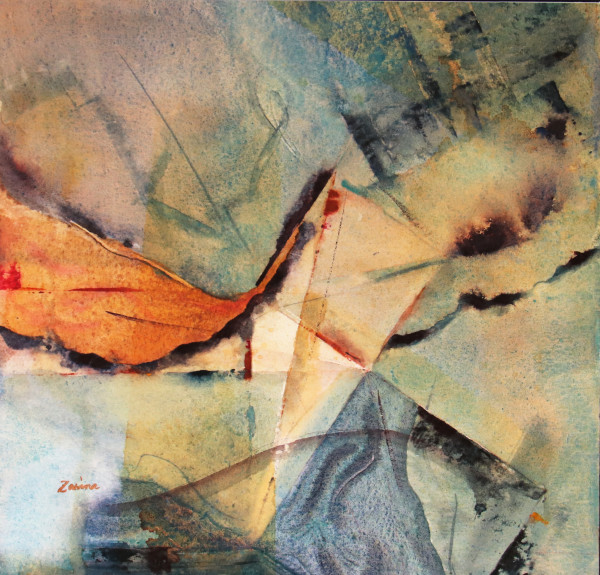
Collection: Xs and Ys
I've been on a journey to connect art and mathematics. My explorations have taken me from visualizing constants to uncovering stories in the graph of functions and playing with geometry. Though I have been enjoying these explorations, I still struggle to express the core of math's resonance for me. This has been surprisingly less obvious than I initially thought.
I have always been drawn to puzzles. I enjoy logic. I relish the sense of accomplishment from a hard-won understanding of concepts that took hours, days, or even weeks of confusion. I am fascinated by proofs. And recently, it occurred to me that is what holds the answer: Proof.
Truth, once an absolute in my youth, is now a source of uncertainty. Recent events have prompted a re-evaluation. How can two people witness the same thing and arrive at such different—even opposite—truths? Even science, our most reliable tool for understanding reality, grapples with this. Physicist Sabine Hossenfelder, in Lost in Math, argues that theoretical physics has prioritized mathematical beauty over empirical evidence, leading to elegant but untestable theories—theories that may forever remain beyond proof or disproof.
Bombarded with information, I find myself with a constant hum of anxiety, feeling as if I no longer have stable ground to stand on. Brian Cox and Jeff Forshaw's the quantum universe captures this feeling perfectly: “That we do not fall through the floor is something of a mystery. To say the floor is ‘solid’ is not very helpful... atoms are almost entirely empty space. The situation is made even more puzzling because, as far as we can tell, the fundamental particles of nature are of no size at all.”
That's how I feel—still standing on solid ground, but with the unsettling sense that the laws governing these infinitesimally small particles might not hold, that somehow these laws might no longer be true.
But through mathematics, we have a powerful tool for critical thinking. Though with inherent limitations, proofs have allowed us to establish and build upon fundamental, albeit abstract, truths. Proofs demand rigorous demonstration. They are only as good as their assumptions, so there is a possibility of disproof. Proofs require a willingness to admit error and acknowledge that even long-held truths can crumble in the face of new evidence. While we don’t live by theorems, the spirit of mathematical inquiry—its emphasis on logic, reason, and intellectual humility—to me offers a compass in our current world of manufactured realities.
It seems, then, that my exploration of the intersection of art and mathematics is actually a quest for truth, expressed through art.