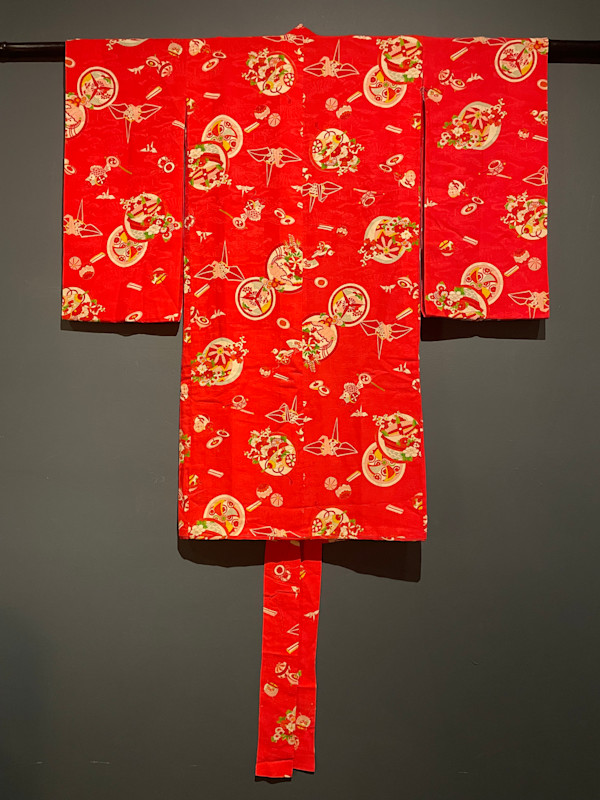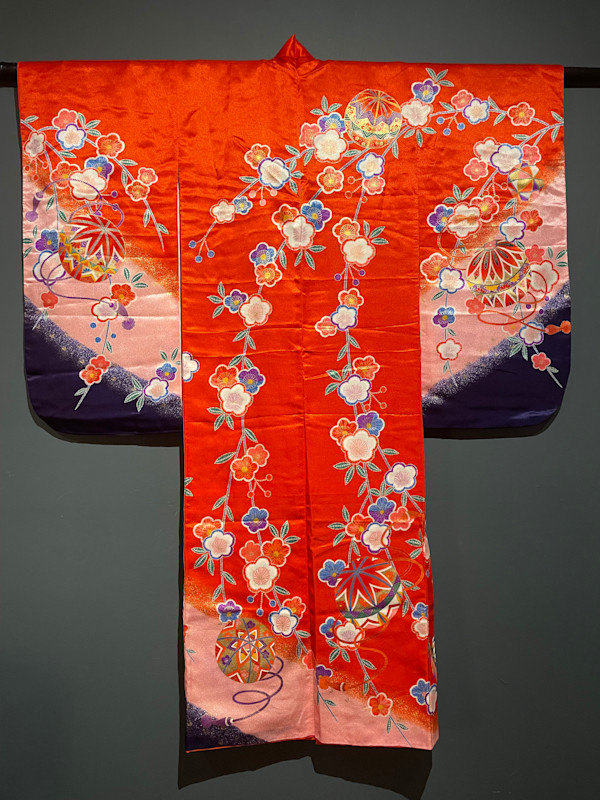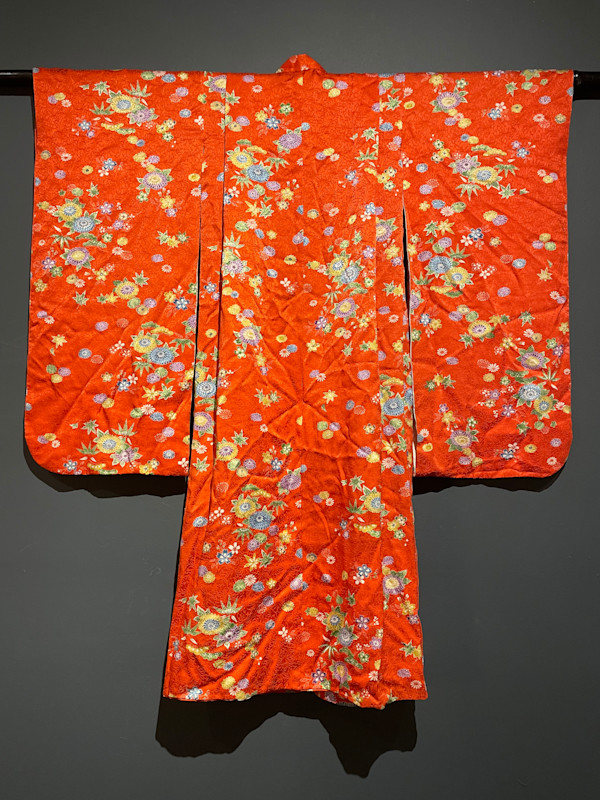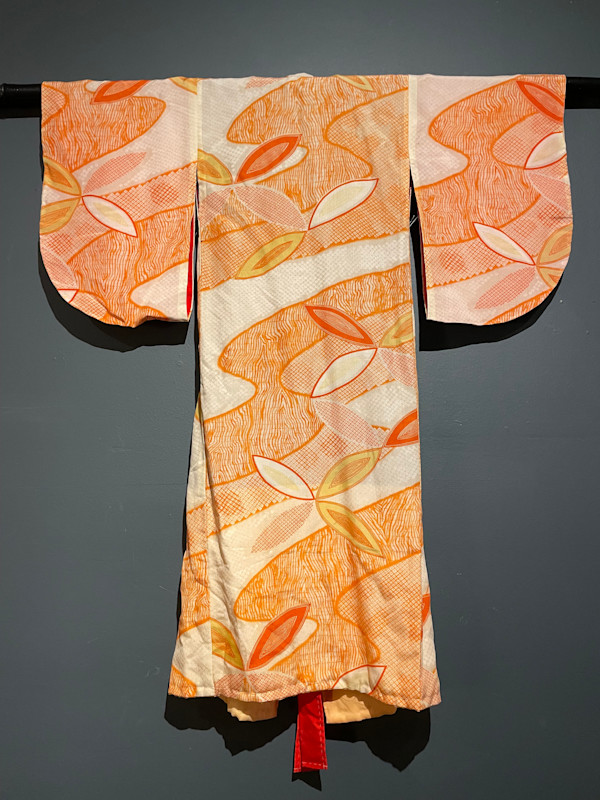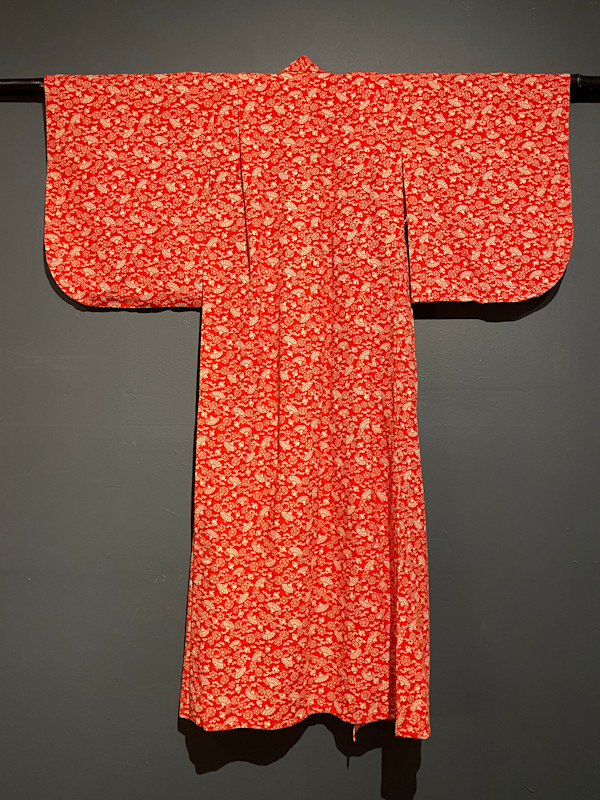

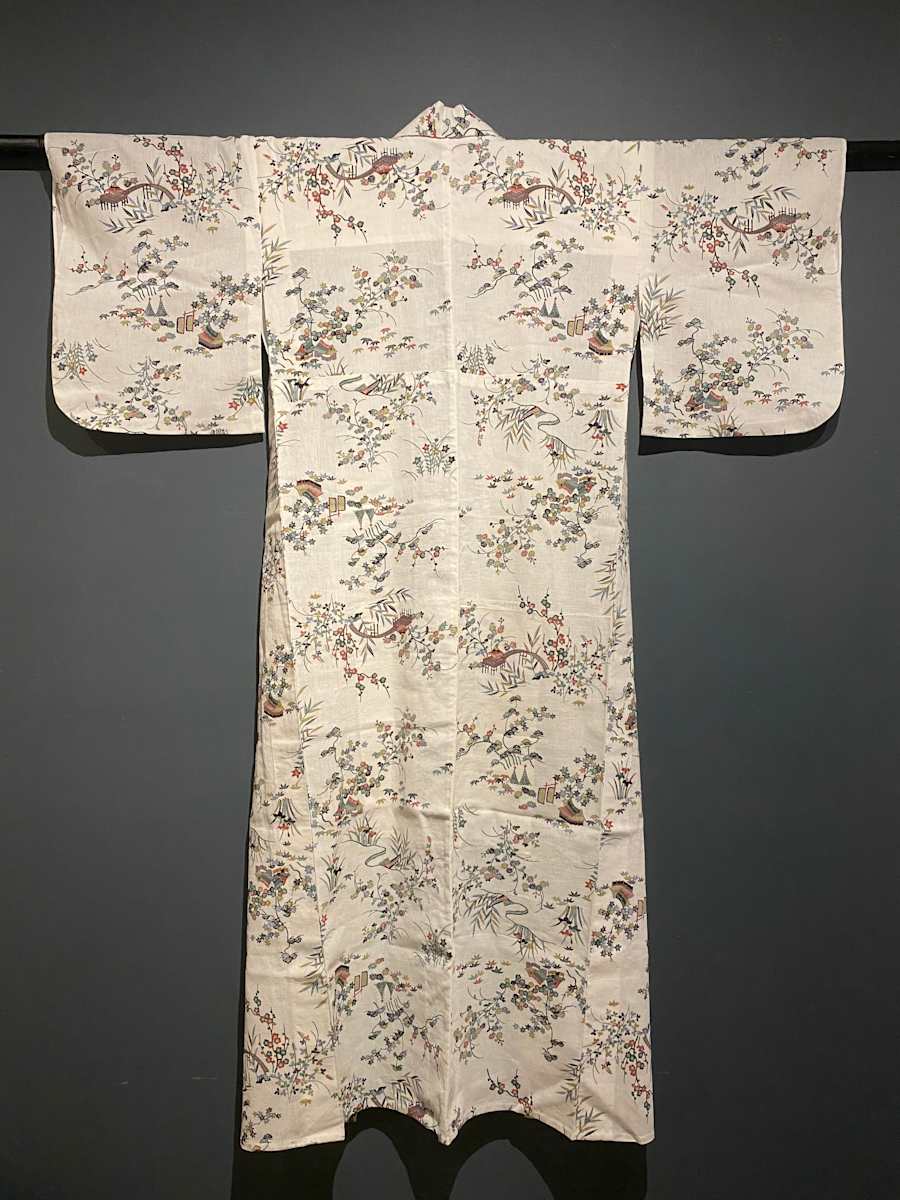
Yukata (浴衣), casual summer kimono in cotton, animated by vignettes of Japanese gardens - pavilions and fences, flowering plants, pines, maples, and bamboo.
Originally little more than a bathrobe, the yukata was worn within the home, for brief outings nearby, or by guests at inns, its design often bearing the emblem or character of the establishment. From the mid-1980s, however, yukata began to appear in a wider variety of colors and motifs, responding to demand for garments that could be worn more publicly, particularly at summer festivals. In this evolution, they gradually shed their purely private associations, assuming a more formal character. On occasion, refined and less vividly colored yukata came to substitute for the komon (小紋).
Thus, the yukata traces a cultural journey from the intimacy of bathhouse and inn to the sociability of festival and, eventually, into the domain of everyday summer wear.
- Subject Matter: Japanese gardens
- Collections: Kimono Collection
Other Work From Yume Collections