
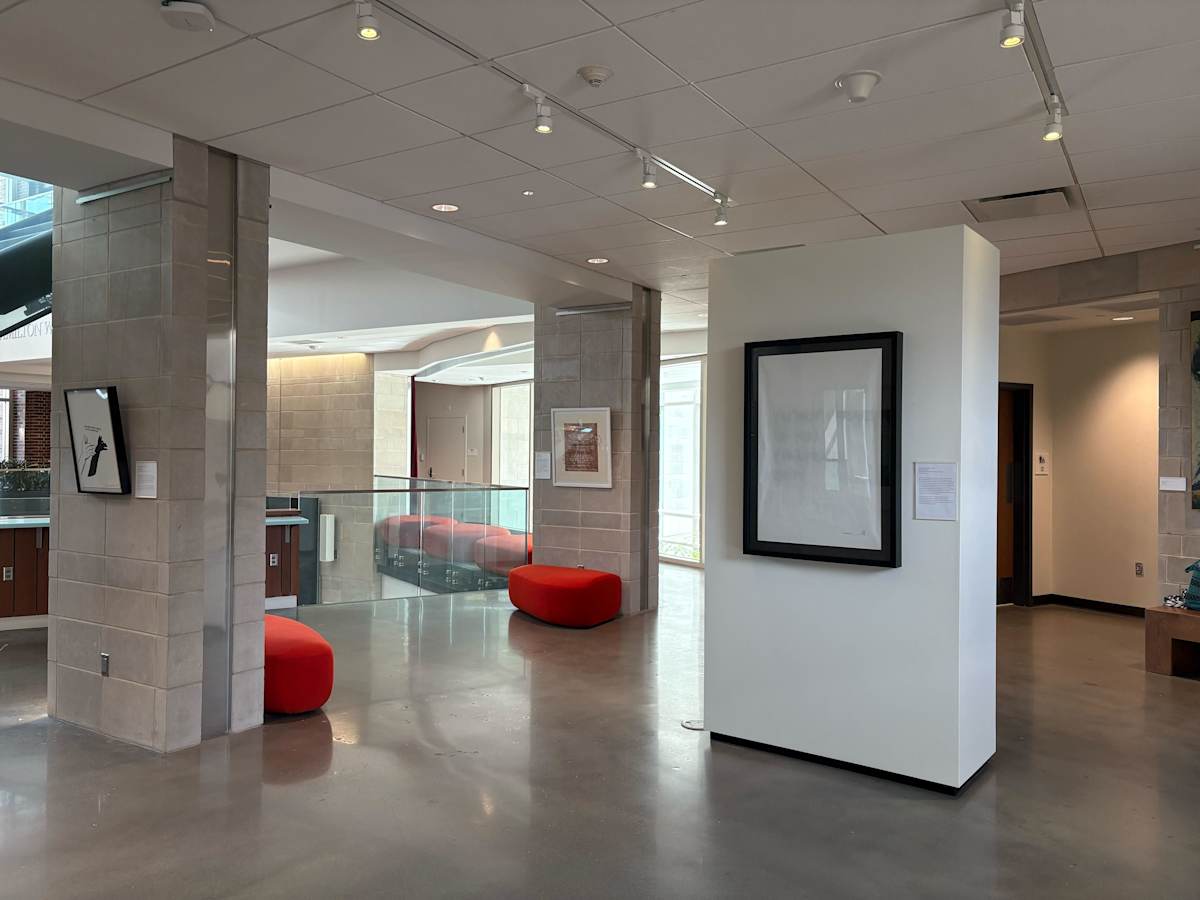
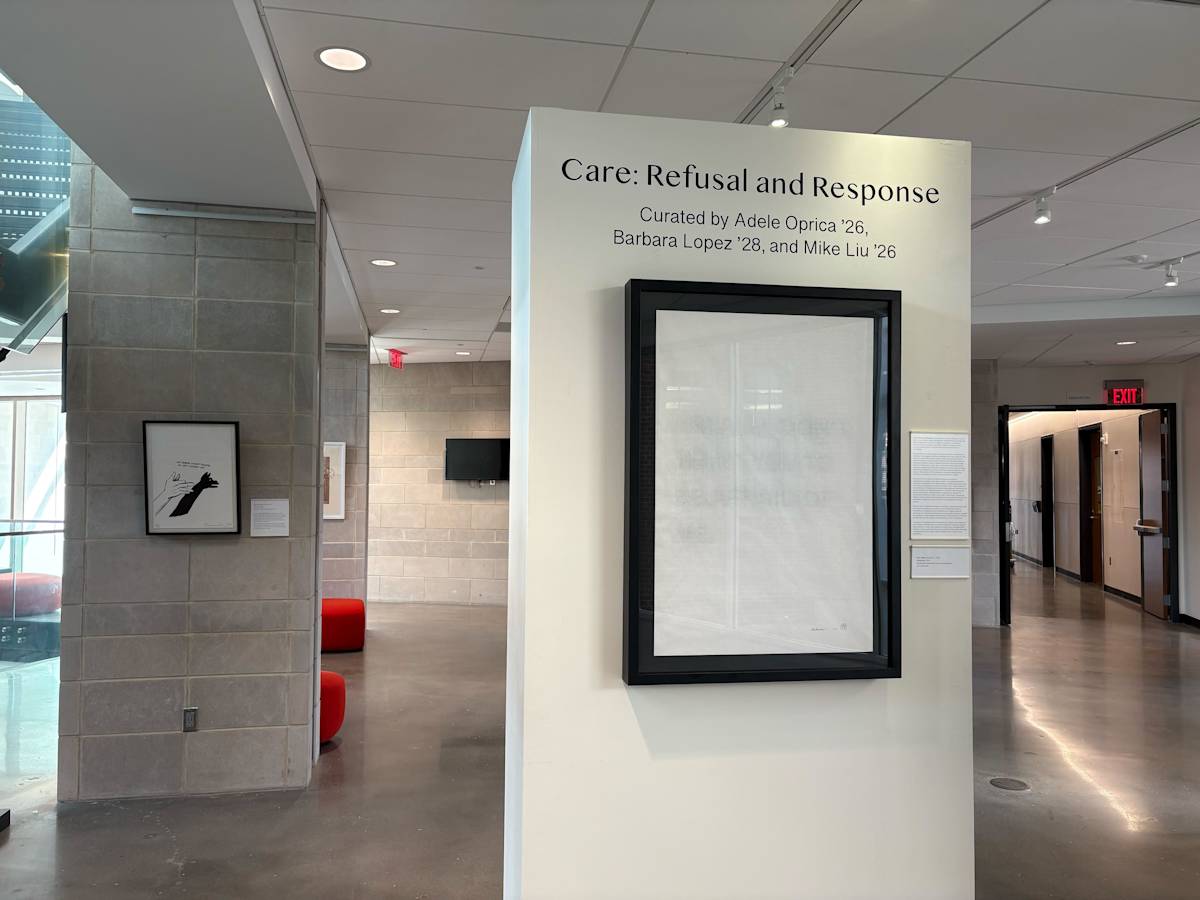
Care: Refusal and Response is a student curated exhibition currently on display in E. Craig Wall Jr. Academic Center. Curators Adele Oprica ’26, Barbara Lopez ’28, and Mike Liu ‘26 drew inspiration from Lia Rose Newman and John Corso-Esquivel’s exhibition Alternative Medicine: Healing Remedies for Harmful Times, on view at the Van Every/Smith Galleries. Drawing from the Davidson College collection, this exhibition examines how care is shaped not only by medicine, but also by social attitudes, political systems, and the lived experiences of illness and vulnerability.
The title reflects the conflicting yet intertwined conditions of contemporary healthcare. Care suggests treatment and support, yet it also reveals the risks of failure or denial. It is within this space that the dynamics of refusal and response emerge, it moves between institutions and individuals rather than belonging exclusively to either. Systems of power can reject responsibility, visibility, or timely action, and in return, communities respond by creating alternative networks of care like forms of protest or acts of collective support. Additionally, individuals may refuse the identities imposed upon them—the stigma or the reduction of life to diagnosis—prompting responses from institutions that range from reform to continued refusal or neglect.
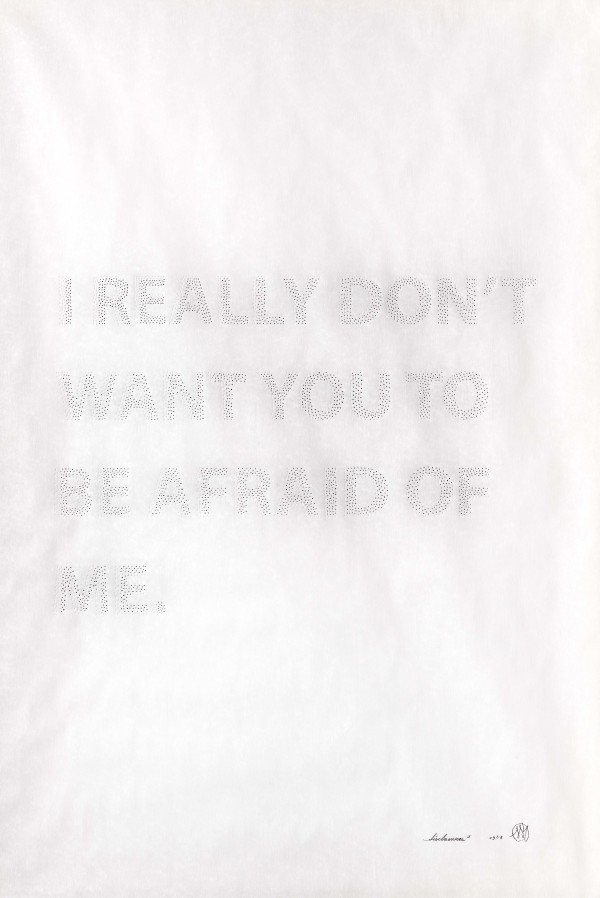
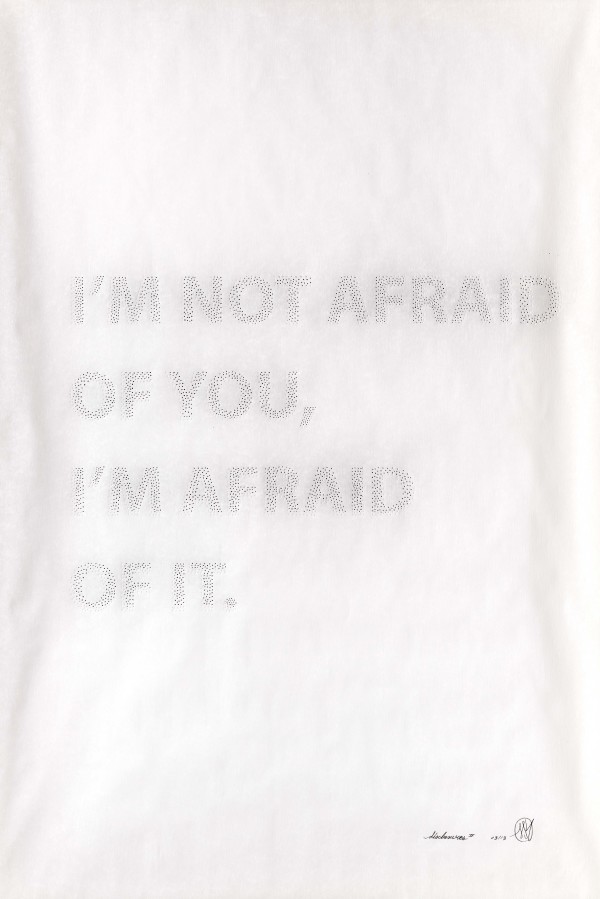
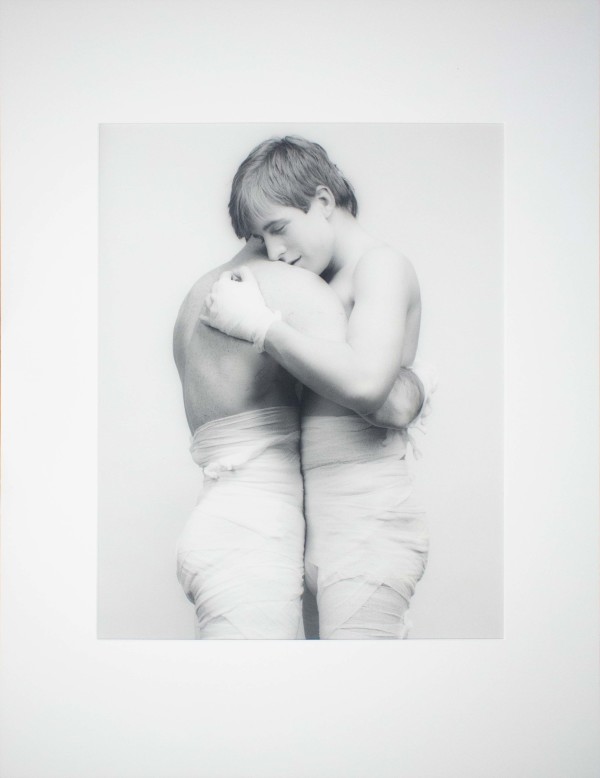
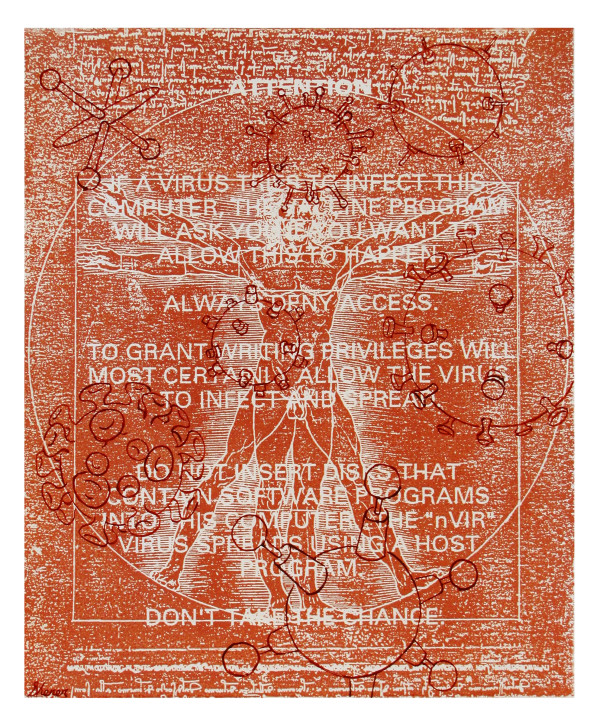
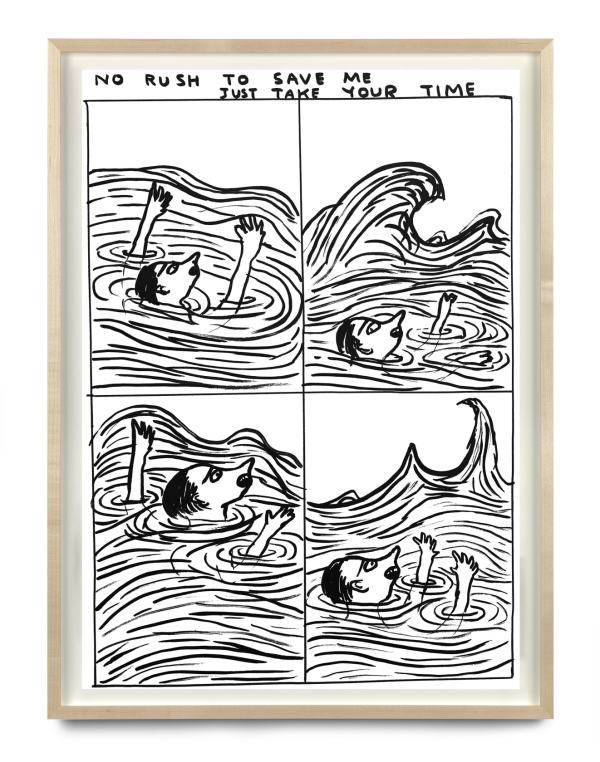
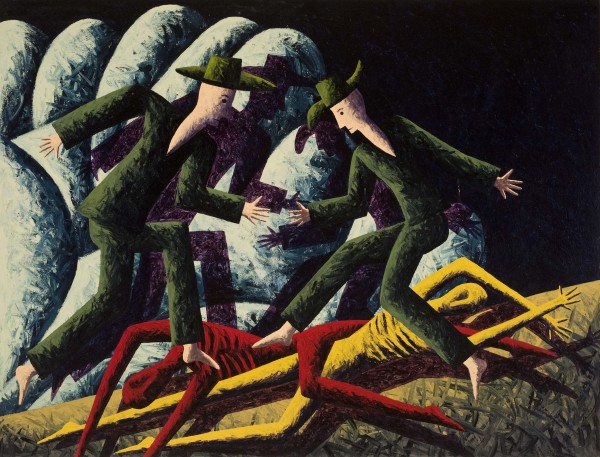
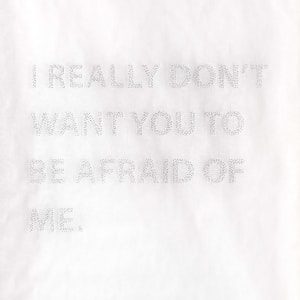
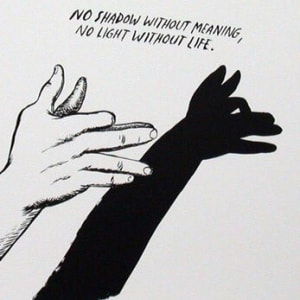
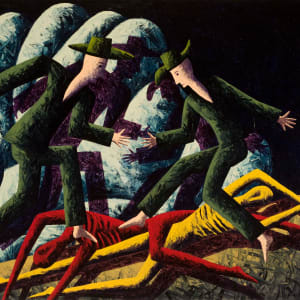
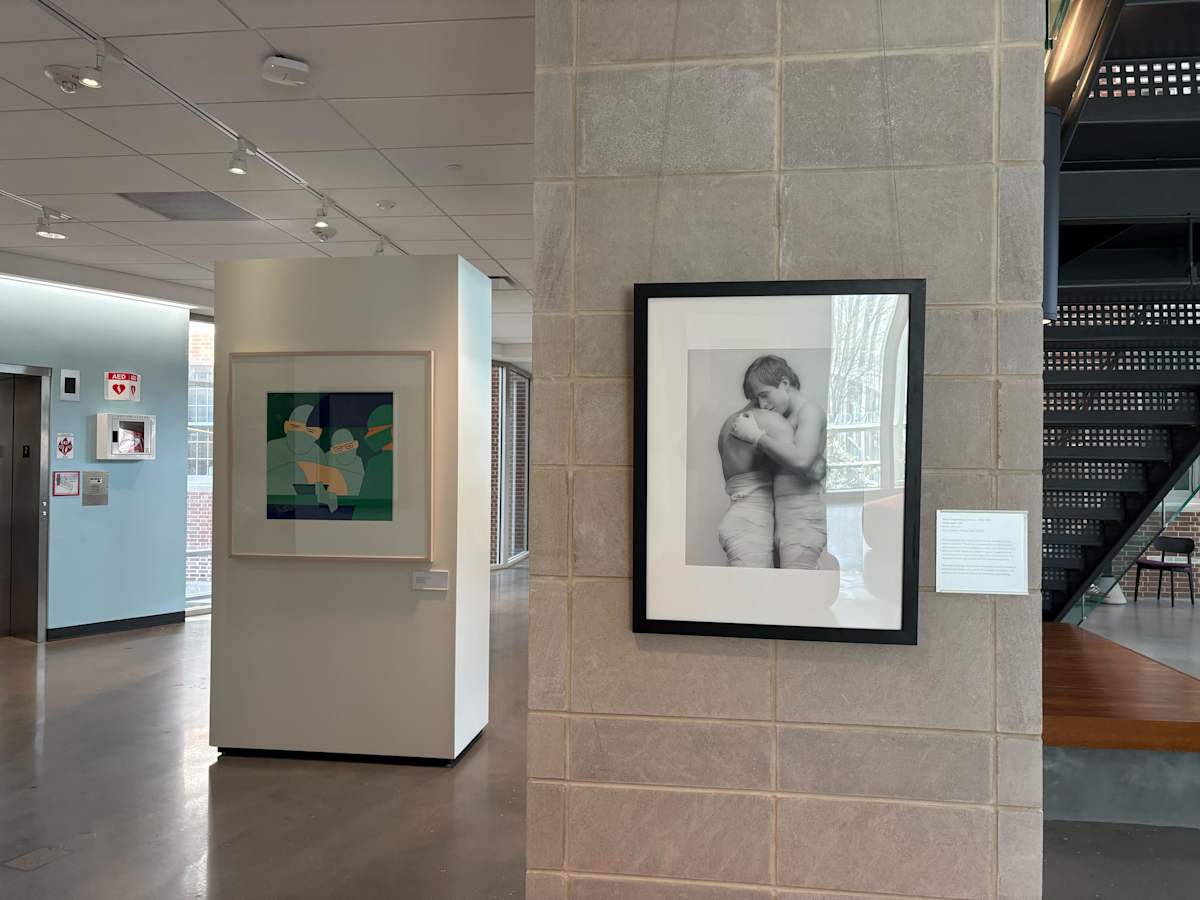
Several works in the exhibition address the social and emotional consequences of disease, particularly in relation to the HIV/AIDS epidemic. Works such as Disclosures I & II, Viral Warning, and White Gauze examine fear and visibility, emphasizing social aspects of illness. Other works consider the tension between individual experiences and larger systems of governance and control. Russ Warren’s Politicians presents an unsettling image of authority figures moving across vulnerable bodies, suggesting the ways political structures can overlook or exploit those most in need of care. The painting reflects broader anxieties about how decisions made at the level of policy and leadership can determine whose suffering is acknowledged and whose is ignored.
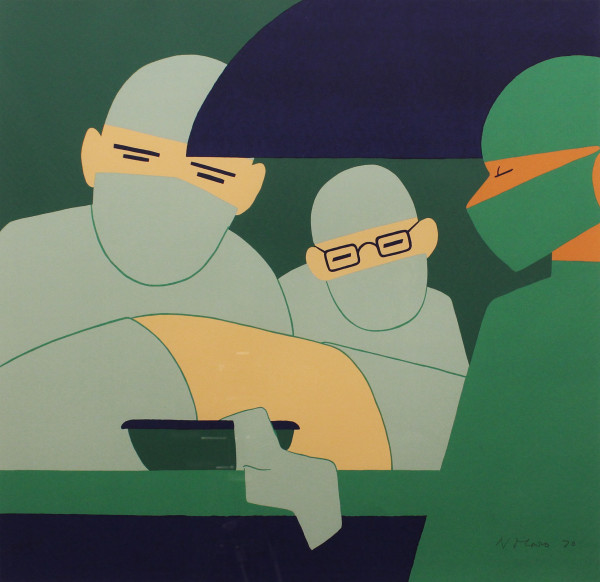
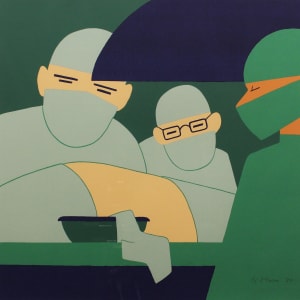
Nicholas Monro’s Operating Theatre turns attention to the clinical space itself, examining the operating room as both a site of healing and a place of vulnerability. By isolating and recontextualizing the imagery and forms associated with surgical intervention, the work encourages viewers to consider the emotional and psychological dimensions of medical treatment: the tension between trust and fear, precision and uncertainty, control and exposure.
The body of work gathered here invites viewers to reflect on how systems of care function, where their faults lie, and how individuals continue to respond with resilience. In a time when questions of access, trust, and responsibility continue to shape public discourse around healthcare, these works encourage us to reconsider care as both an ethical obligation and a shared human experience.
Curated by Adele Oprica '26, Barbara Lopez '28, and Mike Liu '26