

Terri Goodness
Rudolph, WI
Terri Goodness is a mixed media artist. Combining elements of painting and collage, her work explores themes of connection to the earth and human experience.
Message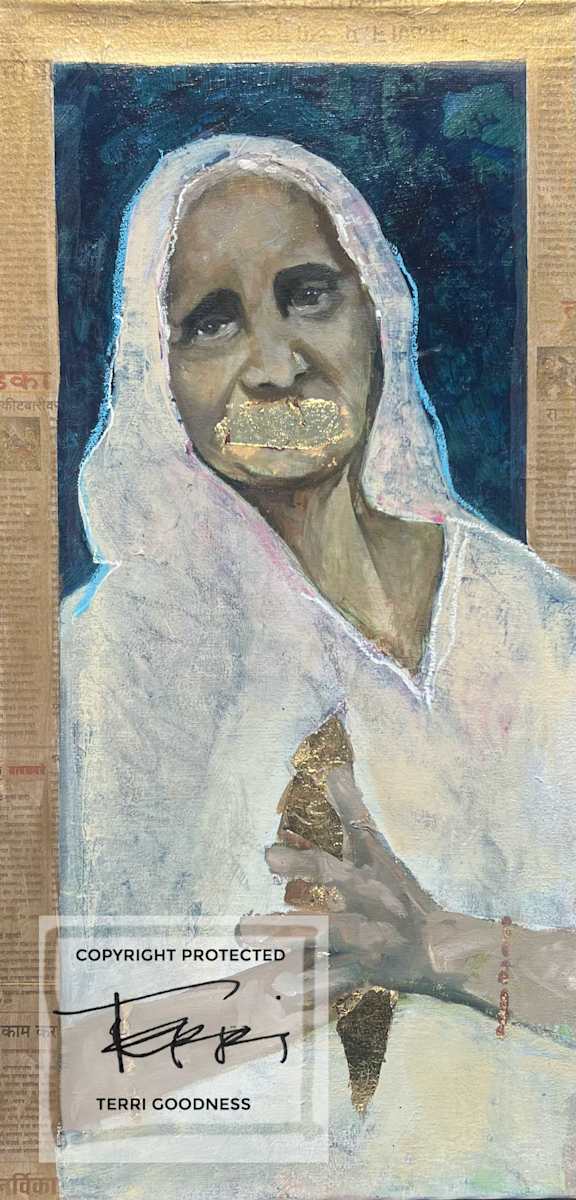
“Silence is Golden” is a common proverb that people understand implicitly. It is used to say that it is often better to remain silent than to speak.
This series examines the complex role of silence—what we are taught as children (children are to be seen and not heard) as well as its capacity to harm. In particular, I focus on the silences imposed on women, born of misogyny and culture that demands compliance and complicity. These silences instruct us to police our tone, dilute our rage, and suppress our truths. Society insists that we shrink ourselves to fit the comfort of others, forcing us to carry the weight of unspoken pain and unseen injustices.
The woman in this portrait is a member of the "Untouchable class." Untouchables are outcasts—people considered too impure, too polluted, to rank as worthy beings. Prejudice defines their lives, particularly in the rural areas, where nearly three-quarters of India 's people live. She lives in a very small room in the Dharavi Slums in Mumbai, India.
She holds in her hands a small bit of money. Enough to carry her through the month or two. She has lost many of her family members and remembers them with photos displayed in a small shrine in her one room home. She is left alone...without anyone to provide for her having lost her husband and sons.
- Subject Matter: Portrait
- Collections: Silence is Not Golden