
-
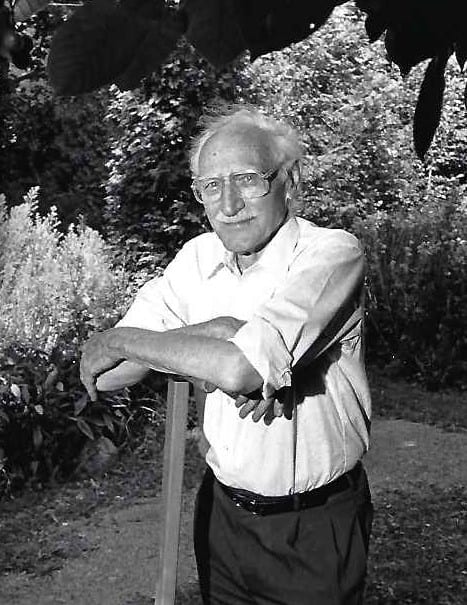
Artist: Schomer Lichtner (American, 1905-2006)
In 1934, Lichtner married fellow artist Ruth Grotenrath and began working under the Federal Works Progress Administration art program, the Treasury Relief Art Project (TRAP), and the Public Works Art Projects (PWAP). In 1955, Lichtner traveled with Alan Watts, a British philosopher and Zen guru, to Japan. There, he became inspired by Japanese culture and artistic style. By the early 1960s, Lichtner was a teacher of drawing and design at the University of Wisconsin – Milwaukee.
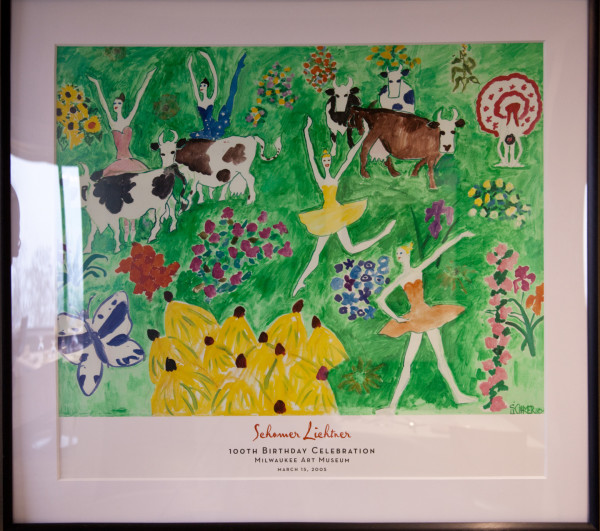
Lichtner was known for his regionalist murals. After traveling to Japan, he would reflect in his works Japanese influence, yet not quite to the extent Grotenrath did. Toward his later career, the artist would turn to abstraction and the juxtaposition of seemingly conflicting subjects, ballerinas and Holstein cows, the latter of which reflected his summers spent at Holy Hill in Washington County.
Lichtner’s work has been exhibited at the Milwaukee Art Center, Art Institute of Chicago, National Gallery of Art, Metropolitan Museum of Art, and Museum of Fine Arts, Boston.