

-
Artist: Jan Balet (German-American, 1913-2009)
In 1938, Jan was recruited by the German military so he chose to immigrate to the United States, moving to New York. He began painting furniture and doing short-term work until he found his first job in commercial art at the magazine, Mademoiselle, as an art director. He proved so successful in this field that he quickly began his own agency, working on behalf of CBS Radio, Good Housekeeping, Vogue, House and Garden, Glamour, The Saturday Evening Post, and many others. He had finally found a home in New York, living with his wife and one son, establishing American citizenship in 1945.
By the time his son was five, Balet and his wife had divorced. Jan moved to a house boat in Montauk, Long Island, setting up his studio and occasionally commuting back to the city. He began creating children’s books, his first published in 1948, titled “Amos and the Moon.” Shortly after, Jan traveled to Paris to visit his grandmother – his first trip back to Europe since his emigration – and this trip would have a profound effect on his future work. Upon his return to the States, he married an American model, Lisa Tallal, and moved into a house in Long Island where he would continue to work commercially until 1966.
In 1966, Jan divorced Lisa, moving back to Munich. It was at this point that he settled with his final companion, Claudia, and finally focused on his art, via paintings and children’s books. In 1973 he moved to France, the country that inspired him most, and focused solely on his fine art. He found success selling his paintings while in Munich and was contacted by Circle Fine Art while in France, translating his images into lithographs in Switzerland. In 1978, he and Claudia moved to Switzerland to work on his lithography in Switzerland. He passed away in 2009 in Estavayer le Lac, Switzerland.
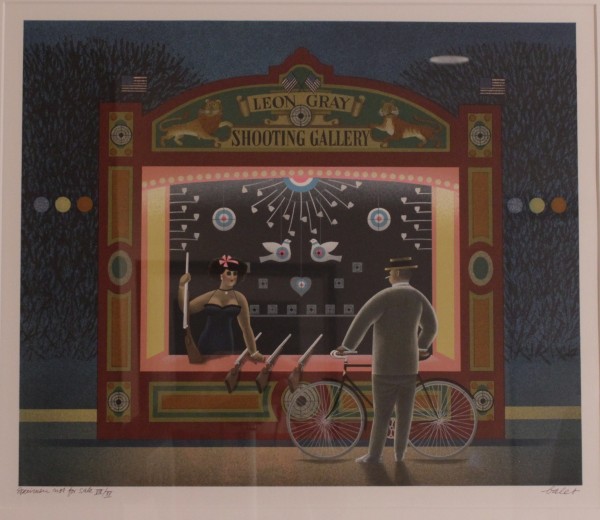
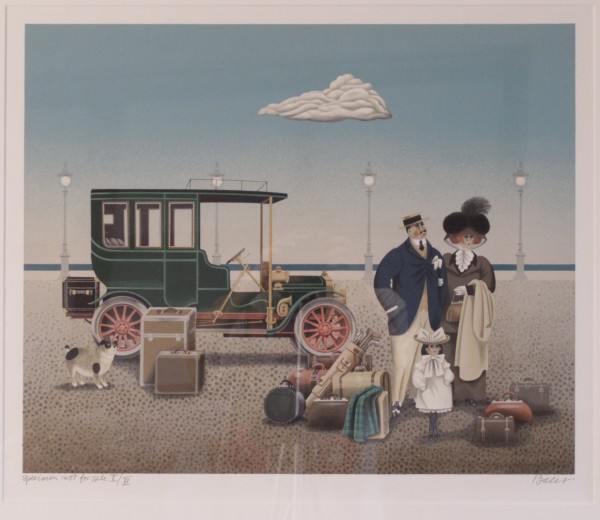
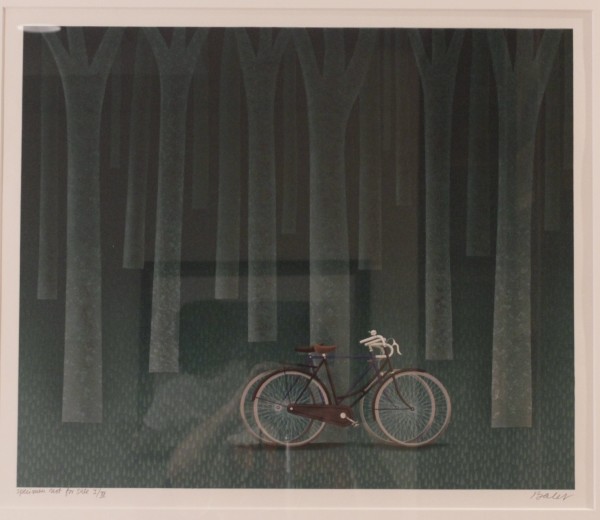
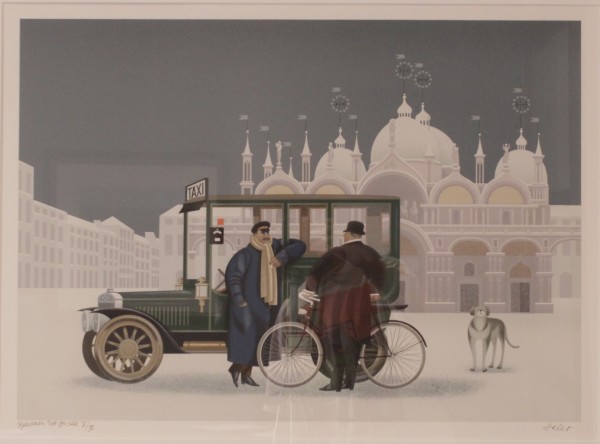
Revealing rare psychological perception and a wry sense of humor, Jan Balet’s art represents a penetrating analysis of interpersonal relationships. Though often described as a “contemporary primitive” or “naïve” artist because of the stylized appearance of his work, Balet’s art explores complex themes involving various aspects of romance and sexuality. Burgeoning passion, evolving marital relationships, illicit romantic liaisons, and erotic sexual fantasy find representation in scenes layered with symbolism and romantic intrigue often laced with delightful elements of whimsy.