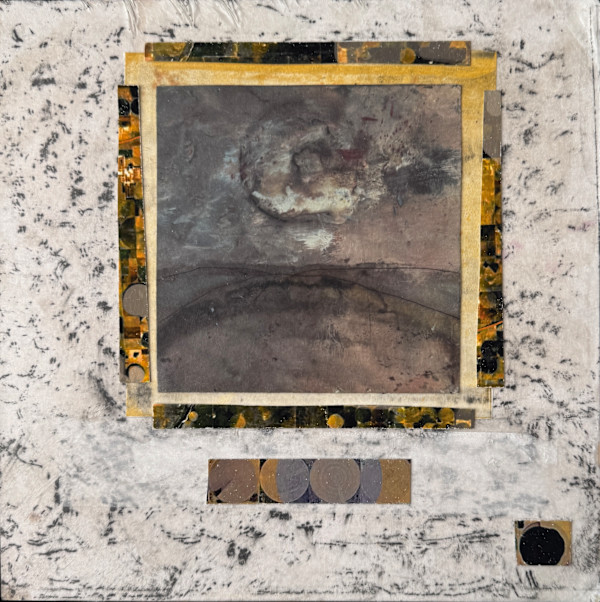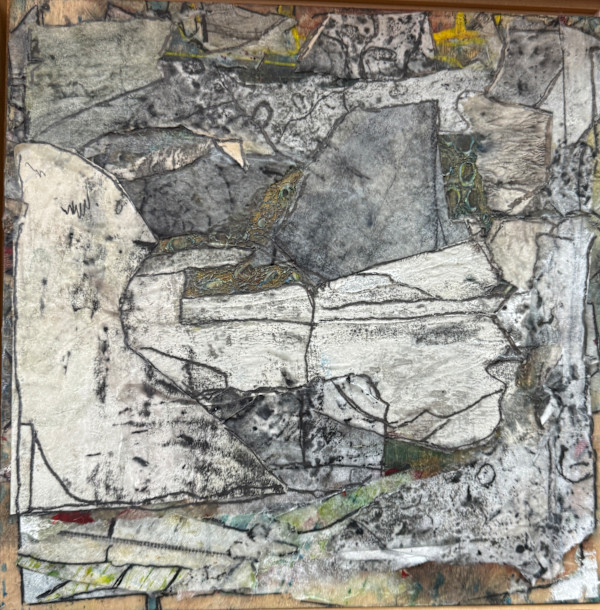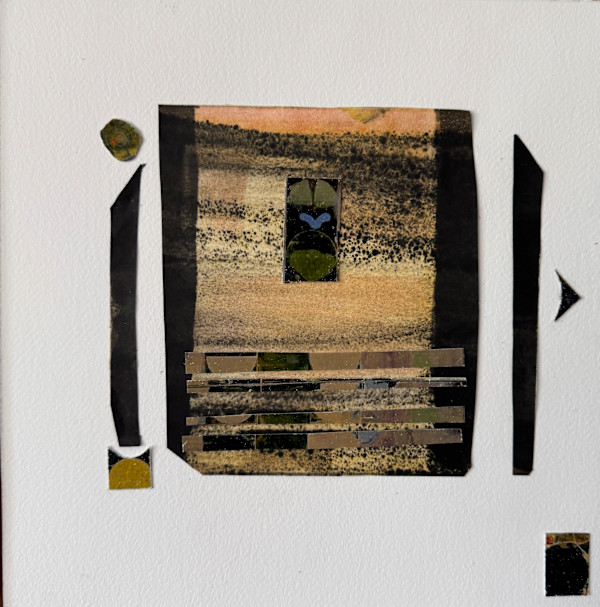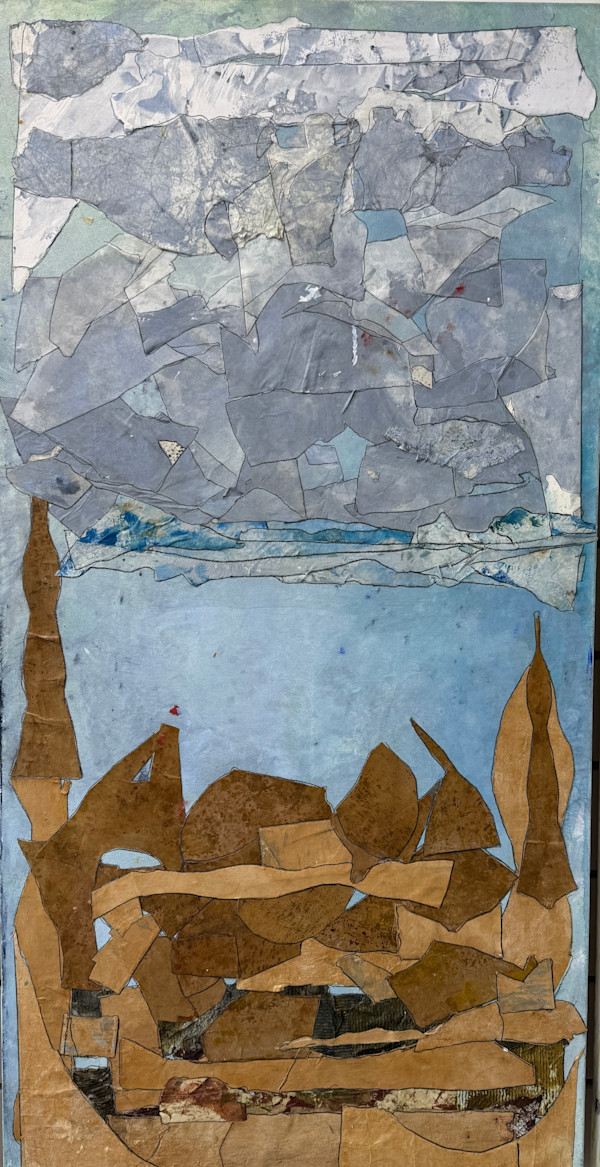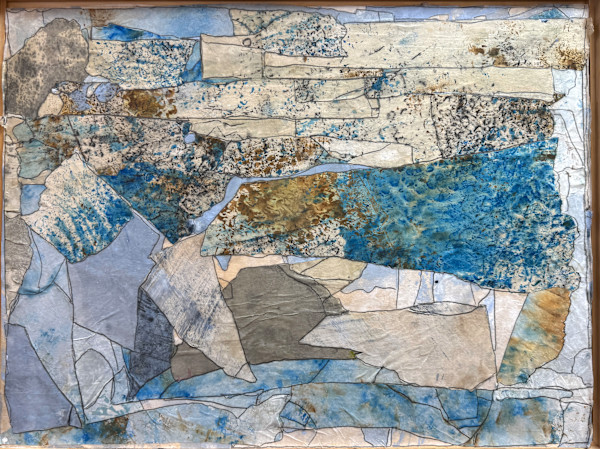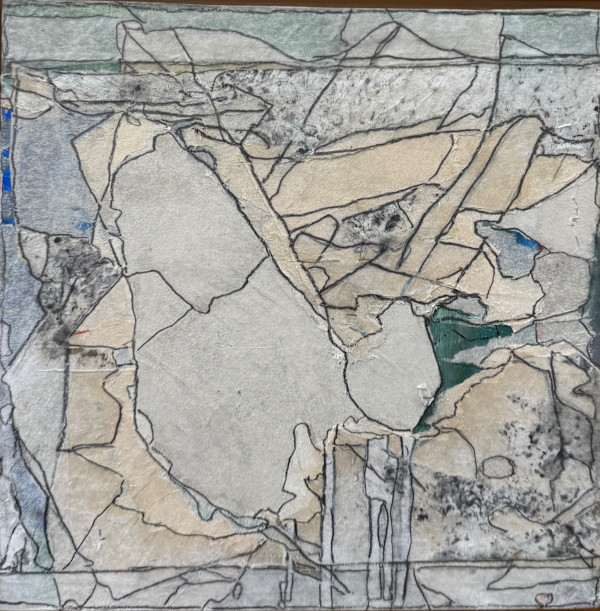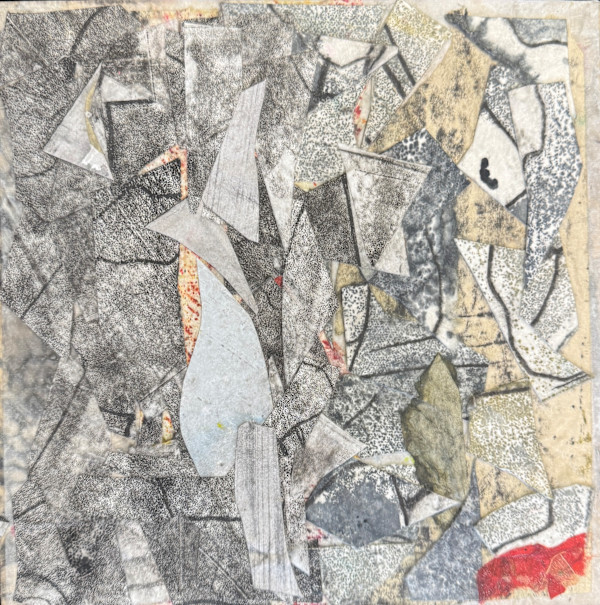

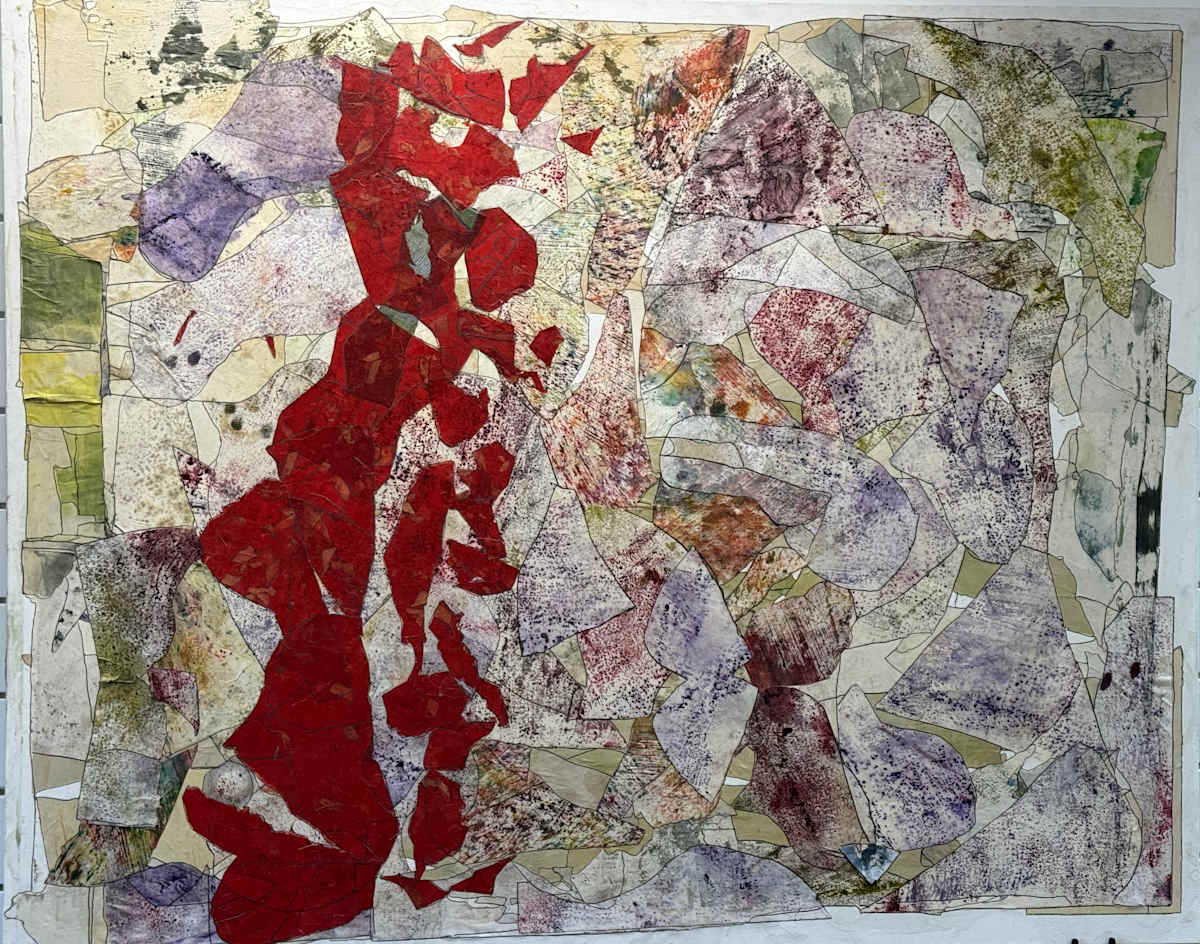
In this piece, fragments move across the surface like spectral rhythms — a choreography of torn memory and silence. Layers of translucent paper, graphite impressions, and stains of red and violet construct a visual lament. The composition borrows from the musical logic of repetition and dissonance — phrases that return altered, like a melody half-remembered or half-erased.
The work draws its emotional key from Sting’s song “They Dance Alone (Cueca Solo),” a haunting elegy for the women of Chile who danced alone in public squares, holding photographs of their disappeared husbands and sons. The lyrics echo through the structure of this painting:
“Why are these women here dancing on their own?
Why is there this sadness in their eyes?
They dance alone, they dance alone…”
The song’s circular rhythm — sorrow rising and falling like breath — mirrors the compositional pulse here. Each torn piece becomes a body, a note, a step; the repetition of gesture becomes an act of endurance.
As with other works in The Condition of Music series, this painting seeks to inhabit the space where abstraction becomes audible — where color and rhythm replace melody and harmony. The red forms move like a lamenting chorus through a field of quieter tones, the tension between the two suggesting both grief and resilience.
Set in E minor, Sting’s song carries the emotional gravity of lament and endurance — a tonal center long associated with introspection and human sorrow. Its unresolved harmonies and descending lines mirror the visual cadence of this work, where color and texture embody the same ache of remembrance and resilience.
- Collections: The Condition of Music