
-
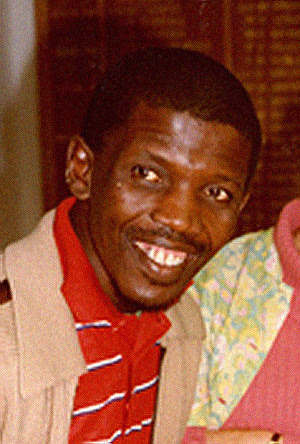
Artist: Welcome Mandla Koboka (1941-1997)
Welcome Mandla Koboka’s journey as an artist began in the vibrant heart of Johannesburg, where he was born in 1941. Growing up amid the challenges and energy of township life, Koboka discovered his passion for art at a young age. In the 1950s, he found a creative home at the Polly Street Art Centre—a pioneering space for Black South African artists—where his talent quickly became apparent. By 1961, Koboka was honing his skills at the Jubilee Art Centre under the guidance of celebrated artists Cecil Skotnes and Ephraim Ngatane, both of whom would leave a lasting impression on his artistic vision.
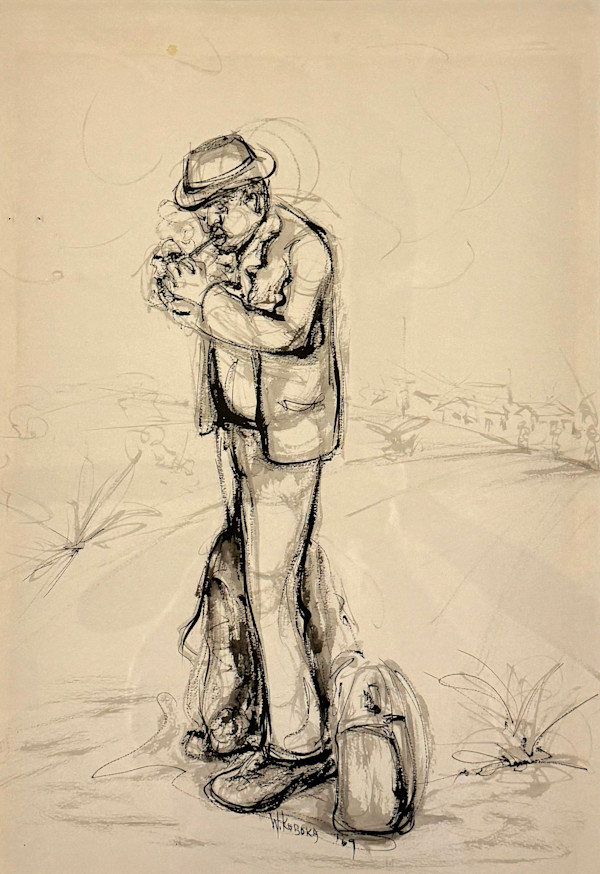
Koboka’s career blossomed in the 1960s, as he began exhibiting his work in group and solo shows across South Africa. He soon gained recognition for his bold, expressive paintings that captured the rhythms of township life: bustling streets, women shopping, and children making music. Working primarily in oils, Koboka developed a distinctive palette knife technique, layering thick, textured strokes that gave his scenes a gritty, almost sculptural quality. His style was marked by abstraction and simplicity, distilling everyday moments into powerful visual statements.
Koboka is a significant artist because he was among the pioneering figures of the Township Art Movement, using his art to authentically represent the daily experiences and spirit of Black South Africans during a time of profound social and political change. His unique contribution lies in his ability to transform ordinary township scenes into vibrant, textured compositions, using abstraction and a bold palette knife technique to convey both the hardship and vitality of his community.
As his reputation grew, Koboka’s art traveled beyond South Africa’s borders, appearing in exhibitions in Austria, the United States, and in the landmark "Black Art Today Exhibition" in Soweto in 1981. Yet, he remained deeply committed to his roots, teaching art at the Federated Union of Black Artists (FUBA) in Orlando, Soweto. Through his teaching, he inspired and mentored a new generation of artists, ensuring that the creative spirit of the townships would continue to flourish.
Welcome Mandla Koboka’s legacy lives on in the vivid township scenes that grace public and private collections, and in the countless students he encouraged to find their own artistic voices. His life and work remain a testament to the enduring power of art in the face of adversity.
Works:
Public Collections: His paintings are held in major South African public collections, including the University of Pretoria and the University of Fort Hare. For example, his oil painting "Penny Whistle" is part of the Fort Hare University Art Collection, and his work has been included in exhibitions at the Johannesburg Art Gallery.
Online Museum Platforms: Koboka’s 1981 watercolor and ink work "Talking" is featured on Google Arts & Culture, where you can view the piece and learn more about his artistic style and influences.
Art Auctions: Many of Koboka's works appear regularly at auction houses. You can view past sales, current listings, and auction results for his paintings on platforms such as Invaluable, MutualArt, and askART. These sites provide images, sale prices, and provenance details for his works that have appeared on the secondary market.
Commercial Galleries: Some galleries specializing in African art, such as Gems of Africa Gallery, have featured his works and may occasionally offer them for sale or display.
To see his work in person, you can visit the University of Fort Hare or the University of Pretoria, or check for current exhibitions at South African museums and galleries. For purchasing or viewing works on the market, regularly monitoring auction sites and contacting galleries with a focus on South African or township art is recommended.