
-
Artist: Robert Berkeley Green
Robert Berkeley Green’s artistic journey began in Pittsburgh, Pennsylvania, where he was born in 1909 amid the industrial heartbeat of early 20th-century America. From a young age, Green was drawn to the world of art, a passion that led him to the halls of Carnegie Mellon University and later Yale University, where he refined his craft and earned a Bachelor of Fine Arts in painting in 1935.
His early talent did not go unnoticed. Green was awarded the prestigious Prix de Rome Prize in painting, granting him a transformative fellowship at the American Academy in Rome. There, surrounded by the echoes of classical art and the vibrant life of the city, he honed his skills and earned recognition for mural painting. These formative years abroad deepened his appreciation for both tradition and innovation, influences that would remain with him throughout his career.
The turbulence of the Great Depression and World War II shaped Green’s worldview and his art. Serving as a quartermaster in the U.S. Army during the war, he witnessed firsthand the resilience and quiet dignity of everyday people—an experience that would inform the subjects and mood of his later work.
After the war, Green devoted himself to teaching, spending over three decades at the University of Kansas. In the classroom, he became a mentor to generations of artists, fostering creativity and technical excellence. His dedication to education became as much a part of his legacy as his paintings.
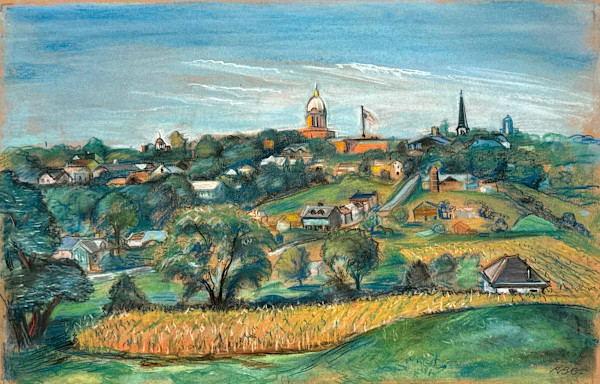
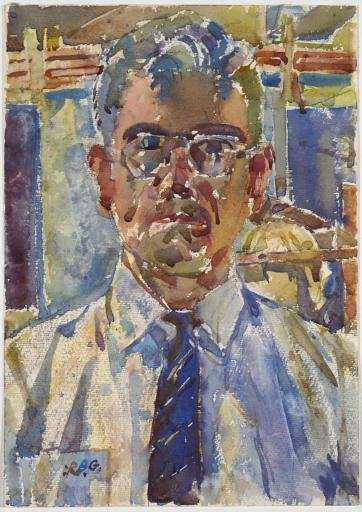
Green’s art is celebrated for its technical mastery and emotional resonance. He became known for his American landscapes and portraits, works that captured the understated beauty and spirit of rural life. His style blended the clarity of realism with the softness of impressionism, using light and composition to evoke a deep sense of place and memory.
Robert Berkeley Green’s significance lies in his ability to bridge the gap between American realism and modern artistic movements, preserving the essence of traditional landscape and portraiture while subtly embracing contemporary trends. His unique contribution was not only in the evocative scenes he painted but also in the generations of artists he inspired through his teaching.
Today, Green’s works are held in major museums, including the Smithsonian American Art Museum and The Metropolitan Museum of Art, testament to a life spent capturing the enduring beauty of the American experience and shaping the future of American art.
You can find the work of Robert Berkeley Green in several notable places:
Major Museums and Public Collections: Green’s art is held in the permanent collections of prominent institutions, including the Smithsonian American Art Museum, The Metropolitan Museum of Art, The Art Institute of Chicago, and the Philadelphia Museum of Art. These museums feature his paintings and drawings as part of their American art collections.
Spencer Museum of Art, University of Kansas: The Spencer Museum in Lawrence, Kansas, holds an extensive collection of Green’s work—over 50 pieces, including paintings, watercolors, and drawings. The museum has featured his art in dedicated exhibitions and maintains an online catalog of his works.
Art Auctions and Online Marketplaces: Green’s works regularly appear at art auctions, such as those listed on Invaluable and Revere Auctions. These platforms provide opportunities to view, bid on, and purchase his paintings, with details about provenance and condition.
Archival Collections: The Kenneth Spencer Research Library at the University of Kansas houses Green’s personal papers, including drawings, sketches, portfolios, and slides. Researchers can arrange to view these materials by contacting the library in advance.
Online Art Galleries: Select works by Green are available for viewing and purchase through online galleries, such as Artwork Archive and Robert Berkeley’s own site, which may offer original pieces or prints.
Green’s art is also found in private collections throughout the United States, and his legacy is preserved through both public exhibitions and the ongoing interest of collectors and scholars.