
-
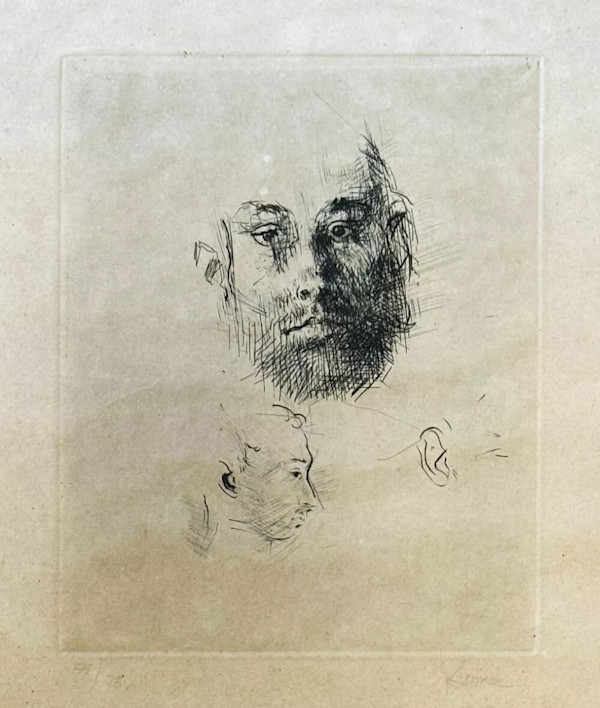
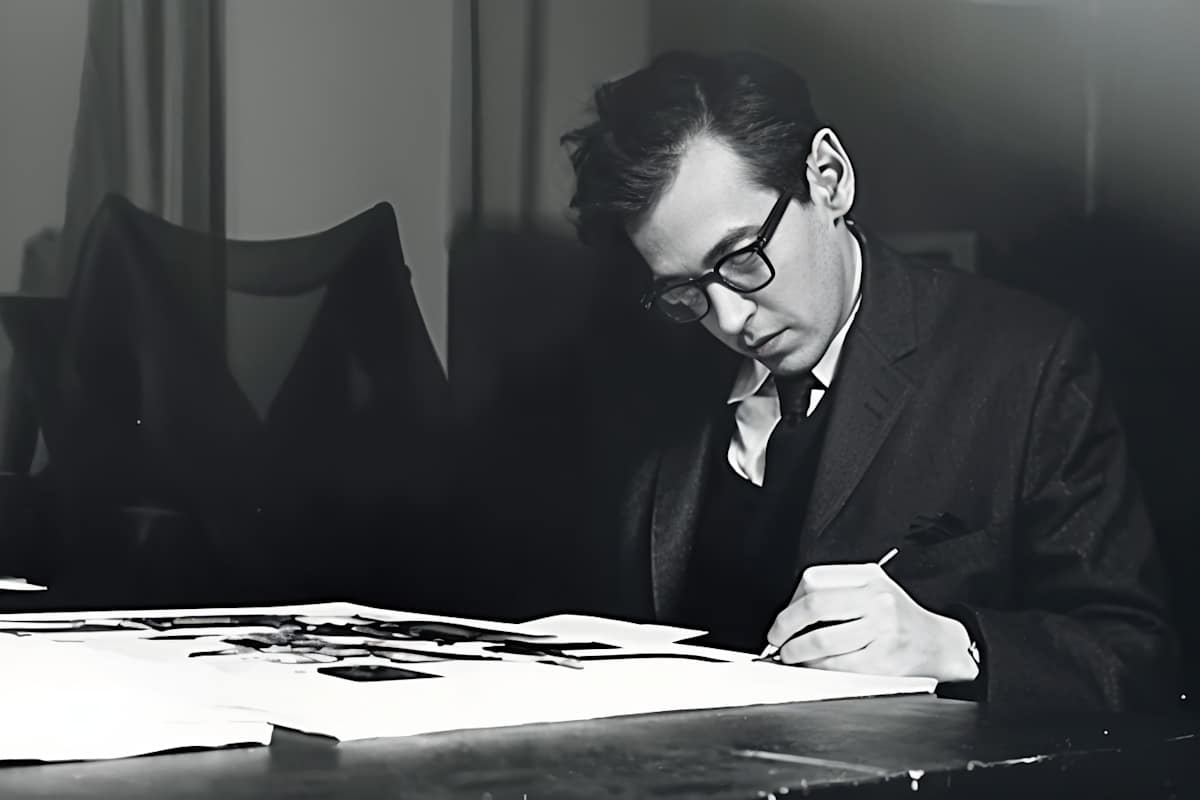
Artist: Jack Levine
Jack Levine’s story began in Boston’s South End in 1915, the youngest child in a large family of Lithuanian Jewish immigrants. From an early age, Levine was captivated by the bustling, sometimes rough world around him—a world that would later fill his canvases with biting social commentary and vivid, expressive figures. He honed his artistic skills at the Jewish Welfare Center in Roxbury and, by his teens, was studying under Denman Ross at Harvard, who recognized Levine’s talent and provided him with a studio and a stipend.
During the Great Depression, Levine joined the WPA Federal Art Project, immersing himself in the realities of urban life and social injustice. His breakthrough came in 1937 with The Feast of Pure Reason, a satirical portrayal of a policeman, a politician, and a wealthy man, which drew national attention for its sharp indictment of corruption. The painting was acquired by the Museum of Modern Art, launching Levine into the spotlight at just 23 years old.
Levine’s career was defined by his commitment to figurative painting and his fearless social critique. His style—sometimes called satirical realism—was marked by exaggerated, often grotesque characters rendered with bold color and dynamic brushwork. Works like Gang Wars, Welcome Home, and Gangster Funeral skewered the powerful and exposed the hypocrisies of American society, while also drawing on biblical and classical themes with a modern sensibility.
Levine is significant as one of America’s foremost social realists, unafraid to challenge the status quo through art. His unique contribution lies in his ability to blend humor, pathos, and pointed social observation, making him a “history painter for our peculiar times.” Even as abstraction dominated mid-century art, Levine remained true to his vision, leaving a legacy of paintings that continue to provoke and engage viewers.
His works are housed in major museums, including the Art Institute of Chicago, The Metropolitan Museum of Art, and the Smithsonian American Art Museum. Jack Levine’s legacy endures as a master of social critique, using art to hold a mirror to society and demand reflection.
You can find Jack Levine’s work in the permanent collections of several major museums and public institutions:
Art Institute of Chicago: Levine’s paintings are part of the museum’s collection, and you can view select works in person or through the museum’s online database.
The Metropolitan Museum of Art (New York): The Met holds works by Levine, which are accessible via their online collection and sometimes on display in the galleries.
Whitney Museum of American Art (New York): The Whitney owns Levine’s celebrated Gangster Funeral (1952–1953), an iconic example of his social realist style. While not always on view, it is part of the museum’s permanent collection and can be explored online.
The Phillips Collection (Washington, D.C.): Levine’s work is included in this renowned collection of modern American art.
Smithsonian American Art Museum (Washington, D.C.): The Smithsonian holds several works by Levine and provides biographical information and images of his art online.
Walker Art Center (Minneapolis): Levine’s works are also in the collection here.
Other institutions with Levine’s works include the Fine Arts Museums of San Francisco, Brooklyn Museum, National Gallery of Art (Washington, D.C.), Cleveland Museum of Art, and Philadelphia Museum of Art.
In addition to museum collections, Levine’s work is sometimes available for viewing and purchase through galleries such as DC Moore Gallery in New York, which represents his estate and has organized exhibitions of his art