In the early years of her artistic career, Cynthia Groya found her inspiration in the bustling energy and layered complexity of urban landscapes. Born in Indiana and trained at Drake University, Groya moved through academic and artistic circles with a sharp eye for the interplay between environment and emotion. Her cityscape paintings, which featured prominently in her solo exhibitions during the late 2000s and early 2010s, marked the beginning of her distinctive approach to abstraction and mixed media.
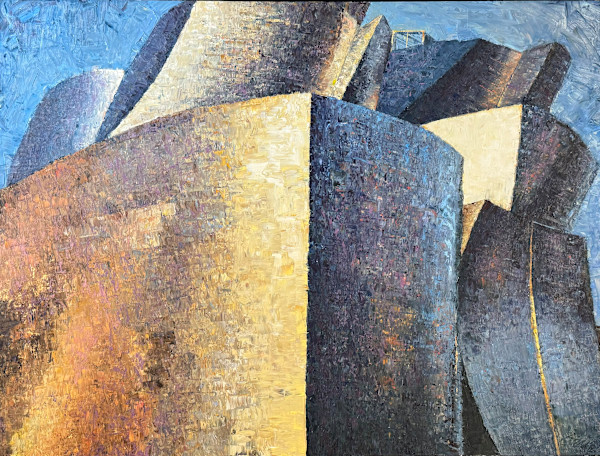
Groya’s early cityscapes were not conventional depictions of city life. Instead, she developed a unique method of applying pigment to canvas: using small rectangles of matte board, she “pulled” paint across the surface, creating dynamic textures and a sense of movement that echoed the rhythm of urban streets. This technique allowed her to capture the fleeting light, shifting forms, and architectural patterns of cities, while also pushing the boundaries of traditional painting.
Her 2010 solo exhibition, “Pulling Paint,” at MUSE Gallery in Philadelphia, showcased these innovative works. The cityscapes, with their abstracted forms and energetic brushwork, drew attention for their ability to evoke both the physical structure and the emotional pulse of contemporary urban life. Critics noted how Groya’s paintings bridged the gap between representation and abstraction, influenced by both classical art and modern calligraphic currents.
Cynthia Groya is a significant artist because she consistently challenges and expands the language of painting, using innovative materials and techniques to create visual dialogues about history, memory, and social justice. Her unique contribution lies in her ability to layer meaning—literally and metaphorically—by incorporating unconventional materials such as plexiglass, mirrors, and historical documents, transforming her art into immersive experiences that invite viewers to reflect on the connections between past and present.
As Groya’s career progressed, the skills and sensibilities honed in her cityscape period became foundational to her later explorations in mixed media. She began incorporating materials like plexiglass, mirrors, and historical documents, shifting her focus to broader themes of history, memory, and social justice. Yet, the energy and layered composition of her early cityscapes continued to inform her evolving artistic voice, establishing Cynthia Groya as an artist whose work is both technically innovative and deeply reflective.