
-
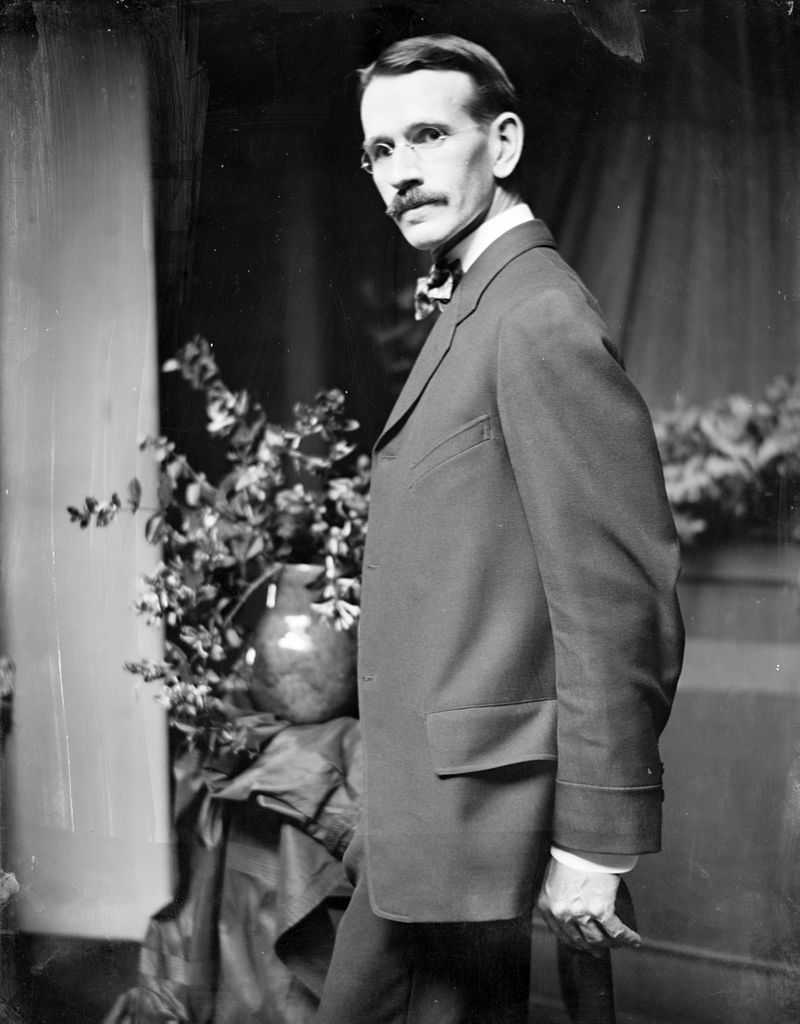
Artist: Arthur B. Davies (1862-1928)
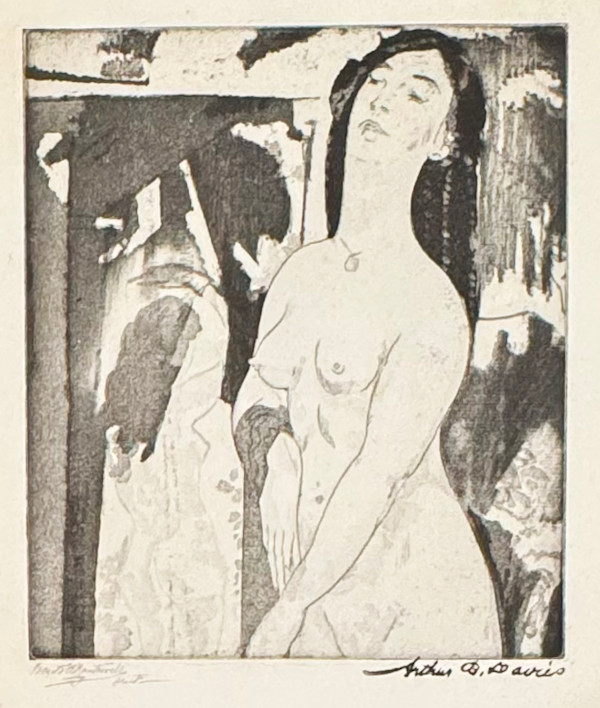
Arthur B. Davies’s life unfolded as a story of quiet vision and transformative influence in American art. Born in 1862 in Utica, New York, Davies was captivated by painting from an early age, inspired by exhibitions of American landscapes and the promise of artistic discovery. He pursued formal studies at the Chicago Academy of Design, the School of the Art Institute of Chicago, and the Art Students League in New York, supporting himself as a magazine illustrator before establishing his reputation as a painter.
Davies’s canvases soon became known for their lyrical, dreamlike quality—elegant nudes and mythological figures drifting through idyllic, often mystical landscapes. His paintings, such as "Unicorns: Legend, Sea Calm" and "Crescendo," blended Romanticism and Symbolism, inviting viewers into poetic worlds where fantasy and beauty reigned. Though his style was rooted in 19th-century traditions, Davies was open to experimentation, briefly exploring Cubism and abstraction after encountering European modernism, yet always returning to his signature ethereal vision.
Yet Davies’s most profound impact reached beyond his own brush. He emerged as a driving force behind the 1913 Armory Show, the groundbreaking exhibition that introduced American audiences to the radical innovations of European modernists like Matisse and Duchamp. As president of the Association of American Painters and Sculptors, Davies championed new artistic voices and helped dismantle conservative barriers in the American art world. He also advised major collectors, shaping the foundations of institutions such as the Museum of Modern Art.
Davies is a significant artist not only for his enchanting, symbolist paintings but also for his unique role as a bridge between tradition and modernity in American art. His leadership in organizing the Armory Show and advocating for modernism fundamentally changed the course of American artistic development, making him a key architect of the nation’s cultural transformation. When he died in Florence in 1928, Davies left behind a legacy of poetic beauty and visionary leadership that continues to resonate in the story of American art.
You can view Arthur B. Davies’s work in several major American museums and public collections:
National Gallery of Art (Washington, D.C.): The NGA holds an extensive collection of Davies’s paintings and works on paper, including pieces such as "Stars and Dews and Dreams of Night," "The Umbrian Mountains," and "Sweet Tremulous Leaves." The museum’s online catalog features over 60 works by Davies, many of which are viewable digitally.
Smithsonian American Art Museum (Washington, D.C.): The museum owns paintings like "A Greater Morning" (ca. 1900–1905), which exemplifies Davies’s signature style of idealized figures in lyrical landscapes. This work and others are on display or accessible through their digital collections.
Detroit Institute of Arts (Detroit, Michigan): The DIA features Davies’s monumental painting "Dances" (1914 or 1915), part of a collaborative mural project and a significant example of his large-scale work.
Whitney Museum of American Art (New York): The Whitney holds 31 works by Davies, including landscapes and figure studies. While not all are always on view, the museum regularly features his work in exhibitions on early American modernism, and many pieces can be explored online.
The Metropolitan Museum of Art (New York): The Met includes Davies’s works in its collection and has featured them in exhibitions related to American and European modernism. Some of his works are also part of the museum’s research and archives.
In addition to these institutions, Davies’s works can be found in other major museums such as the Phillips Collection (Washington, D.C.) and the Victoria and Albert Museum (London), as well as in various public and private collections. For the most up-to-date information on viewing his works in person, check the museums’ current exhibition schedules and online databases.