
- Kody Shafer
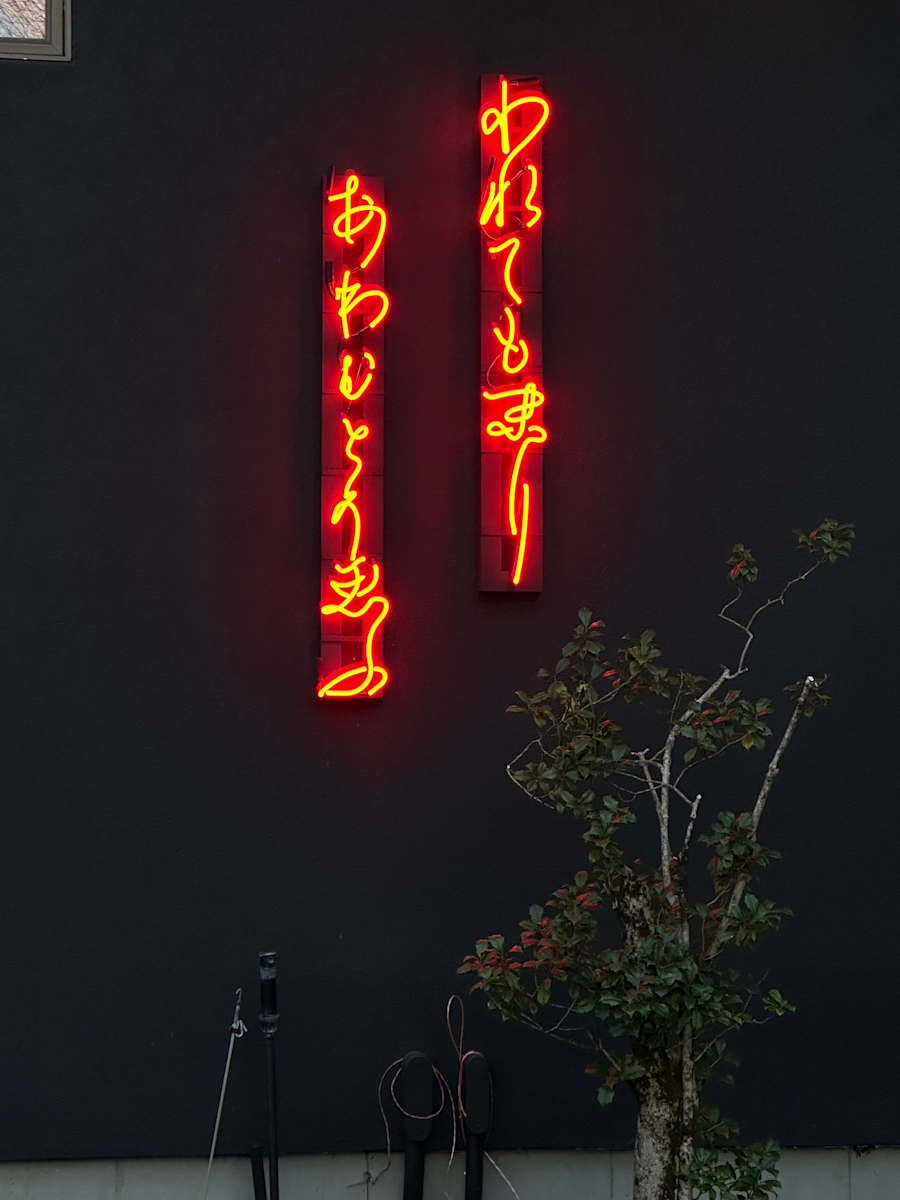
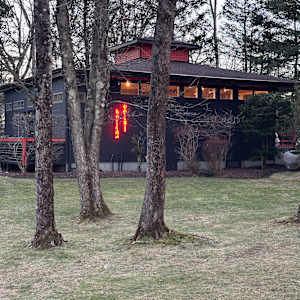
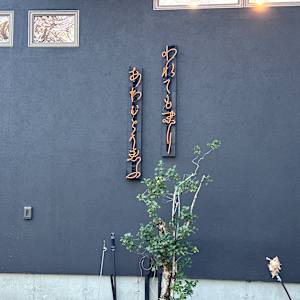
- Where the River Rejoins, 2025
- Neon tubing - Murano Italian Citrus Orange Glass tubing - filled with neon gas.
- 60 x 28 in
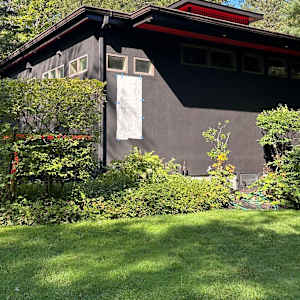
Inspired by the poetry collection book that Paul mentioned as his favorite at the Pavilion, I
conceived the following idea for the outdoor pavilion wall: Waka poetry, one of the oldest forms of Japanese literature from 7th century, is more than words — it’s an emotional and spiritual expression that has influenced art, craft, and culture for over a thousand years. The most iconic type is the Tanka, which consists of five lines with a 5-7-5-7-7 syllable.
Rather than expressing feelings directly, poets conveyed their emotions by depicting
seasonal landscapes and fleeting natural moments. This technique gave rise to the deeply
introspective and aesthetic qualities that characterize traditional Japanese culture.
Among the renowned collection of the 100 Waka, we selected two to feature in the design.
As it was challenging to include the entrire poem due to the space, we chose to highlight
only the final two lines, traditionally referred to as the “shimo-no-ku”:
"Though a swift stream be,
By a rock met and restrained,
In impetuous flow,
Yet, divided, it speeds on,
And at last unites again."
Meaning: The scene of a fast-flowing river being blocked by a rock and splitting into two branches, only to return to a single flow, mirrors the poet Emperor Sutoku (1119-1164) feelings about the situation with a loved one who is now far away. The peom uses several puns to express both the sorrow of parting and the strong hope of eventually being reunited. It conveys the idea that, even in the loneliness we all carry in some way, there is the strength to find a positive light.
A lose interpretation could be: Even when divided, what truly belongs together continues toward reunion.
- Current Location: Ridgefield, CT
- Collections: The Leir Collection