-
Artist: Erhard Kirschstein (German, 1920-1972)
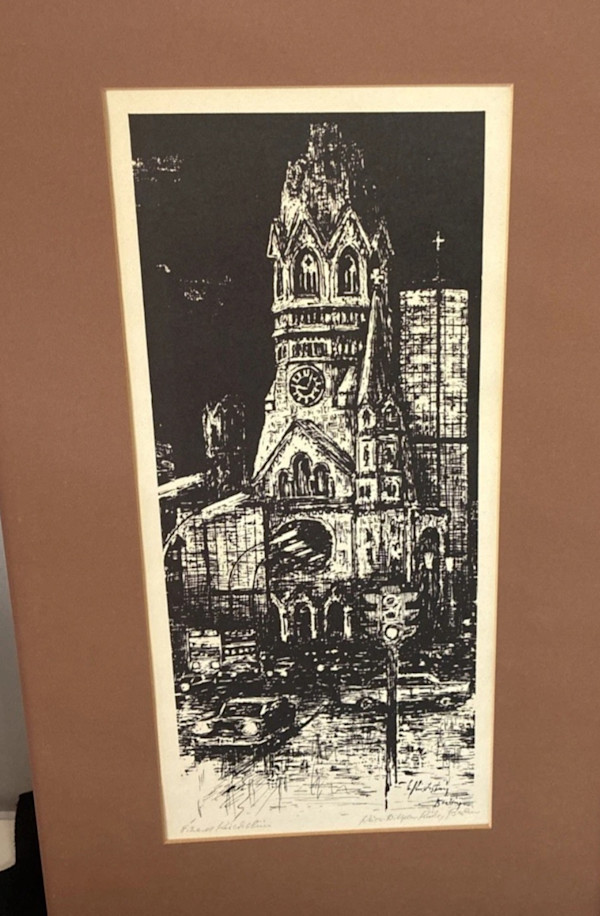
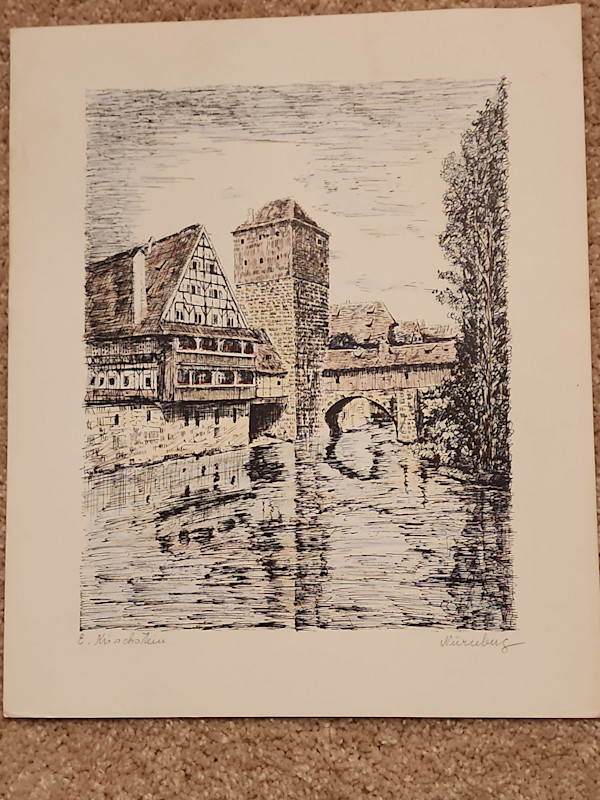
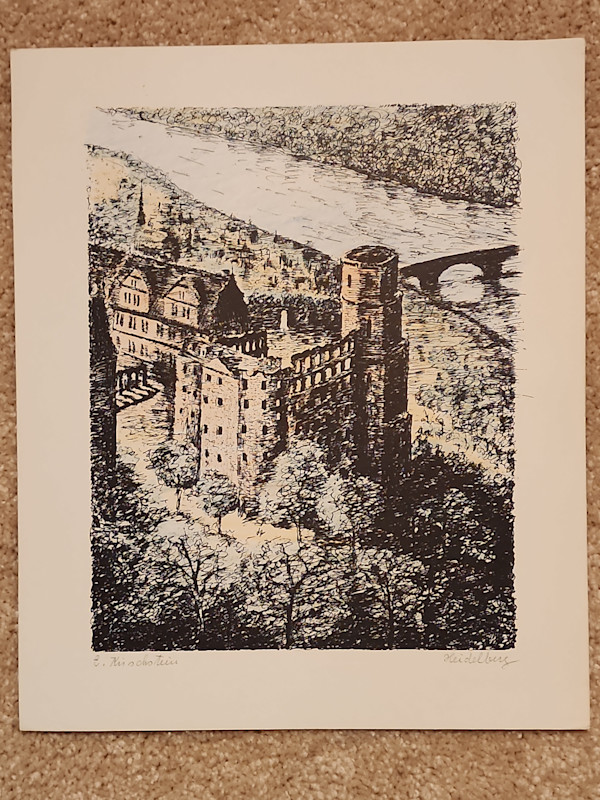
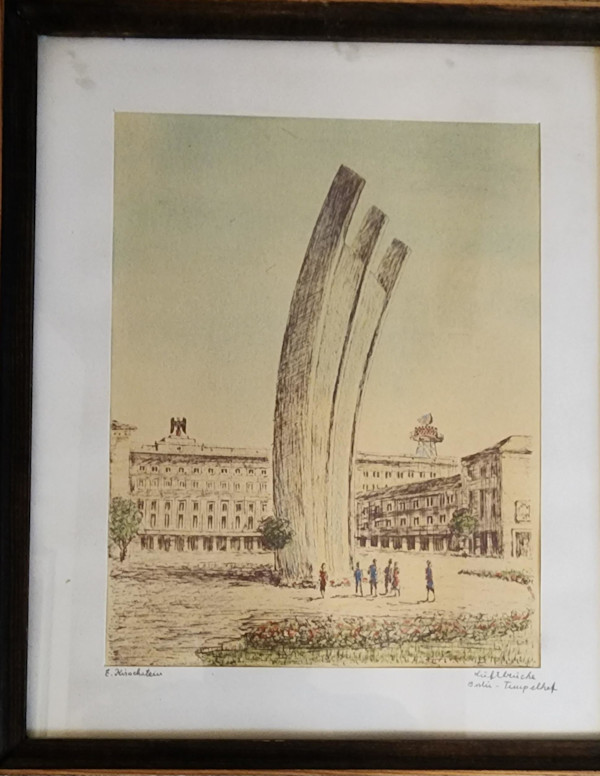
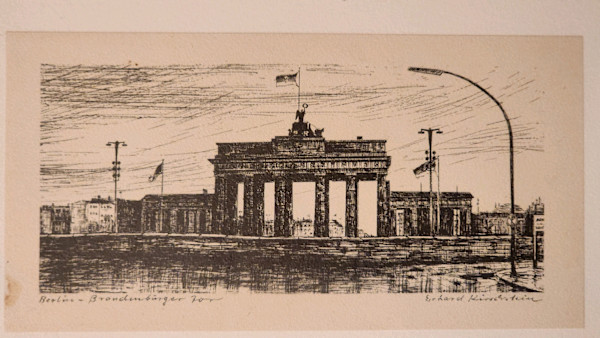
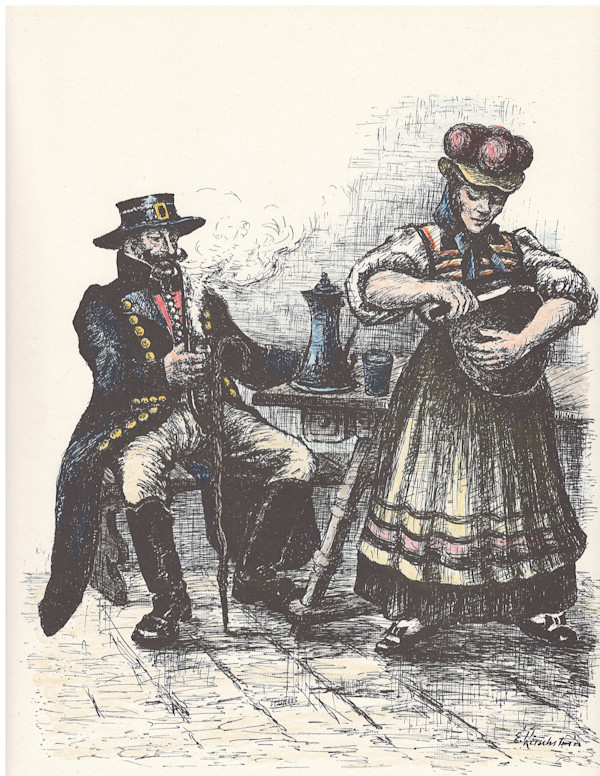
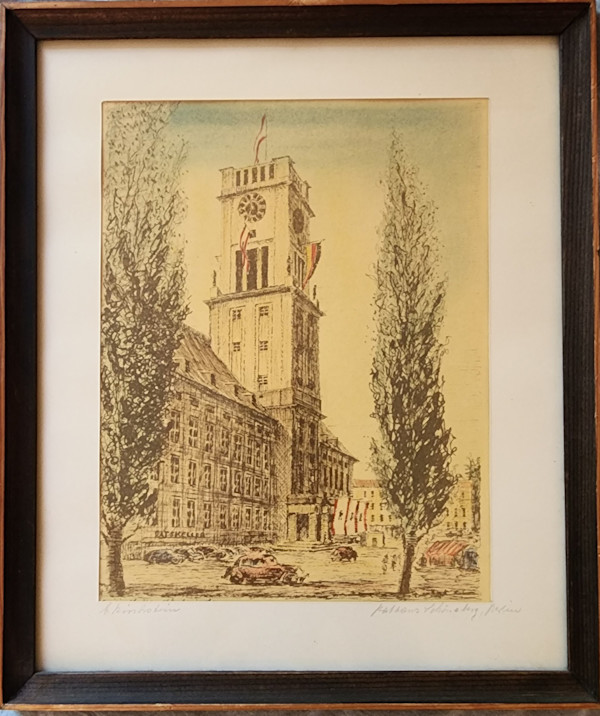
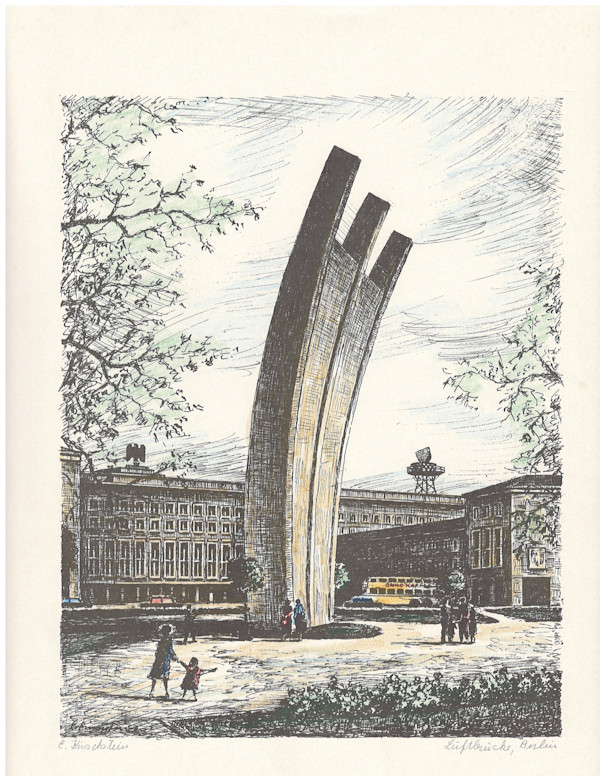
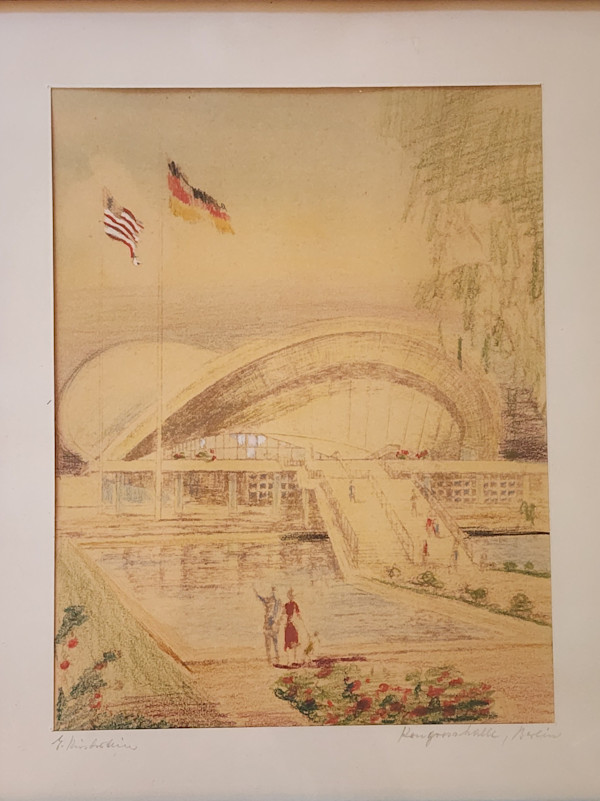
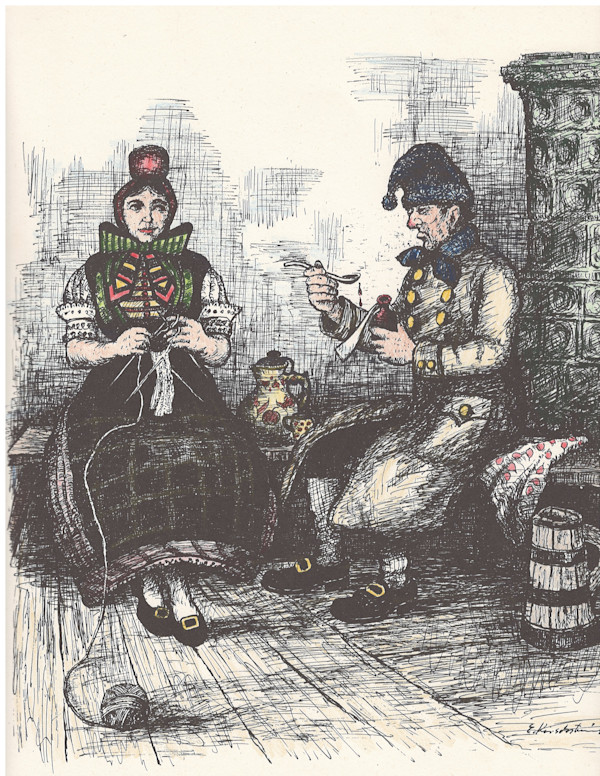
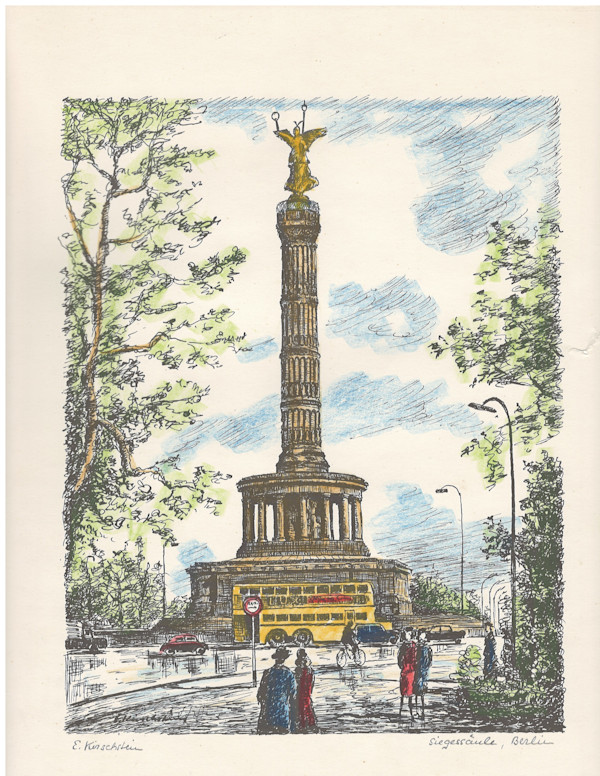
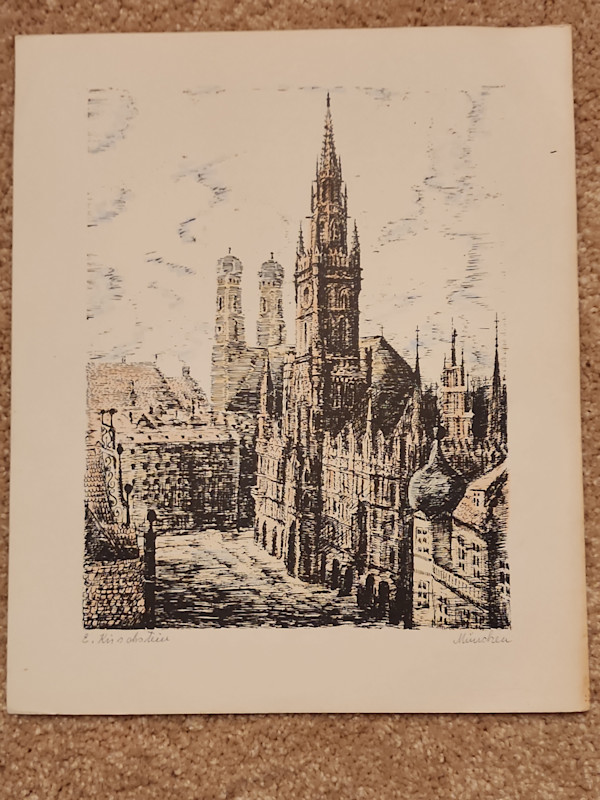
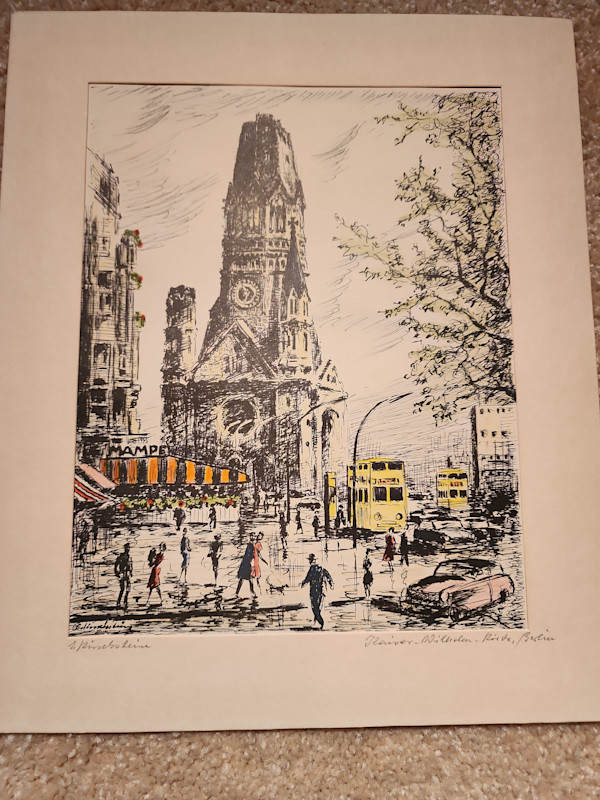
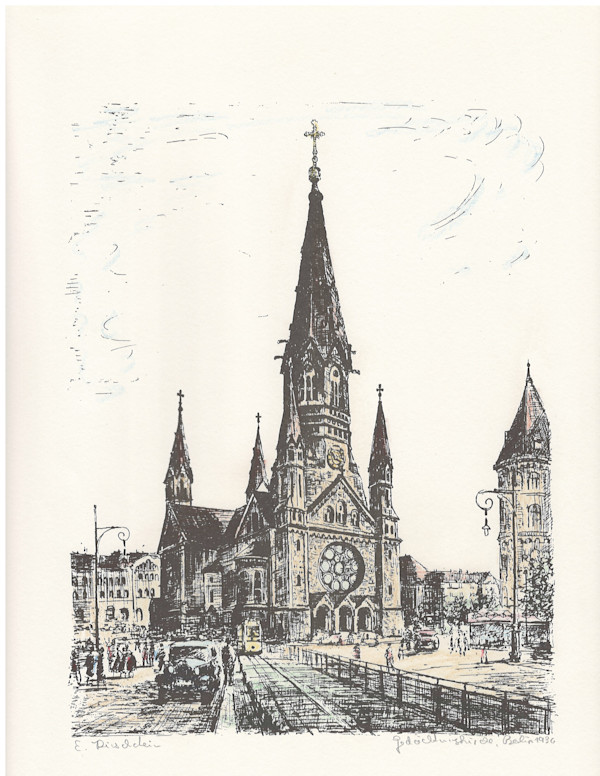
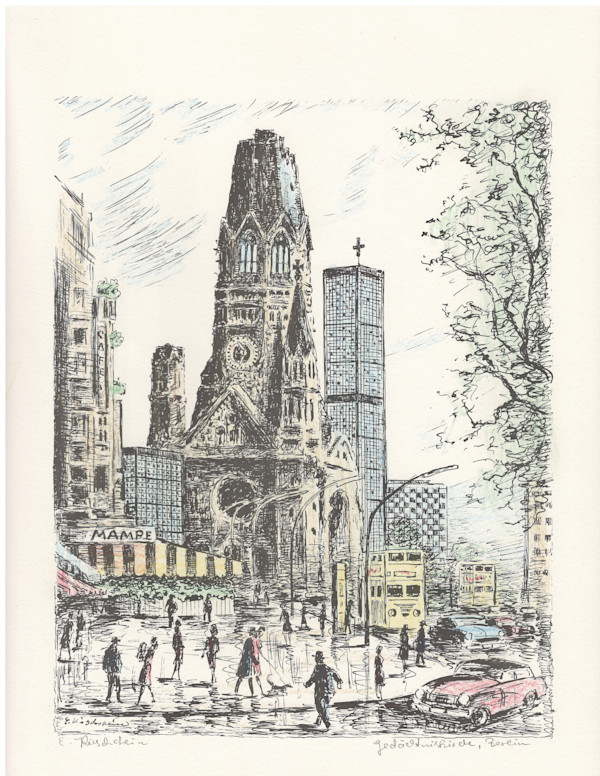
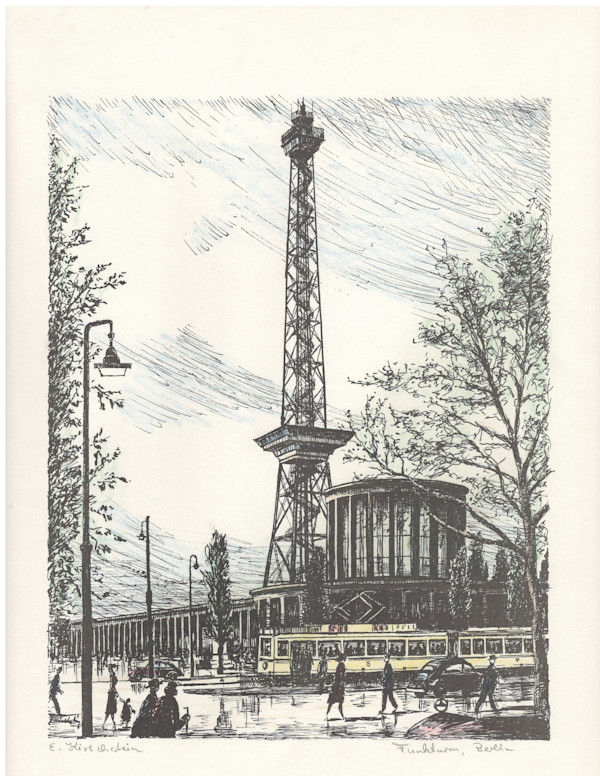
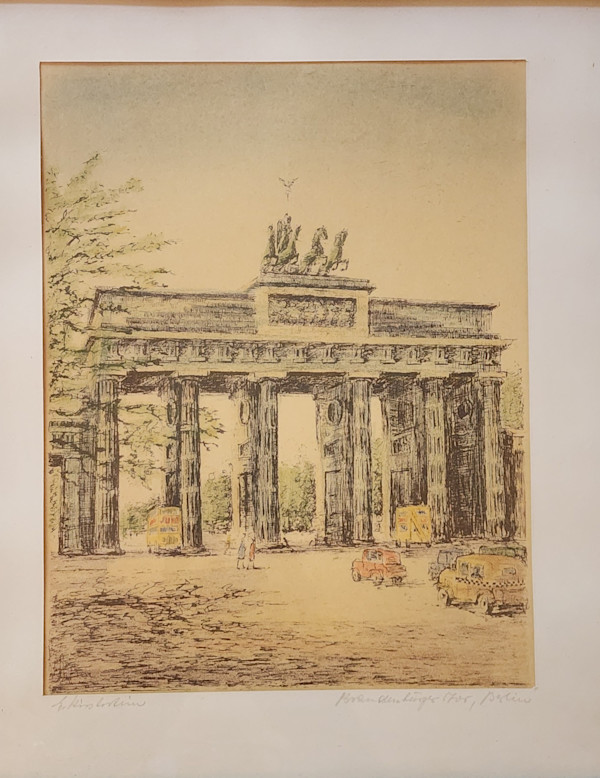
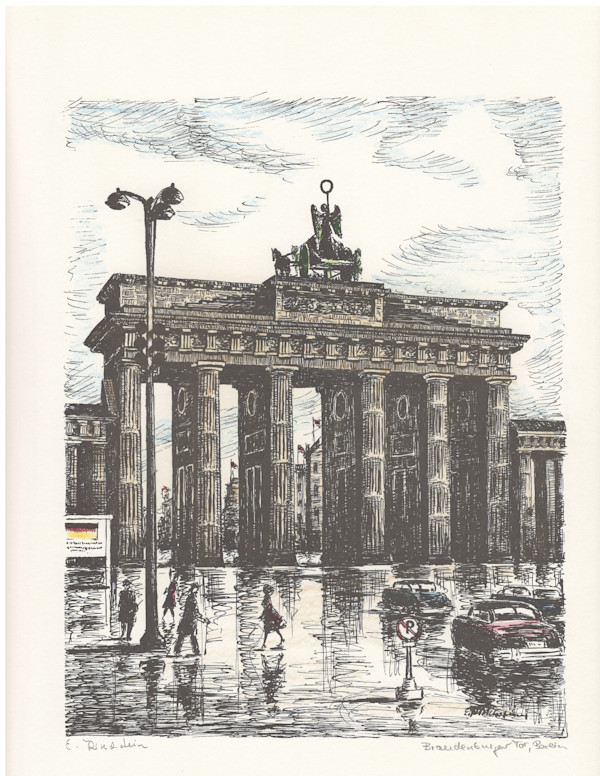
Kirschstein’s work is characterized by careful observation and a strong documentary impulse. His Berlin city views depict streets, buildings, signage, and architectural landmarks with notable topographic accuracy, anchoring the images in the lived reality of postwar urban Berlin rather than in nostalgic or idealized imagery. Alongside these works, he produced figurative and regional subjects, including a group of prints commonly known as the Deutsche Trachten series, depicting traditional German folk costumes identified by region.
His printed output encompasses multiple categories, ranging from hand-drawn lithographs conceived as autonomous works of art to commercially produced offset prints distributed for decorative or export purposes. Evidence suggests that some commercially circulated works bear mat or margin inscriptions added post-production, likely by assistants or by Charlotte Kirschstein herself, reflecting the practical realities of mid-century art distribution.
Although much of Kirschstein’s work survives in private collections, at least one painting has entered an institutional collection in the United States. His painting Summer Landscape with Country Building by Stream with Bridge was bequeathed by Estella Elizabeth Cooper Harris to the Phillips Museum of Art, at Franklin & Marshall College. Harris, a Pennsylvania-born educator who spent many years teaching in U.S. Department of Defense schools in Germany, represents a broader pattern of postwar transatlantic circulation through which Kirschstein’s work entered American collections.
Kirschstein’s life spanned some of the most tumultuous periods in Berlin’s modern history.
Born in 1920, he came of age during the Weimar Republic, reached early adulthood under National Socialism, and lived through the destruction of Berlin during the Second World War. His postwar career unfolded amid the material scarcity, political division, and social disruption that followed, particularly in the American sector of Berlin. Working as an artist under these conditions would have required considerable adaptability and resourcefulness. The practical diversity of his output—ranging from original lithographs and paintings to commercially distributed prints—suggests an artist navigating unstable markets and limited resources, balancing personal artistic aims with the economic necessity of producing work that could circulate and sell. His sustained productivity indicates a capacity for ingenuity and persistence in a city repeatedly reshaped by war, reconstruction, and Cold War division.
Erhard Kirschstein died on 6 November 1972 at 9:45 a.m. in a Neukölln hospital. His death was officially recorded with the Neukölln civil registry. He was buried on 9 November 1972 in Berlin-Lichtenrade in an Evangelical funeral service officiated by Pastor Röhrborn, with a sermon based on Romans 11:33 and 11:36. His grave lease later expired and the plot was subsequently reused, leaving no surviving grave. His wife Charlotte continued to live and work in Berlin for several decades after his death, developing a distinct artistic practice of her own.