LBCC Art Gallery
Long Beach , CA
LBCC Art Gallery showcases diverse exhibitions, student & faculty work, and programs that inspire and engage our community.
Message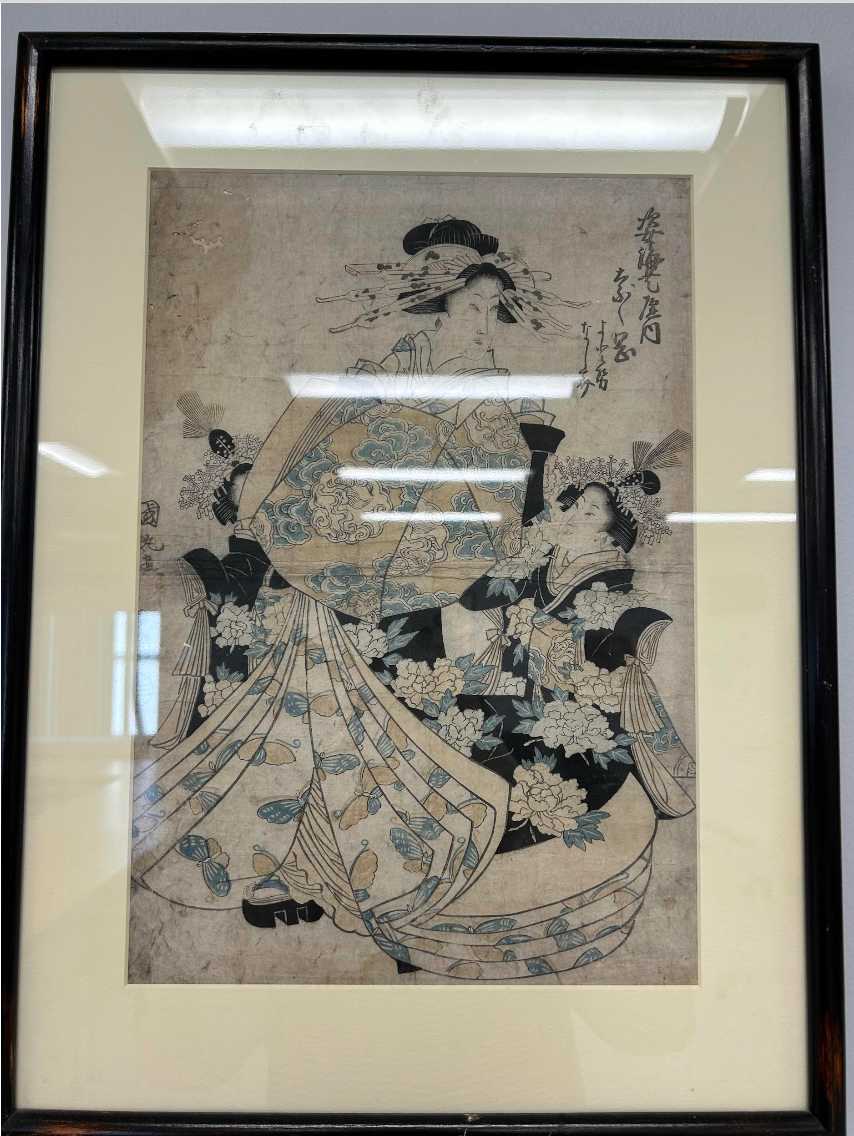
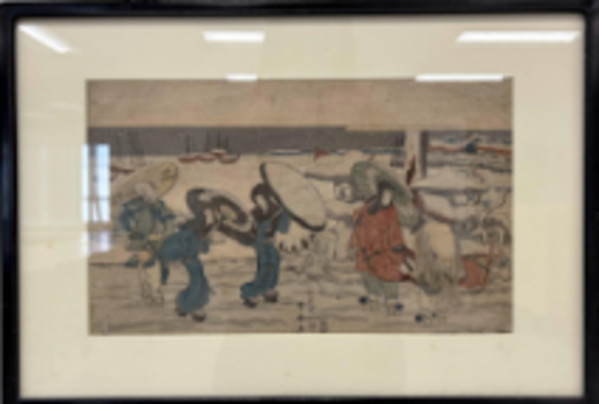
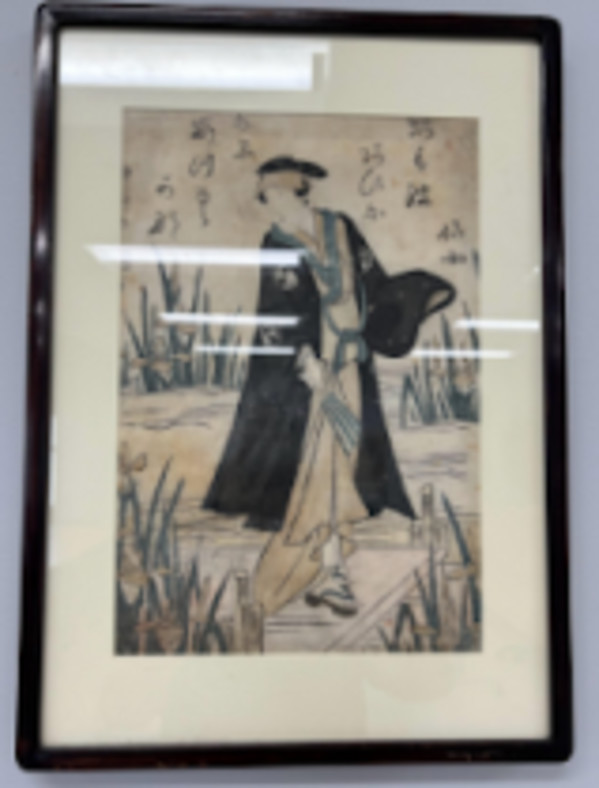
This ukiyo-e print depicts a courtesan, wearing a kimono decorated with clouds and butterflies, walking in platform sandals alongside two other women, who scatter flowers around her as she walks. The two women, while also sporting large hair ornaments and similarly-patterned sashes around their waists, are wearing less extravagant kimono than the central figure, indicating their status as servants or potential apprentices.
Developed during the Edo period (1615–1868), ukiyo-e (浮世絵) is a genre of Japanese art characterized by the depiction of everyday scenes that capture the concept of ukiyo (浮世), or “the floating world.” This idea of “floating” was meant to express impermanence and the fleeting, transitory nature of human life. It served as a descriptor for the hedonistic lifestyle and culture that developed around Yoshiwara, the pleasure district of the city of Edo (modern day Tokyo).
While ukiyo-e refers to both paintings and prints, it is more commonly associated with the latter medium due to the streamlined process of woodblock printing, allowing for the mass production and distribution of inexpensive, yet high quality prints. Visually, ukiyo-e is characterized by clean, sharp linework, and the depiction of contemporary subjects such as popular kabuki actors and beautiful courtesans, known as oiran (花魁).
Description written by Emiliana Dar Santos, 2026.
This work can be viewed in the World Language Lab in LAC M-327. For hours of operation please visit:
https://www.lbcc.edu/contact/world-language-lab-support