- TSUKIOKA YOSHITOSHI
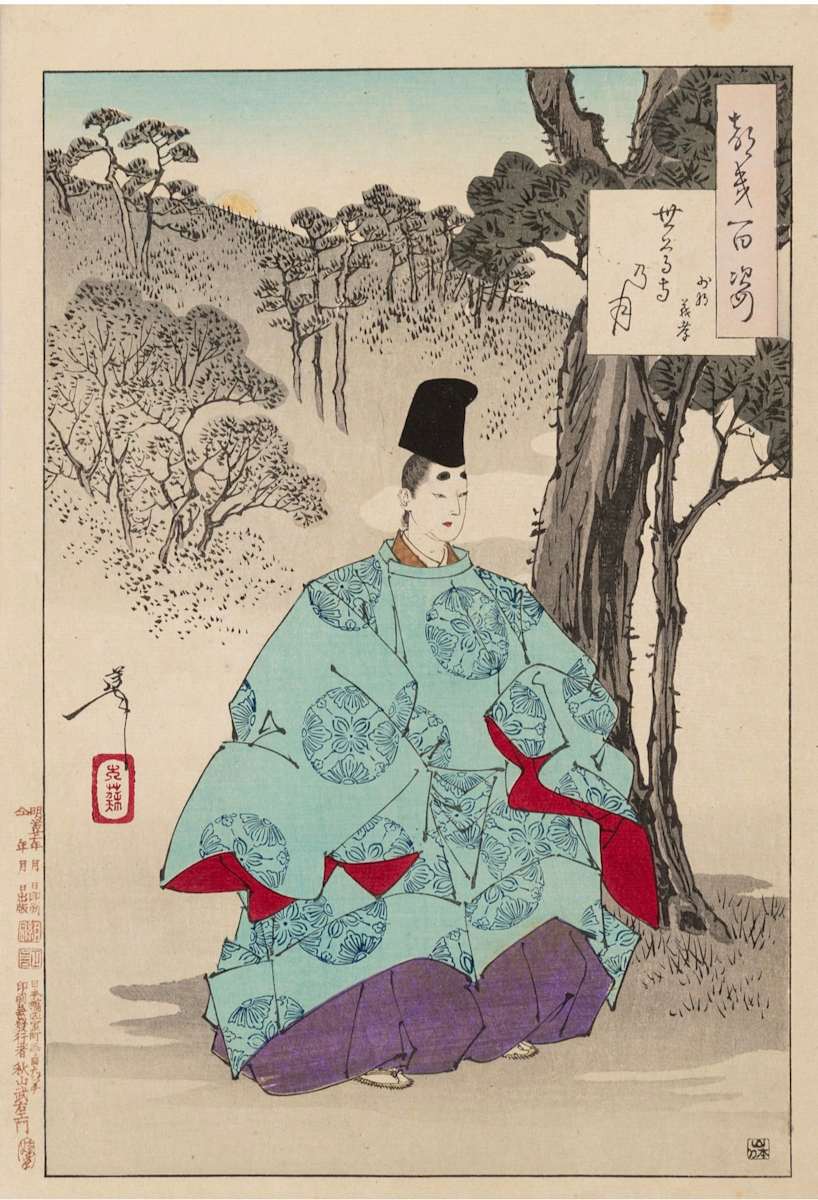
- SESON TEMPLE MOON, CAPTAIN YOSHITAKA, 1888
- Color woodblock print on paper
- Vertical Oban 36.2 x 24.8 cm
Japan, dated 1888
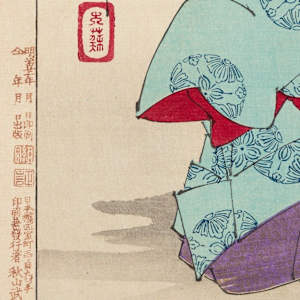
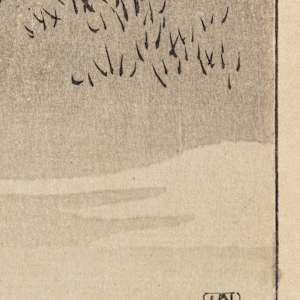
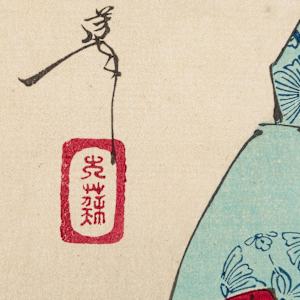
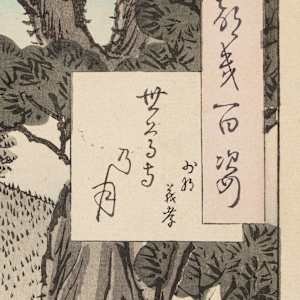
Color woodblock print on paper. Vertical oban. Signed Yoshitoshi with seal Taiso; publisher Akiyama Buemon. Title Sesonji no tsuki - Shosho Yoshitaka (Seson temple moon – Captain Yoshitaka), number 69 from the series Tsuki no hyakushi (One Hundred Aspects of the Moon).
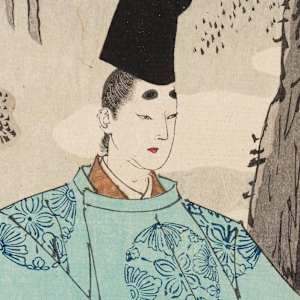
This composition depicts the shosho (minor captain in the imperial guard) and poet Fujiwara no Yoshitaka (951-974) at the Sesonji Temple grounds outside Kyoto. Dressed in courtly attire, he is shown here sitting deep in thought in an extensive garden on a moonlit night.
The Heian Period court poet, Yoshitaka, is included in the classic 13th century anthology Hyakunin Isshu (One Hundred Poems by One Hundred Poets). Yoshitaka gained recognition in court at the age of 12, showing great skill composing renga - poetry in which two people respond to one another in verse. His older brother Agechika was a poet as well. It became clear early in their lives that Yoshitaka was the more talented of the two, at which point he gave up poetry out of deference to his older sibling. Tragically, both brothers would die on the same evening in 974 during a smallpox epidemic.
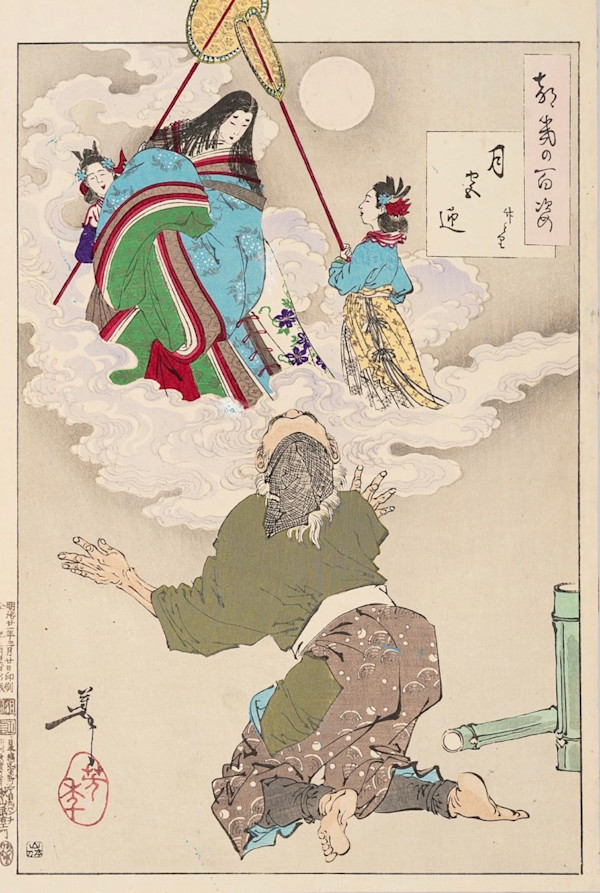
This print is part of Yoshitoshi's famous series One Hundred Aspects of the Moon, which consists of one hundred prints with the moon as a unifying motif and depicts scenes from traditional Chinese and Japanese history and lore. Prints from the series were released individually or in groups every few months, with the final image completed shortly before Yoshitoshi's death. The series proved tremendously popular, with patrons lining up to purchase the new releases as soon as they became available. Today, One Hundred Aspects of the Moon remains Yoshitoshi's most well-known work.
Tsukioka Yoshitoshi (1839-1892) was one of the leading woodblock print artists during the Meiji era (1868-1912) and one of the last to work in the traditional ukiyo-e manner. Born in Edo (today's Tokyo), he showed a strong interest in classical Japanese literature and history. When he was 11, he became a student at Kuniyoshi Utagawa's studio. Under his teacher's guidance, he showed exquisite draftsmanship skills and learned how to draw from life, something not necessarily part of the training schools of painting and illustration in Japan.
Museum comparison:
A closely related print, with similar seals, is in the Art Gallery of New South Wales, accession number 258.2012.69.
Provenance
24/07/2025 – Galerie Zacke
- Subject Matter: One Hundred Aspects of the Moon
- Collections: Meiji, Tsuki no hyakushi (One Hundred Aspects of the Moon)