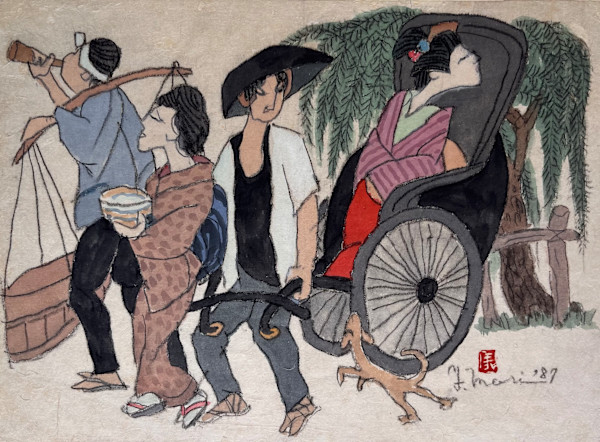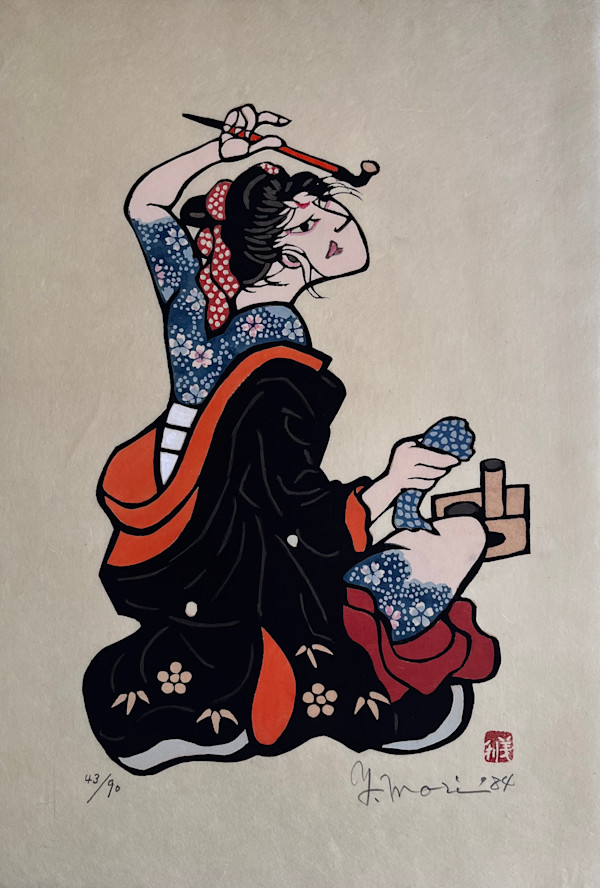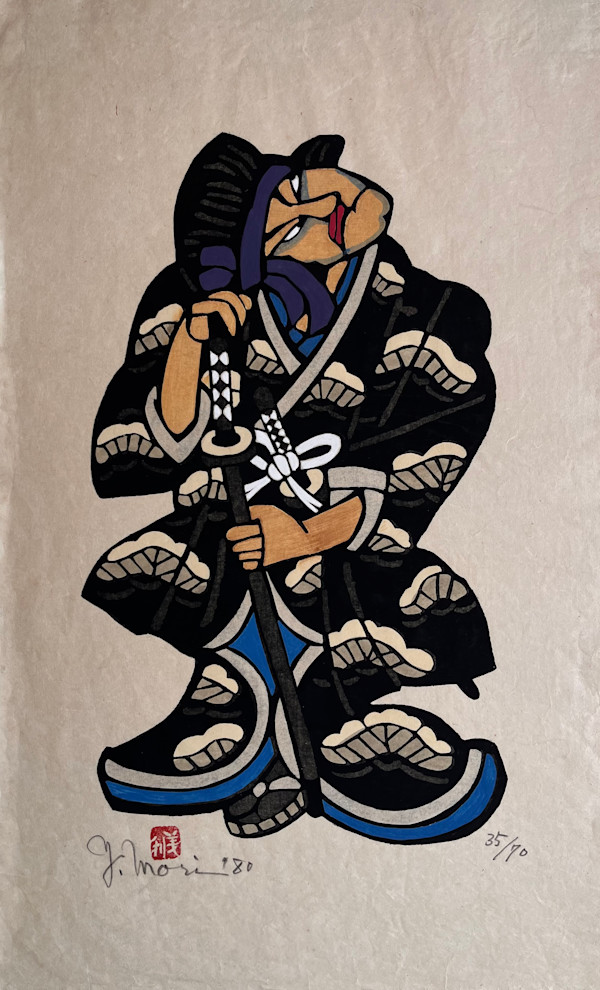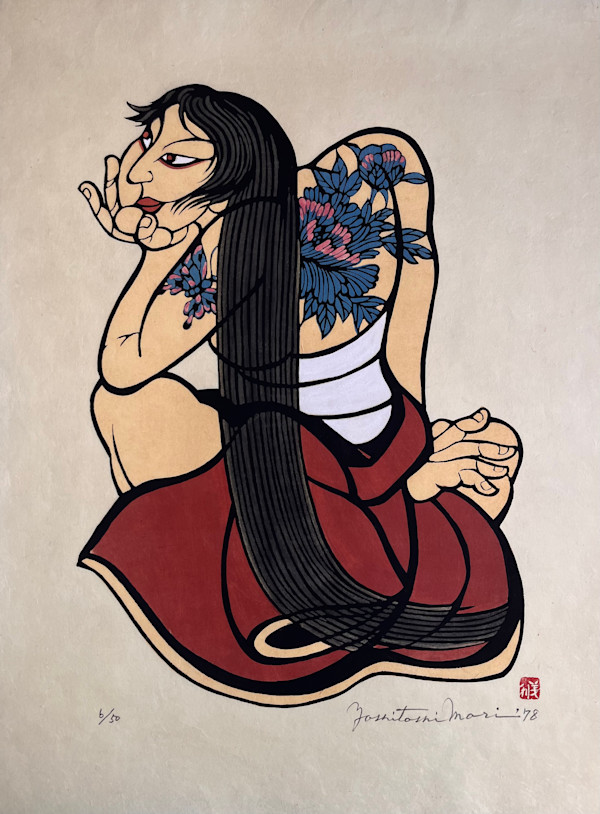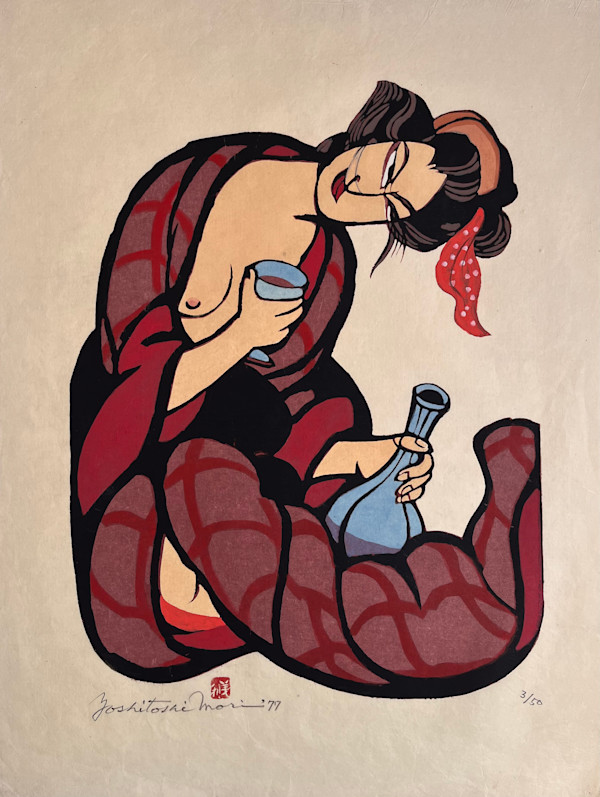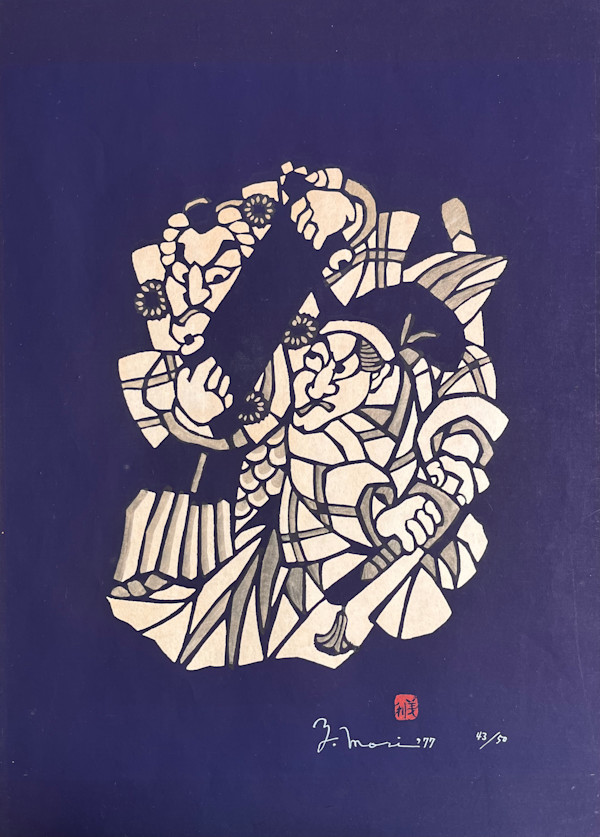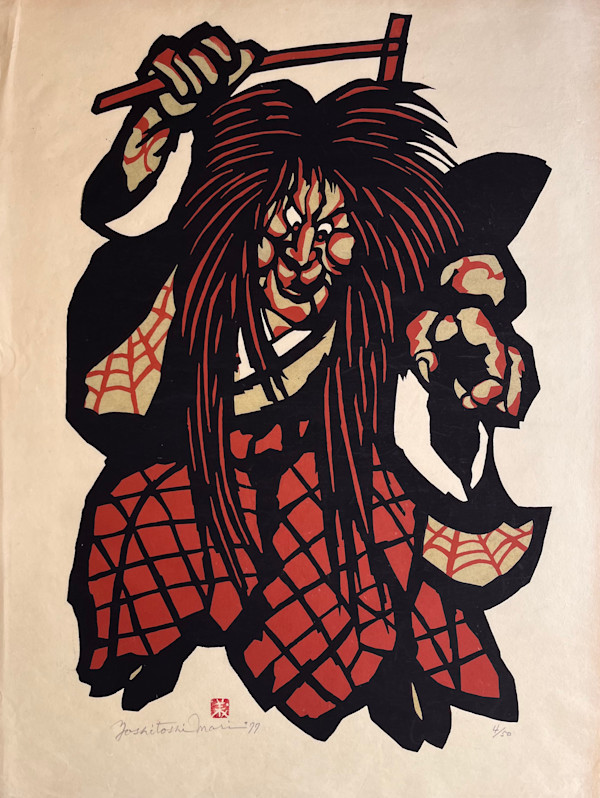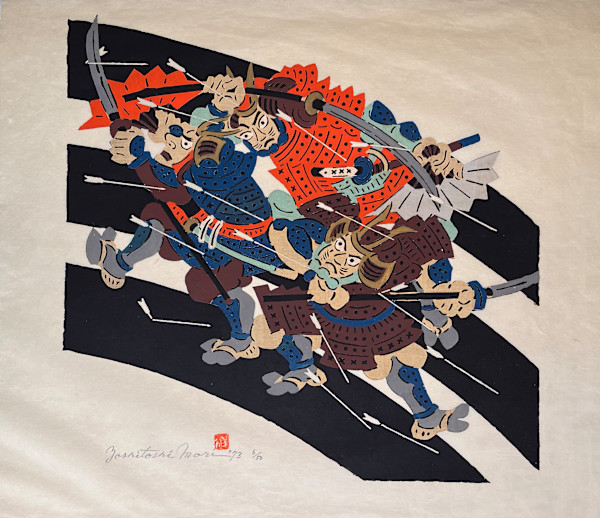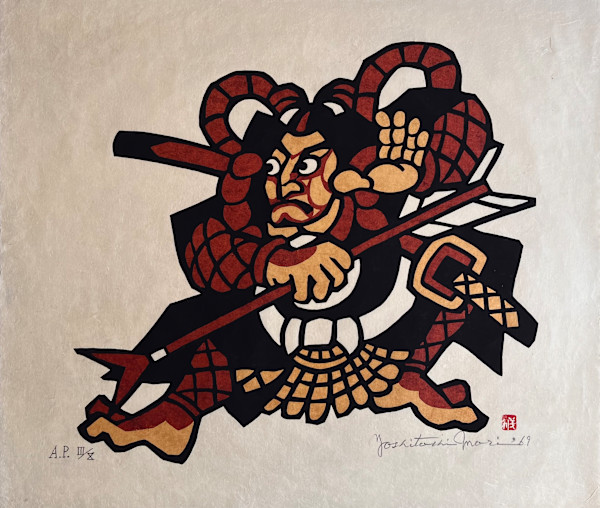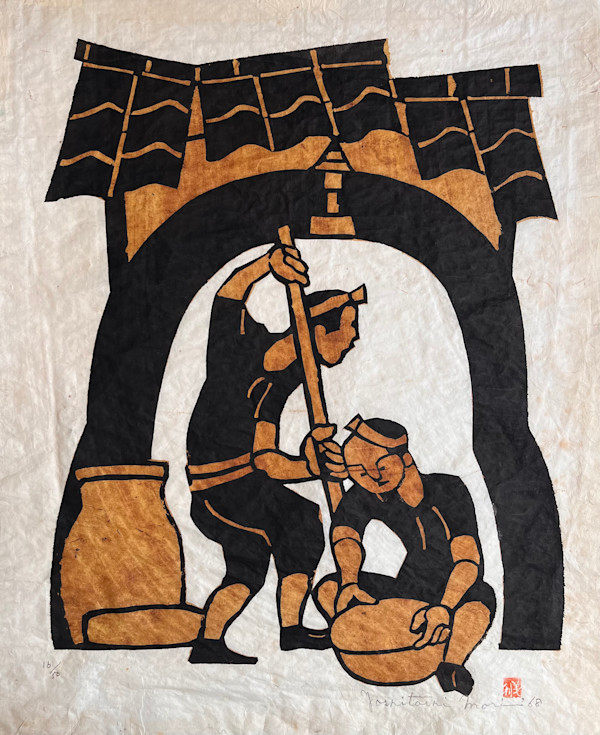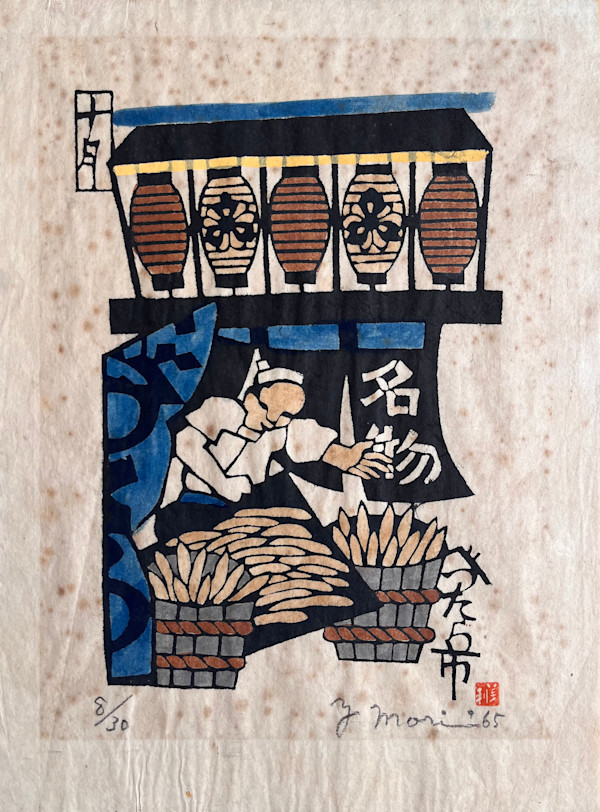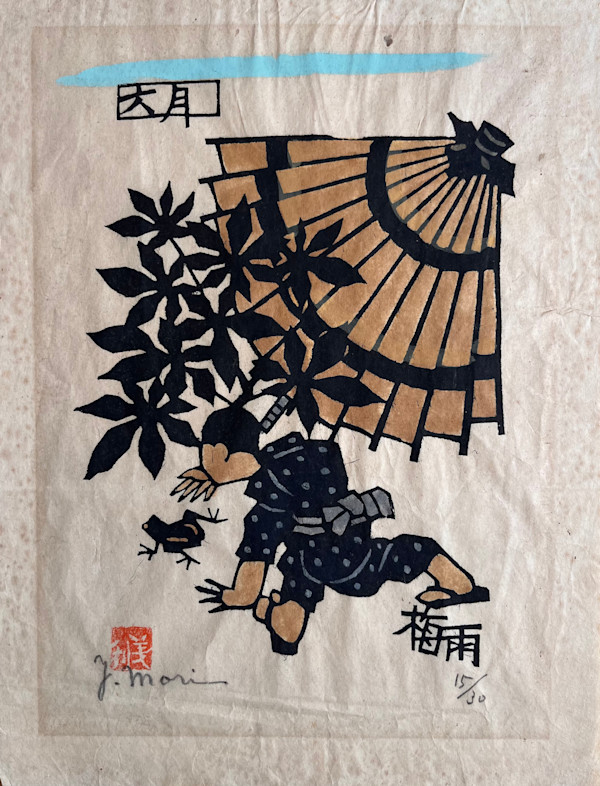
Yoshitoshi Mori (1898–1992) was one of the most important Japanese printmakers of the twentieth century and is widely regarded as the leading modern master of kappazuri (Japanese stencil printing). Trained as a textile designer and deeply influenced by the Mingei folk-art movement, he developed a distinctive artistic language that combined traditional craftsmanship with modern graphic design.
Mori began his career in textile dyeing and stencil work before turning to printmaking in the 1950s. Working within the spirit of the Sōsaku Hanga (“creative print”) movement, he produced highly original stencil prints characterized by bold compositions, strong silhouettes, rich colors, and dynamic figures. His subjects include Kabuki theatre, Japanese folklore, Buddhist legends, historical heroes, festivals, and scenes of everyday life.
A major ambassador of Japanese printmaking abroad, Mori exhibited extensively throughout Japan and participated in more than thirty international exhibitions between the late 1950s and the 1970s. In 1966 he toured the United States with a traveling exhibition sponsored by the Japan Society of New York, helping to introduce modern Japanese stencil prints to Western audiences.
His achievements were formally recognized through several distinctions. In 1984, he received an Honorary Doctorate from the University of Maryland, and in 1991 he was honored by the Tokyo Metropolitan Government for his contribution to Japanese art and culture.
Today, Mori's works are held in major international collections, including the British Museum, the Metropolitan Museum of Art, the Seattle Art Museum, the Brooklyn Museum, the Museum of Modern Art, and many other institutions worldwide.
Today, Yoshitoshi Mori is regarded as the foremost twentieth-century practitioner of kappazuri and one of the key figures in the revival of traditional Japanese stencil printing.
Among modern Japanese printmakers, Mori occupies for kappazuri the same position that Hasui holds for shin-hanga landscape prints.