
James de Villiers
Johannesburg, South Africa
My art is a meditation on nature and an investigation of the forces that lie behind outward appearances
Message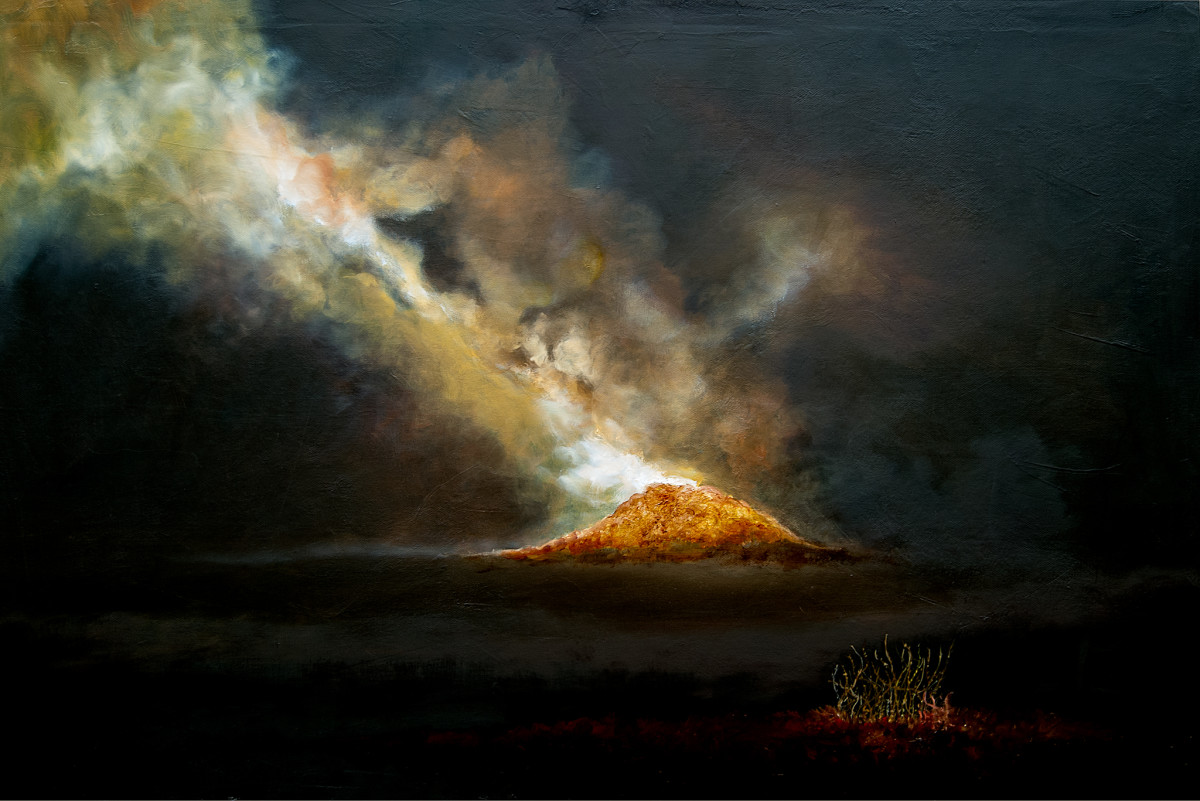
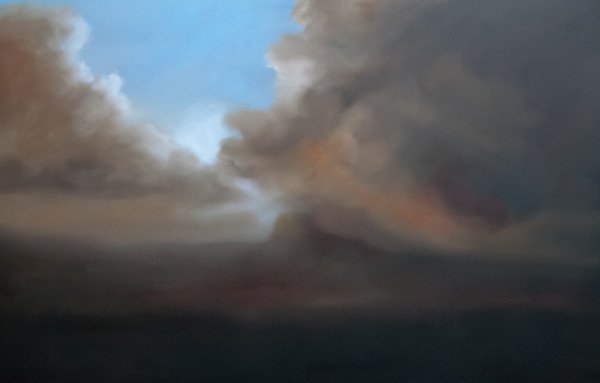
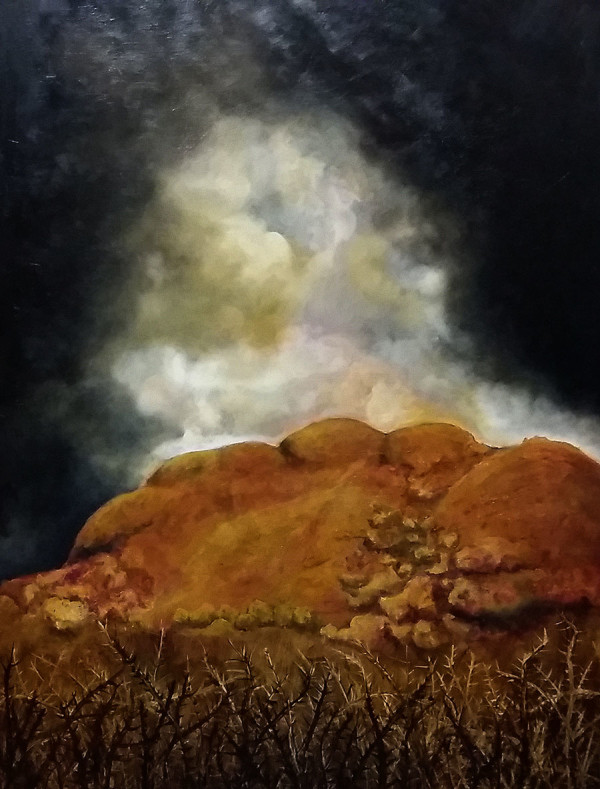
The oil painting "Marikana 2" presents a dramatic and emotionally charged landscape, engaging with themes of memory, destruction, and historical significance. Below is an in-depth analysis of its elements:
Composition & Subject Matter
The focal point of the painting is a small mound or hill, which is illuminated by a striking diagonal beam of light or smoke.
The landscape is vast and dark, evoking a sense of emptiness and desolation.
The dramatic cloud formations suggest movement, possibly indicating an explosion, fire, or a significant disturbance.
A small patch of vegetation in the foreground provides contrast, hinting at resilience or remnants of life amid destruction.
Color & Lighting
The dominant dark tones create an ominous, oppressive mood, reinforcing a theme of mourning or tragedy.
The golden hues on the mound and light source contrast sharply with the darkness, suggesting hope, revelation, or divine intervention.
The glowing effect within the clouds adds a sense of mystery and grandeur, drawing attention to the central area of the composition.
Style & Technique
The painting blends romanticism, atmospheric realism, and contemporary political art.
The loose, expressive brushwork in the clouds contrasts with the textural richness of the mound, adding to the dynamic energy of the composition.
The use of chiaroscuro (strong contrast between light and dark) creates an almost theatrical effect, reminiscent of Baroque drama.
Symbolism & Interpretation
The title "Marikana 2" refers to the Marikana Massacre (2012) in South Africa, where striking miners were killed by police.
The mound could represent the mining landscape itself, a mass grave, or a symbol of exploitation and struggle.
The beam of light or smoke rising from the mound may symbolize:
A spiritual or divine presence, mourning the lost lives.
The lingering impact of the event, as if history itself refuses to settle.
An explosion or aftermath, marking a moment of irreversible change.
The small vegetation patch in the foreground could signify life continuing despite destruction, a symbol of hope or endurance.
Art Historical & Political Context
The work resonates with social realism, akin to Francisco Goya’s "Disasters of War" series, which documented human suffering through expressive, dark imagery.
It also recalls J.M.W. Turner's dramatic use of light and atmosphere, particularly in works dealing with natural and man-made disasters.
In a contemporary South African context, the painting serves as a political commentary on labor struggles, violence, and historical trauma.
Conclusion
"Marikana 2" is a haunting and powerful work, using landscape as a metaphor for historical violence. The dramatic interplay of light and dark, the ambiguous yet potent symbolism, and the emotional weight of the event it references make it a compelling visual statement on memory, loss, and resilience.
- Subject Matter: Landscape
- Collections: Artwork for sale, Realist Art