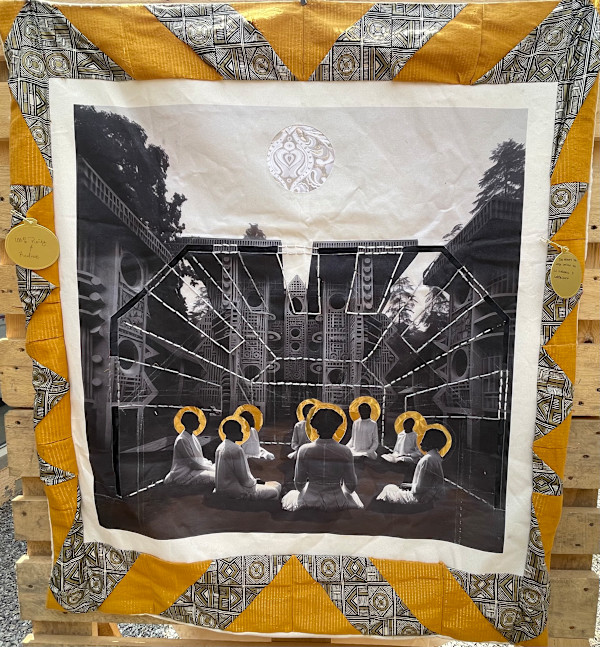
Ebe Mgbanwe: Sacred Spaces of Transformation by Ifeoma Ebo  Image: In Igbo cosmology, transformation occurs within sacred enclosures called ebe mgbanwe—protective spaces where the soul undergoes ritual renewal. This quilted vision depicts the ancient practice of ime ogwu (entering the medicine space), where community members retreat into woven sanctuaries to emerge spiritually reborn. The twin cocoon structures mirror the obi (sacred dwellings) found in traditional Igbo compounds, spaces where healing and wisdom-gathering take place.
The great osisi (sacred tree) at the center represents Iroko, the mighty tree spirit that serves as a meeting point between earthly and ancestral realms. Its spreading branches create a canopy of protection, while the golden light filtering through speaks to Anyanwu (the sun deity) blessing the transformation ritual. In Igbo tradition, certain trees house the spirits of the ndichie, making them natural sites for communal healing and renewal.
The crocheted border in deep forest greens and earth browns honors the colors of omenala—the traditional practices that connect us to the land. The white inner border represents nzu (sacred chalk), used in Igbo ceremonies to mark spiritual boundaries and invoke ancestral protection. These textile choices transform the quilt into a portable shrine, carrying the essence of sacred groves wherever it travels.
The figures within the cocoon spaces embody the Igbo understanding of mgbanwe (change) as a communal process. Their golden ichi markings identify them as those who have undergone spiritual initiation, while their gathering within the protective structures reflects the belief that true transformation requires both individual commitment and community support. Here, beneath Iroko's watchful presence, the cycles of death and rebirth continue as they have for generations.
In Igbo cosmology, transformation occurs within sacred enclosures called ebe mgbanwe—protective spaces where the soul undergoes ritual renewal. This quilted vision depicts the ancient practice of ime ogwu (entering the medicine space), where community members retreat into woven sanctuaries to emerge spiritually reborn. The twin cocoon structures mirror the obi (sacred dwellings) found in traditional Igbo compounds, spaces where healing and wisdom-gathering take place. The great osisi (sacred tree) at the center represents Iroko, the mighty tree spirit that serves as a meeting point between earthly and ancestral realms. Its spreading branches create a canopy of protection, while the golden light filtering through speaks to Anyanwu (the sun deity) blessing the transformation ritual. In Igbo tradition, certain trees house the spirits of the ndichie, making them natural sites for communal healing and renewal. The crocheted border in deep forest greens and earth browns honors the colors of omenala—the traditional practices that connect us to the land. The white inner border represents nzu (sacred chalk), used in Igbo ceremonies to mark spiritual boundaries and invoke ancestral protection. These textile choices transform the quilt into a portable shrine, carrying the essence of sacred groves wherever it travels. The figures within the cocoon spaces embody the Igbo understanding of mgbanwe (change) as a communal process. Their golden ichi markings identify them as those who have undergone spiritual initiation, while their gathering within the protective structures reflects the belief that true transformation requires both individual commitment and community support. Here, beneath Iroko's watchful presence, the cycles of death and rebirth continue as they have for generations.

Audio

  • Ifeoma Ebo
  • Ebe Mgbanwe: Sacred Spaces of Transformation
  • Crocheted bordered A.I. images on canvas, fabric (jubilee), red Nigerian earth mixed with water
  • 48 x 42 in (121.92 x 106.68 cm)
  • $2,800
  • Available