
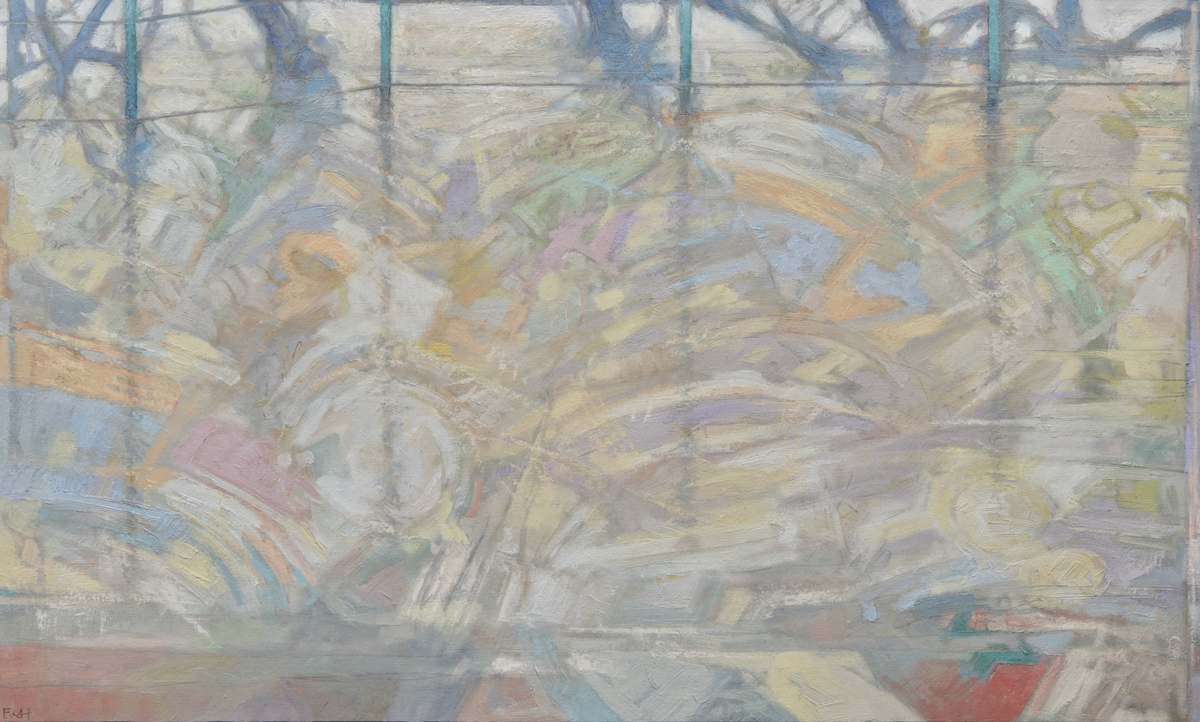
This painting from Fredric Hope's Oak Shadows Series masterfully juxtaposes the natural and built environment, with thin metal fencing and slender oak tree trunks creating a structured geometric framework along the upper edge of the composition. These architectural and natural linear elements are rendered in cool, steely blues and grays, establishing a rhythmic pattern that contrasts with the organic forms below.
The main body of the painting captures the ephemeral quality of light filtering through the oak canopy above. Hope's interpretation of these shadow patterns becomes almost musical in nature, with sweeping brushstrokes creating a symphony of interwoven shapes and forms. The palette is subtle yet complex - incorporating misty greens, ethereal blues, soft yellows, and touches of lavender - all unified by an overall silvery-gray tonality that speaks to the fleeting nature of these light effects.
The artist's gestural brushwork suggests both movement and stillness simultaneously. The paint application varies in opacity, with some areas appearing more transparent while others have a greater sense of density and presence. This layering technique creates a sophisticated depth within the composition, allowing the eye to move through different planes of space.
The painting's elongated format (12 x 20 inches) reinforces the horizontal flow of the shadow patterns, while also echoing the linear quality of the fence structure above. There's a beautiful tension between the rigid, manufactured elements and the fluid, organic nature of the light patterns - perhaps commenting on the ongoing dialogue between human intervention and natural processes in our environment.
Small touches of warmer hues - peach, coral, and subtle orange tones - emerge in the lower portion of the canvas, providing gentle counterpoints to the predominantly cool palette and adding to the painting's atmospheric quality. These moments of warmth might suggest the way sunlight sometimes breaks through more directly, creating points of greater intensity within the overall pattern.
Hope's sensitive handling of this subject matter transforms what might be considered an ordinary natural occurrence into something contemplative and profound, inviting viewers to consider the beauty in these everyday interactions between light, shadow, and the constructed environment.