

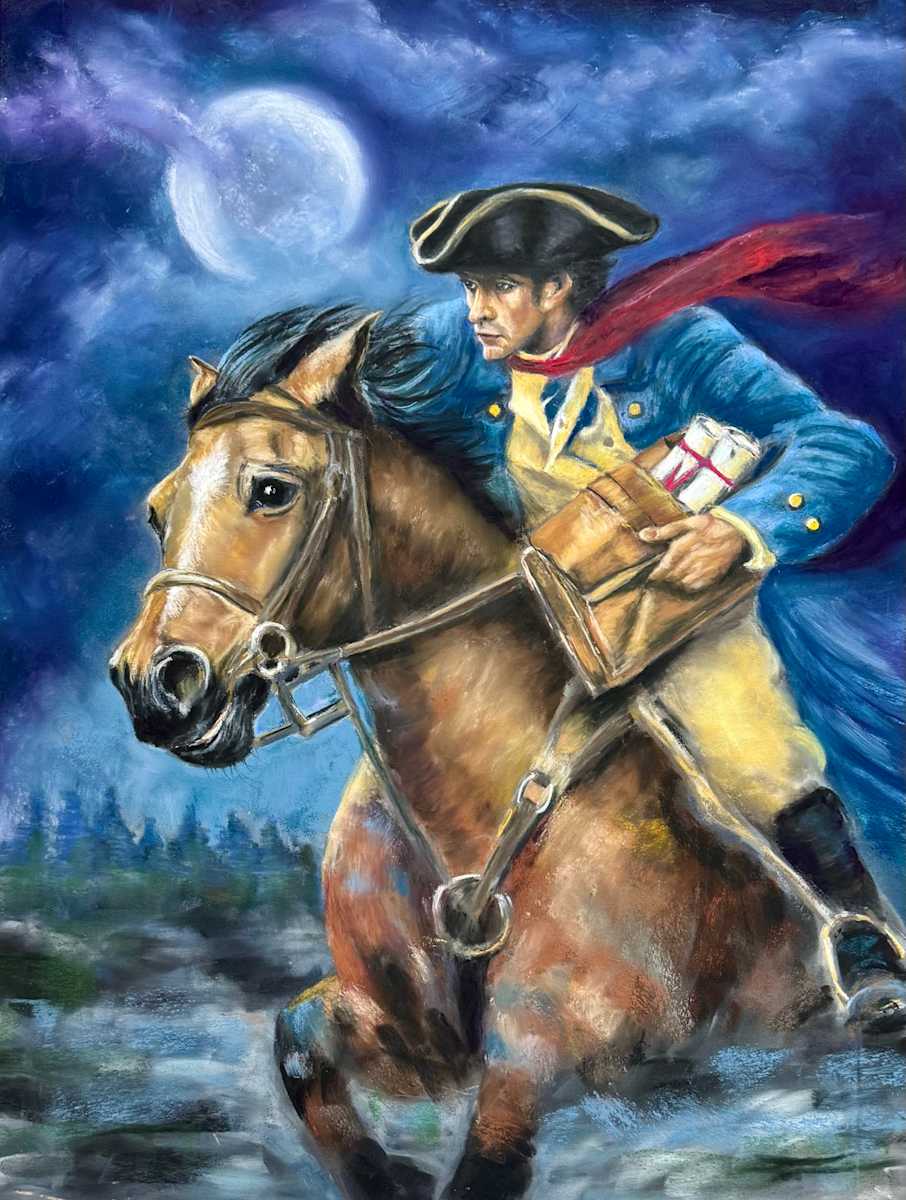
National First Place Winner in Pastel Category
DAR American Heritage 2026
By Dr. Jane D. Steelman
2026 Theme: “ The Road to Independence - Acts of Rebellion and Treason”
Title: “Riding for Freedom”
Prints Available
Paul Revere is remembered as a patriotic hero, represented by a single midnight ride. But this familiar image obscures a less-appealing historical reality. Paul Revere, according to the legal standard of his era, was not simply a dissident — he was a criminal conspirator and traitor to the British Crown. Viewing Revere in this light reveals a central reality of the American Revolution: It was not lawful protest that began the movement, but strategic acts of treason that led to its success.
The American colonies in the 18th century were lawful possessions of the British Empire. Dissent against Parliament was illegal, and British treason laws criminalized acts to undermine royal authority and also to encourage rebellion. Even before April 1775, Revere served as an underground courier between Patriot networks by secretly sending messages between Revolutionary leaders, and gathering information about British troop movements and impending arrests. These actions were deliberate, clandestine and illegal. If convicted and apprehended, Revere might be executed; a risk he was willing to take. Revere was more than a courier but also a member of the Sons of Liberty who used secrecy, propaganda and coordinated defiance. Revere did not seek to reform the British system from within; he was aiming to undermine it. His intelligence work led directly to militia mobilization and armed confrontation, sparking the violence at Lexington and Concord. From the standpoint of the British, these were acts of rebellion that were indistinguishable from treason.
Revere's metamorphosis from traitor to hero reveals how legitimacy is so often granted only after the victory in battle. If the Revolution had lost, Revere probably would have ended up as a criminal footnote. Because it worked, his and other’s crimes were repackaged as patriotism. He did not seek reform and transparency, but rather the overthrow of the existing system.
To declare Paul Revere a traitor according to British law does not reduce his significance, but underlines it. Revolutions are intrinsically illegal. They require individuals willing to defy authority, break laws, and accept the possibility of punishment or death. The American Revolution was no different. Paul Revere was a traitor to the British Empire who helped forge a new nation. His story is a lesson to us all: liberty wasn’t acquired from obedience to orders — freedom was achieved through successful treason, and the distinction between criminal and hero is the result of history and not legal authority.
The purpose of this painting is to not only represent Paul Revere and his rebellious acts; but the many acts of treason performed by brave patriots that would later be known as heroism and led to the birth of our nation.
This painting is an 18”X24” pastel done using soft pastels on dark gray Pastelbord. I begin with a sketch of what I want to paint based on research and review of many historical images in order to create a unique representation of my idea. I then block in the darks using pastels. Once that is done, I use the soft pastels (various brands) to add the appropriate colors and blend them. Final details are done using pastel pencils.
- Subject Matter: Historical
- Collections: Pastel Paintings, Prints