
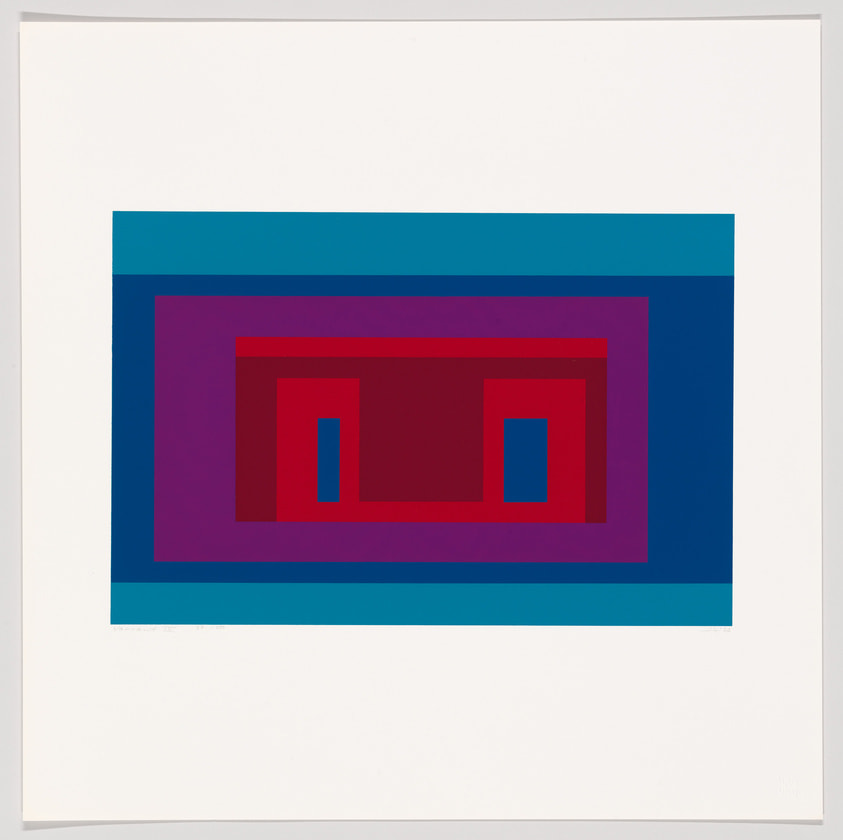
JOSEF ALBERS (1888-1976)
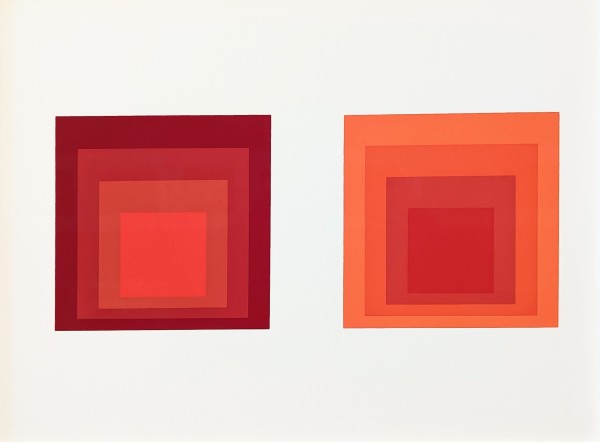
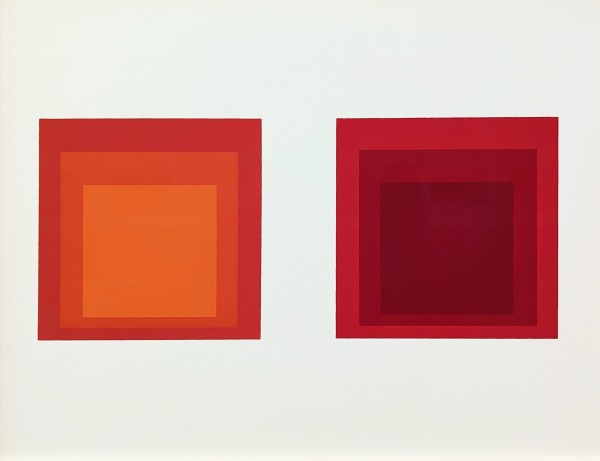
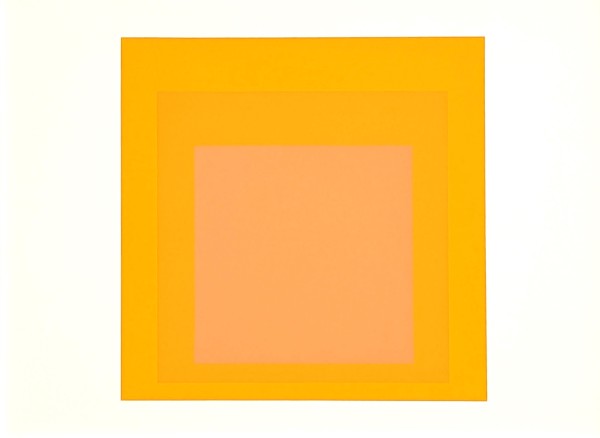
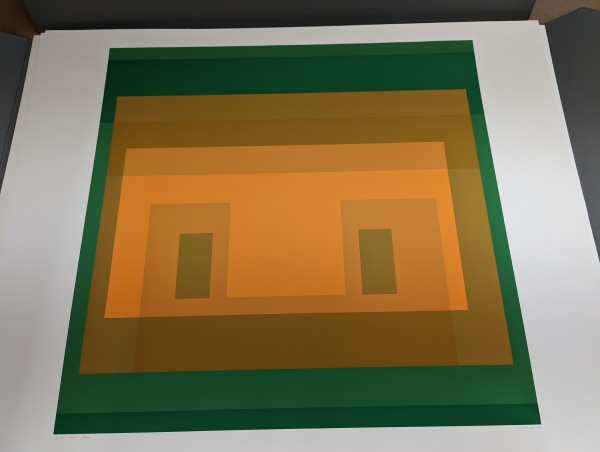
Ten Variants
the complete set of ten screenprints in colors, on Rives paper, 1967, each signed, titled and dated in pencil, number 28 of 200, published by Ives-Sillman, Inc., New Haven, Connecticut, with their blindstamps, each with full margins, in very good condition, loose (as issued), with the title, text, and justification pages, original paper folders, linen portfolio case and black slipcase
Overall: 17x 17 in
The exhibition “Paintings Titled Variants” focuses on Josef Albers’s breakthrough “Variant/Adobe” series, a body of work that was inspired, in part, by the art, architecture, and landscapes that Albers observed during his numerous visits to Mexico and the American Southwest. Like his “Homage to the Square”, the “Variant/Adobe” works follow a serialised format within which Albers experimented with endless chromatic combinations and perceptual effects. Begun in 1947, while Albers was still a teacher at Black Mountain College in North Carolina, the “Variant/Adobe” series initiated a new phase in his work. Titled after the first exhibition of the “Variant/Adobe” paintings at Sidney Janis Gallery, New York, in 1949, The exhibition features a range of works from this series, including compositions on Masonite as well as on blotting paper. With their vivid colour palettes, the paintings reflect Albers’s keen and studied sensitivity to and interest in opticality, as well as the way in which the relationship between different colors dramatically impacts the appearance and experience of the work. Elaborating on these visual qualities. One of Albers’s names for these works, “Adobe”, reinforces their architectural quality and may refer to the ”clay house” in La Luz, New Mexico, in which he began making these works. The name also reflects the influence of pre-Columbian art and architecture on the series, which resembles a schematic rendering of a vernacular southern Mexican adobe dwelling. Several of Albers’s photocollages from his trips to Mexico are also on view and further attest to this connection. An important, yet largely unrecognised facet of his work, the photocollages, which often present typologies of architectural forms or decorative patterns, visualise Albers’s thinking and illuminate how his travels and study influenced his painterly practise. Highlighting the significance of these works, curator Lauren Hinkson writes, “Albers’s photography offers a kind of Rosetta stone for interpreting how his overall body of work bridges the temporal divide between ancient forms and modernist abstraction. The chain of formal correspondence linking the photographs of pre-Columbian ruins to Albers’s paintings and prints looks self-evident, almost obvious.”3 Albers’s connection to Mexico and Mesoamerican art and architecture was the subject of Josef Albers in Mexico, a major 2017–2018 exhibition at the Solomon R. Guggenheim Museum, New York, that subsequently travelled to the Peggy Guggenheim Collection, Venice.
- Subject Matter: Graphic Abstract
Other Work From Da Silva Gallery / GALLERyLABS