
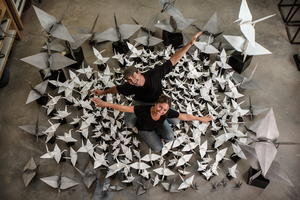






Limited Edition of 3
Price Available on Request
Up to One Year to Produce
The lifecycle of a butterfly tells a complex story of transformation. In it we can see how a caterpillar, capable of destroying one plant with an enormous appetite, can change into a beautiful butterfly that helps pollinate many plants that are miles apart. Pollinators such as butterflies are a very important part of nature and the food chain that feeds us.
This story presents a comforting metaphor at a time when humanity’s appetite threatens the limited resources of our planet. Scientists have discovered a mystery within the cellular structure of a caterpillar. As the caterpillar eats, ‘imaginal cells’ begin to emerge. These cells are so different that the immune system of the caterpillar attacks and destroys them. But as these cells persist, increase and multiply, they eventually overwhelm the immune system and cause the caterpillar to lose its appetite. The caterpillar hangs upside down and forms a pupa, or protective shell that protects it while it transforms. During this pupa phase, the imaginal cells reorganize the entire economy of the caterpillar to start doing something completely different. They transform from an earth-bound creature of consumption into an airborne butterfly that pollinates flowers near and far.
“The story of humanity and the lifecycle of a caterpillar have many things in common. We are going through similar cycles of consumption, growth and transformation. The plant which the caterpillar consumes is like our planet. The caterpillar’s appetite is a lot like our own and our fate is tied to our ability to transform our unsustainable capacity for consumption into balanced patterns of prosperity.” —Kevin Box