
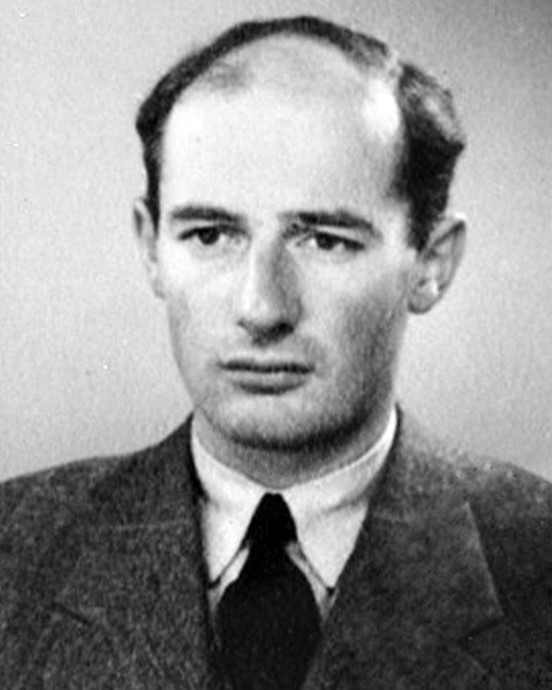
Raoul Wallenberg - Diplomat of Courage
Born: August 4, 1912, Lidingö Municipality, Sweden
Died: July 17, 1947, Moscow, Russia
Raoul Wallenberg, a Swedish diplomat, saved tens of thousands of Jews in Hungary during World War II.
Born on August 4, 1912, he came from a wealthy family of bankers, industrialists, and diplomats. After serving in the Swedish military, he studied architecture at the University of Michigan in the United States. Even though his family was rich, Wallenberg worked odd jobs during college and spent vacations hitchhiking across the country. These travels taught him how to talk to strangers, stay alert, and think quickly, skills that would later help him save lives.
When Wallenberg returned to Sweden, he learned that his American degree did not allow him to practice architecture there. He traveled between South Africa and Israel before finding a job at the Central European Trading Company, owned by Kálmán Lauer, a Hungarian Jew.
In 1938, Hungary began passing anti-Jewish laws like those in Nazi Germany. These laws limited Jewish participation in government, public service, and high-level jobs. Because of these restrictions, Lauer could no longer travel freely between Sweden and Hungary. Wallenberg, who was 1/16th Jewish, became Lauer’s personal representative. In this role, he traveled to Germany and Nazi-occupied France, where he saw firsthand the methods of Nazi oppression.
By 1944, the Hungarian government, aligned with Nazi Germany, had deported over 400,000 Jews to Nazi-occupied Poland. U.S. President Franklin Roosevelt’s War Refugee Board (WRB) searched for someone to go to Budapest to help save Jews from genocide. Lauer, a member of the selection committee, recommended Wallenberg. At first, some rejected him due to his business connections with Germany, but he was eventually chosen to serve at the Swedish legation in Budapest.
Wallenberg arrived in Budapest on July 9, 1944, carrying a list of people in need and 650 protective passports. He quickly set up hospitals, nurseries, and soup kitchens for Jewish families holding Swedish or other neutral protection papers. When the fascist Arrow Cross Party took power and resumed deportations, Wallenberg expanded his distribution of passports. By 1945, he had handed out at least 20,000 protective documents, though some estimates suggest over 100,000.
Wallenberg risked his life far beyond paperwork. When Arrow Cross members seized Jews from Swedish-protected buildings, he confronted them, declaring they were violating Swedish territory and would have to kill him first. He sometimes boarded deportation trains or ran alongside “death marches,” handing out passports and telling Nazis that these people were Swedish citizens. In the final days before Soviet forces took Budapest, he warned Nazi officials planning to massacre 115,000 people in Swedish-protected areas that they would be tried for war crimes. The Nazis abandoned the plan.
Despite his heroism, Wallenberg’s fate remains a mystery. In January 1945, shortly after Soviet troops captured Budapest, he was seen being taken away by Russian soldiers. He was never seen again. The Soviet government claimed he died in 1947 from heart problems or poisoning, but others reported sightings of him in Soviet prisons as late as the 1980s. In 2016, Sweden officially declared him dead, 71 years after his disappearance.
Raoul Wallenberg’s bravery has been honored around the world. Statues, schools, and streets in more than 15 countries bear his name. He was nominated twice for the Nobel Peace Prize and became an honorary citizen of the United States, Israel, and Hungary, as well as the first honorary citizen of Canada and Australia. His story remains a powerful example of courage, compassion, and moral responsibility in the face of injustice.
References:
“Raoul Wallenberg and the Rescue of Jews in Budapest.” United States Holocaust Memorial Museum, United States Holocaust Memorial Museum, encyclopedia.ushmm.org/content/en/article/raoul-wallenberg-and-the-rescue-of-jews-in-budapest.
“Raoul Wallenberg.” , The Righteous Among the Nations, www.yadvashem.org/righteous/stories/wallenberg.html.
“Raoul Wallenberg.” Encyclopædia Britannica, Encyclopædia Britannica, inc., 31 July 2025, www.britannica.com/biography/Raoul-Wallenberg.
Key words:
Civil rights, Justice, Courage, Perseverance, Freedom, Responsibility, Challenge Injustices, Take Risks for Others
Image Citation:
Public Domain
Explore ARTEFFECT projects about this Unsung Hero:
Raoul Wallenberg Artworks
- Collections: Art Gallery, Unsung Heroes