

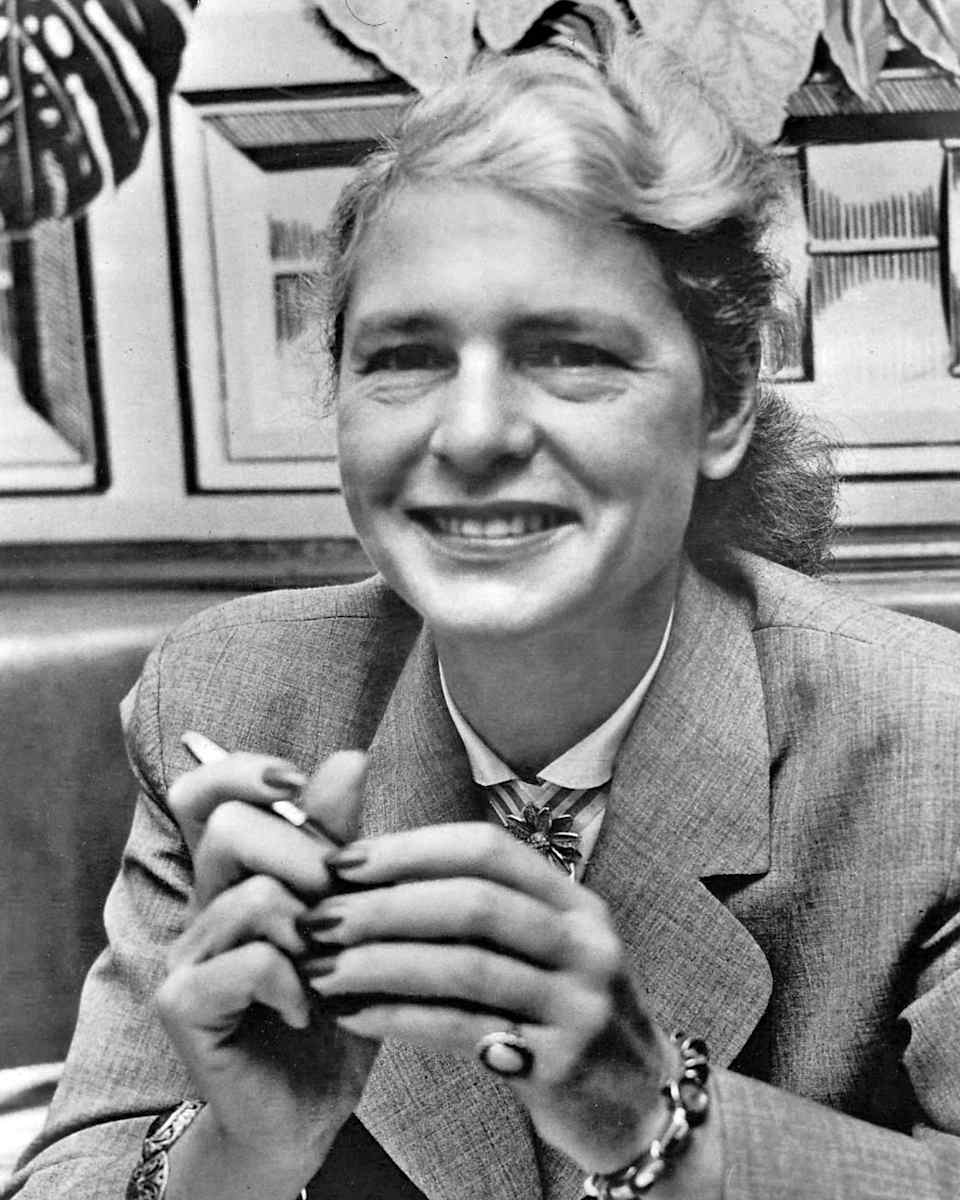
Margaret Bourke‑White - A Trailblazing Photographer
Born: June 14, 1904, New York City, New York, U.S.A.
Died: August 27, 1971, Stamford, Connecticut, U.S.A.
Margaret Bourke‑White became one of America’s most daring and famous photographers, capturing major world events with her camera and breaking barriers for women in photojournalism.
Margaret Bourke‑White was a famous American photographer who took pictures that helped people around the world see what life was really like in big events of the 1900s. She was born on June 14, 1904, in New York City and died on August 27, 1971, in Stamford, Connecticut. From a young age, she loved learning and taking pictures, and she worked very hard to become great at her craft.
Margaret first went to college to study science and biology, but she became interested in photography when she took a photography course at school. She graduated from Cornell University in 1927 and soon began her career as a professional photographer. At first she took pictures of buildings and factories. Her photos were very sharp and interesting, and people liked the way she showed both the big machines and the strong shapes of the buildings.
In 1929, a magazine publisher named Henry Luce noticed her photos and asked her to work for his new magazine called Fortune. There she became known for powerful pictures of industry and even became the first Western photographer allowed to take pictures in the Soviet Union. These photos helped people in many countries learn what life was like far away.
Margaret’s success grew even more when Life magazine began in 1936. She became one of the first four photographers hired by the magazine, and her photo of Fort Peck Dam in Montana was on the very first cover of Life. This was a huge honor and made her famous nationwide.
During the Great Depression of the 1930s, Margaret and writer Erskine Caldwell worked together on a book called You Have Seen Their Faces, which showed the lives of poor families in the Southern United States. These photos helped many Americans understand the serious problems people were facing at that time.
When World War II began, Margaret became even more daring. She was the first woman photographer accredited by the U.S. Army to work in combat areas. She traveled with soldiers in Europe, even flying on combat missions to take pictures. She was one of the first photographers to document the liberation of Nazi concentration camps, showing the world the awful conditions prisoners faced.
After the war, Margaret continued her work abroad. She went to India and photographed Mahatma Gandhi just hours before his assassination. She also covered the Korean War and many other major events around the world.
Even when she began to suffer from Parkinson’s disease in the 1950s, Margaret kept working. She wrote books about her life and gave many people inspiration to use photography to tell important stories. She finally retired from Life magazine in 1969 after decades of capturing moments that mattered.
Margaret Bourke‑White’s photographs are still remembered today for their strength and beauty. She showed people how photos can help us understand history, human struggles, and triumphs. She broke barriers for women and changed photography forever.
References:
“Margaret Bourke White.” Britannica, Encyclopaedia Britannica, https://www.britannica.com/biography/Margaret-Bourke-White.
“Margaret Bourke White.” International Center of Photography, https://www.icp.org/browse/archive/constituents/margaret-bourke-white.
“Margaret Bourke White.” LIFE, https://www.life.com/photographer/margaret-bourke-white/.
“Margaret Bourke White.” MoMA, https://www.moma.org/artists/712-margaret-bourke-white.
Keywords:
Arts, Wartime, Courage, STEAM, Creativity, Achievement, Responsibility, Stand Up for Your Beliefs, Make a Difference
Explore ARTEFFECT projects about this Unsung Hero:
Margaret Bourke-White Artworks
- Collections: Art Gallery, Unsung Heroes