

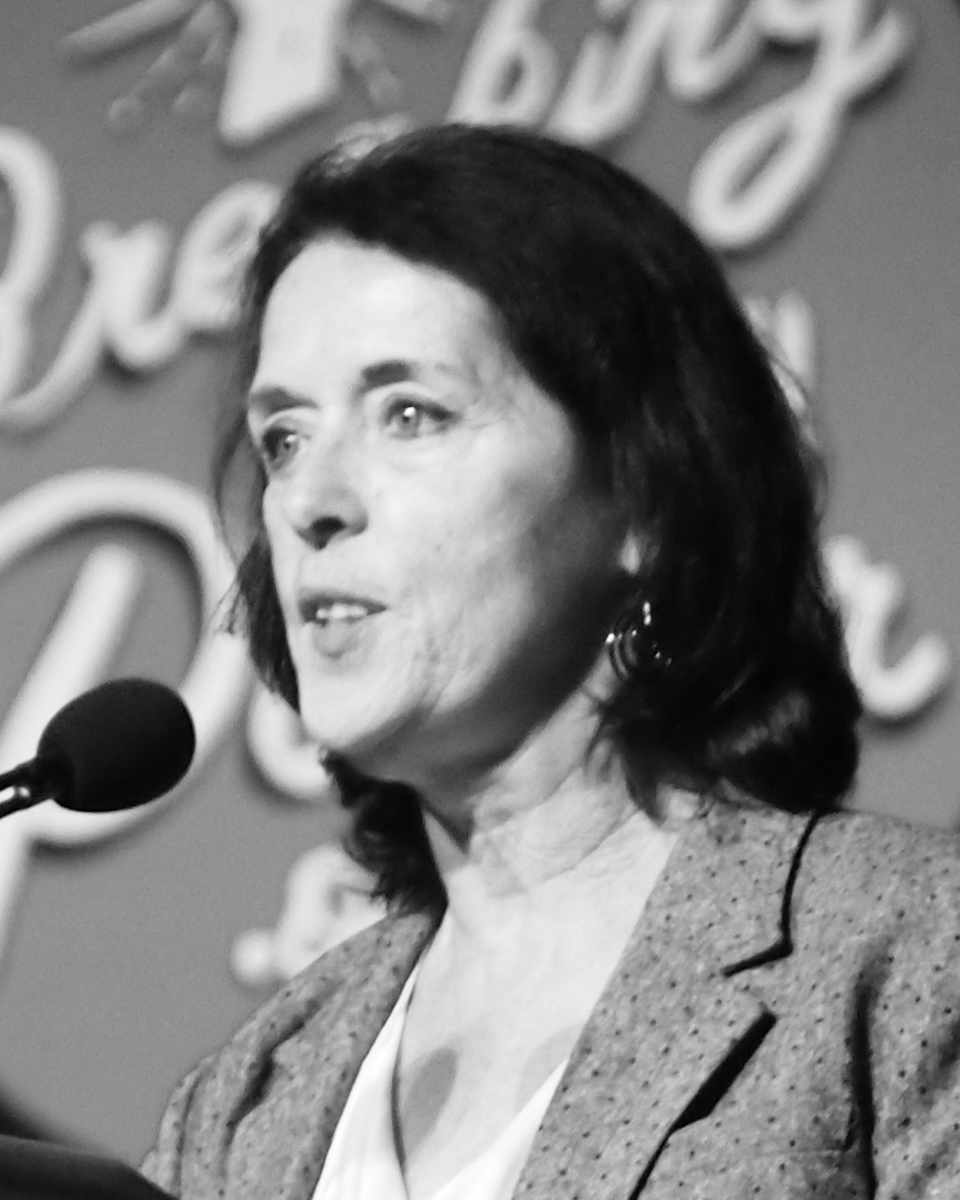
Lois Gibbs - A Leader for Clean and Safe Places to Live
Born: June 25, 1951, Grand Island, New York, U.S.A.
Lois Gibbs, a mother, became a powerful environmental leader who fought toxic pollution to protect children, families, and communities.
Lois Marie Gibbs was born on June 25, 1951, in Grand Island, New York. She grew up with five brothers and sisters. Her father worked hard as a bricklayer, and her mom took care of their home and family. As a child, Lois was quiet and shy, and she liked sewing more than playing sports or doing school activities. After high school, she married Harry Gibbs, and they had two children, Michael and Melissa. In 1972, the family moved to a neighborhood called Love Canal in Niagara Falls, New York. They were excited to own a house and build a good life there.
At first, everything seemed normal. But in the spring of 1978, Lois learned something shocking: the neighborhood where her children played and went to school was built on top of a toxic waste dump where more than 20,000 tons of chemical waste had been buried decades earlier. These dangerous chemicals were buried by a company called Hooker Chemical Corporation many years before people lived there. The waste was leaking into the ground, air, and water, and it was making people sick.
Lois was especially worried because her young son Michael had health problems that might be connected to the chemicals. School officials refused to move him to a safer place, so Lois decided she had to do something about it. Even though she had only a high school education, she began talking to her neighbors and going door-to-door to learn if other families were having problems too. What she found was shocking: many children had strange illnesses, miscarriages had occurred, and people believed their health was being hurt by the toxic waste.
In August 1978, Lois Gibbs founded the Love Canal Homeowners’ Association (LCHA). This group worked together to raise awareness about the danger of living on top of toxic waste. Lois stood up in public, met with government officials, and organized petitions, rallies, and protests. She talked to reporters, scientists, and lawmakers, and she bravely spoke out even when people told her she was just a housewife. Her courage helped her community’s story reach people all across the country.
After years of hard work, President Jimmy Carter declared a national emergency at Love Canal in 1980. The government agreed to buy and relocate many families so they could leave the dangerous area. In the end, more than 800 families were helped to move to safer homes. The cleanup and national attention that followed were so important that a new U.S. law was created to help clean up toxic waste sites everywhere; this law became the Superfund Program. Many people today call Lois Gibbs one of the mothers of the environmental movement because of how much she helped change laws and protect families.
After the Love Canal victory, Lois did not stop fighting for safer communities. In 1981, she moved to Virginia and started a new group called the Citizens’ Clearinghouse for Hazardous Waste, which later became the Center for Health, Environment & Justice (CHEJ). This group trains and supports people across the United States whose communities are facing pollution or dangerous chemicals. Because of her work, this organization has helped thousands of grassroots groups learn how to protect their neighborhoods and families.
Lois Gibbs also wrote books and presented many speeches about environmental health and how ordinary people can make a difference. She has received important awards for her leadership and has even been nominated for the Nobel Peace Prize. Today, she continues to speak with communities and help others protect children and families from harmful pollution.
Lois Gibbs’s story shows that one person’s courage and determination can help many people and even change the world.
References:
Gibbs, Lois Marie. “Lois Gibbs.” Tufts University Archives, Tufts University,
https://archives.tufts.edu/agents/people/15.
Gibbs, Lois. Love Canal: My Story. U.S. Environmental Protection Agency, archived document,
https://www.epa.gov/archive/epa/sites/production/files/2015-11/documents/gibbs.pdf.
Konrad, Kevin. “Lois Gibbs: Grassroots Organizer and Environmental Health Advocate.” American Journal of Public Health, vol. 101, no. 9, 2011, pp. 1636–1640. PubMed Central,
https://pmc.ncbi.nlm.nih.gov/articles/PMC3154230/.
“Lois Marie Gibbs.” Environmental Justice and Women’s Leadership, Lehigh University Libraries,
https://exhibits.lib.lehigh.edu/exhibits/show/envirosteps/iew/lmg.
Keywords:
Justice, Civil Rights, Courage, Perseverance, Responsibility, Selflessness, Stand Up for Your Beliefs, Make a Difference
- Collections: Art Gallery, Unsung Heroes