

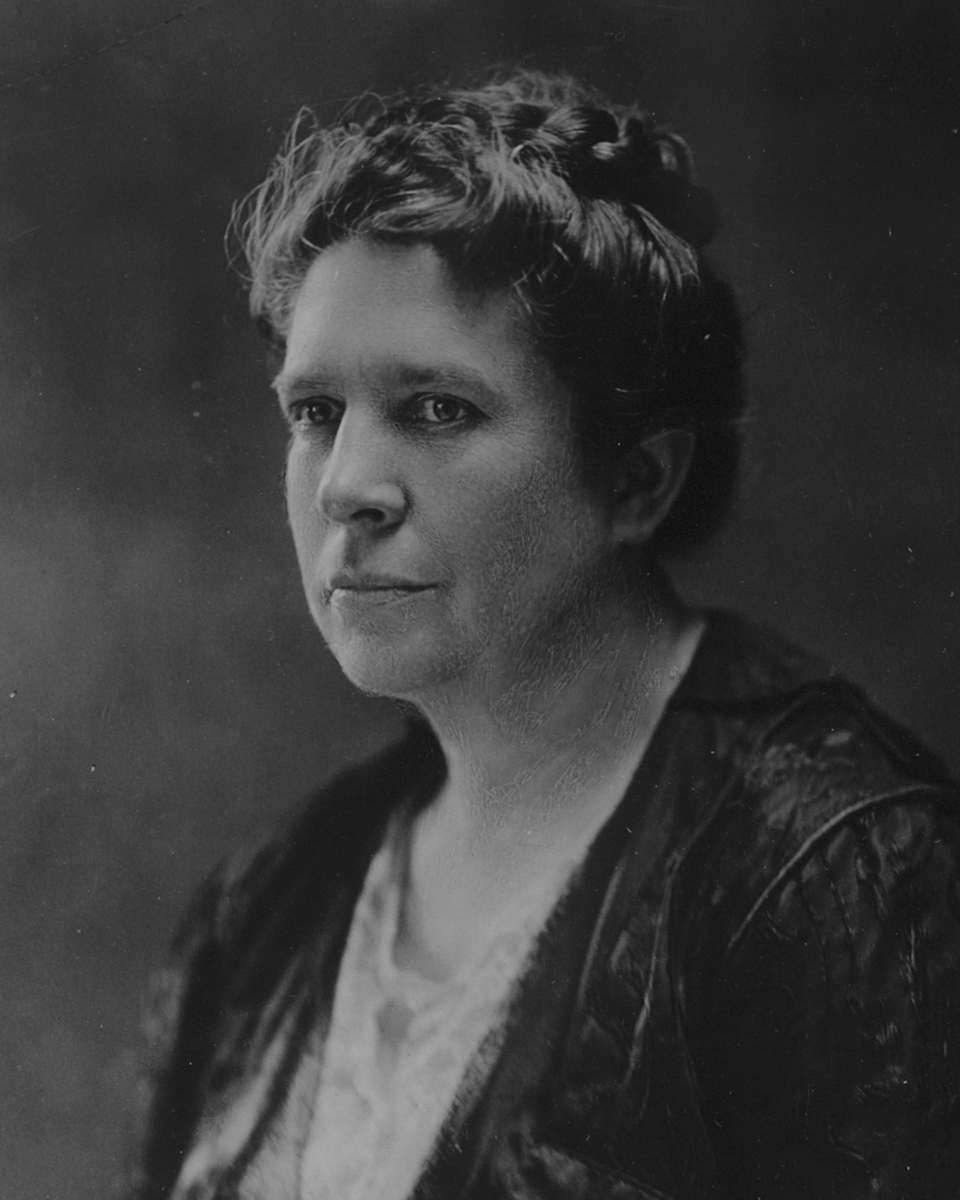
Florence Kelley - Fighter for Workers’ Rights
Born: September 12, 1859, Philadelphia, Pennsylvania, U.S.A.
Died: February 17, 1932, Germantown, Philadelphia, Pennsylvania, U.S.A.
Florence Kelley dedicated her life to improving working conditions, fighting child labor, and promoting workers’ rights.
Many would say Florence Kelley was born to change the world. She was born on September 12, 1859, in Philadelphia, Pennsylvania, to parents who were active abolitionists. From a young age, Kelley was surrounded by ideas of fairness, education, and women’s rights. Her family were Philadelphia Quakers who strongly believed in ending slavery and giving women access to education and voting rights.
When Kelley was only 12, her father, U.S. Representative William Darrah Kelley, took her to visit steel and glass factories. There, she saw children even younger than herself working long hours in dangerous conditions. Tens of thousands of children were injured or killed each year in these factories. Witnessing this inspired Kelley to dedicate her life to improving working conditions for children.
By age 16, Kelley attended Cornell University. She wanted to go to law school at the University of Pennsylvania, but she was denied because she was a woman. Instead, she moved to Europe and studied law and government at the University of Zurich. While in Europe, Kelley joined movements for women’s suffrage and African American civil rights. These experiences shaped her lifelong commitment to justice.
In 1884, Kelley married Lazare Wischnewetzky, a Russian medical student, and they lived in New York City. Sadly, her husband became abusive, and in 1891, Kelley left him and moved to Chicago with their three children. There, she found safety at Hull House, the settlement run by Jane Addams. Hull House helped immigrants with day care, education, libraries, art classes, and job training. Living at Hull House deepened Kelley’s commitment to fighting for workers and children.
In 1892, the Illinois Bureau of Labor Statistics hired Kelley to investigate sweatshops. She discovered that working conditions had barely improved since her childhood visits to factories. Immigrants, including children as young as three or four, worked long hours for low pay in unsafe and crowded shops. Her work led to the 1893 Illinois Factory Act, which banned children under 14 from working. Governor John Peter Altgeld made Kelley the first chief factory inspector. In this role, she monitored factories and fought for laws to protect children. She won a law limiting children’s workdays to eight hours, but it was soon repealed. Undeterred, Kelley earned a law degree from Northwestern University and continued fighting for permanent reforms.
In 1899, Kelley became the first executive director of the National Consumers’ League (NCL) in New York City. She worked tirelessly for higher pay, shorter workdays, and fair treatment of workers. Kelley created the “white label,” which showed which stores treated employees fairly. Consumers were encouraged to support these stores, helping pressure other businesses to improve conditions.
Kelley also worked with President Theodore Roosevelt on the Meat Inspection Act and the Pure Food and Drug Act of 1906. She argued that women needed the vote for these reforms to succeed. Kelley gathered evidence from medical and social research to show that long working hours were harmful. Her work in the Muller v. Oregon Supreme Court case led to minimum wage laws in 14 states.
Kelley also fought against racial discrimination. In 1909, she helped W.E.B. Du Bois found the National Association for the Advancement of Colored People (NAACP). She served on the board for 20 years, pressing for action and fair education laws. Florence Kelley worked for social justice her entire life. She died on February 17, 1932, leaving behind a powerful example of courage, determination, and the ability to create lasting change.
References:
“Florence Kelley.” Encyclopædia Britannica, Encyclopædia Britannica, inc., britannica.com/biography/Florence-Kelley.
“Kelley, Florence.” Social Welfare History Project, 5 Jan. 2022, socialwelfare.library.vcu.edu/people/kelley-florence.
Norwood, Arlisha R. “Florence Kelley.” National Women’s History Museum, womenshistory.org/education-resources/biographies/florence-kelley.
Keywords:
Civil Rights, Justice, Courage, Perseverance, Responsibility, Selflessness, Challenge Injustices, Make a Difference
Explore ARTEFFECT projects about this Unsung Hero:
Florence Kelly Artworks
- Collections: Art Gallery, Unsung Heroes