
Artists for Humanity
Boston, MA
Artists For Humanity (AFH) harnesses the power of mentorship and paid professional experiences to inspire teens to build their future.
Message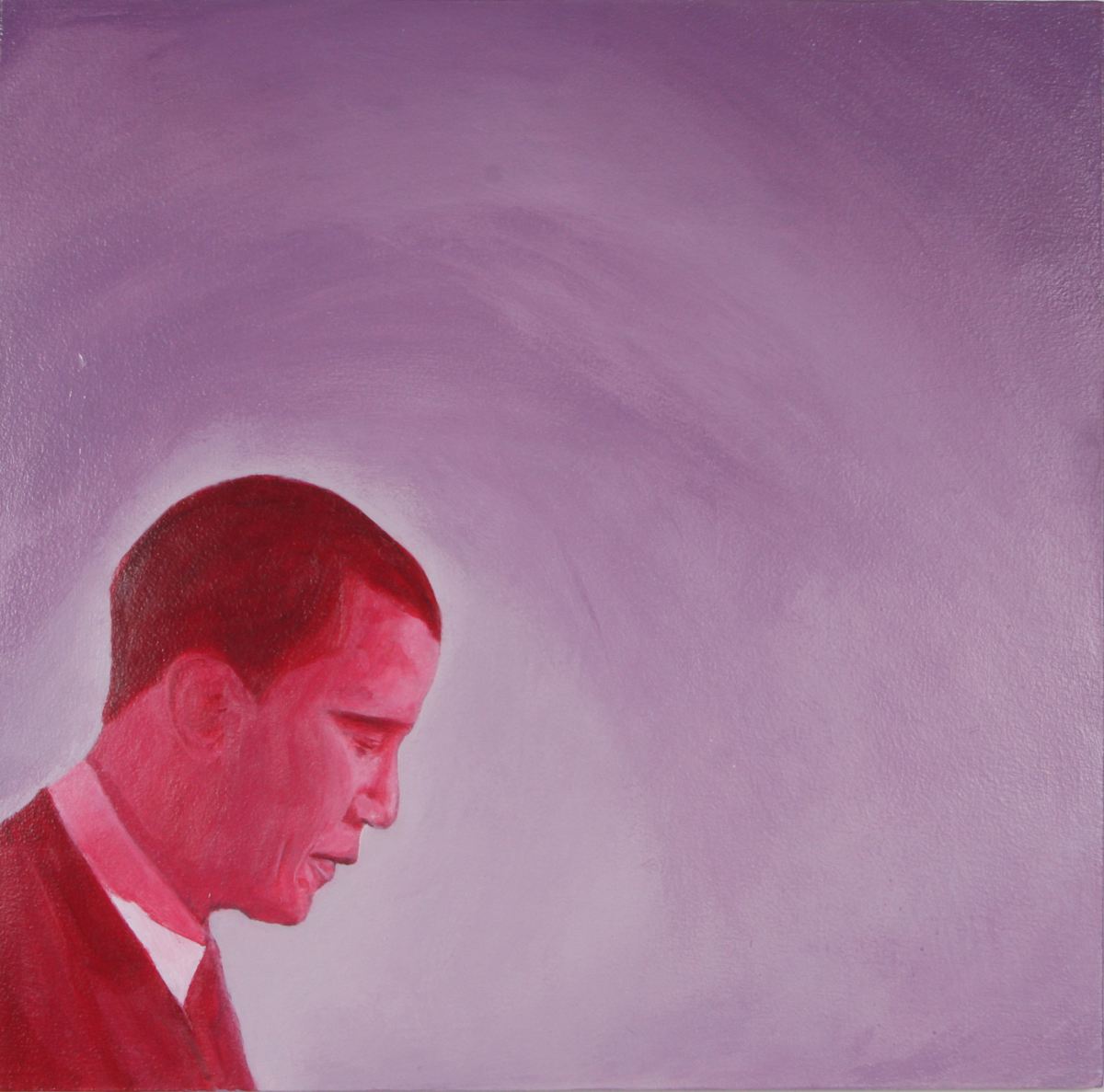
This painting was part of a series in which I used a monochromatic palette to study the intersection of volume, depth, and mood. I saw myself in the relatively young Barack Obama, not just in skin color, but in his charismatic demeanor. Unlike many of his peers, he felt relatable, and I formed an organic connection to him. This piece inadvertently captures the zeitgeist of a bygone era, characterized by behavioral norms no longer found in contemporary politics.
My painting posed a question: had society overcome the barriers that superficial markers such as skin color once imposed? In hindsight, the answer is no. Nevertheless, Barack Obama’s presidency seemed like a logical step in the reconciliation of minorities who had long endured the disparities of second-class citizenship. Recent years have eroded some of the progress made toward equity in the United States. In this context, Obama’s presidency remains an important example of the potential of minorities, but it does not serve as a historical landmark marking the end of inequality.
From 1988 to 1991, Obama called Massachusetts home while attending Harvard Law School. Today, a granite marker commemorating his residency stands in the front garden of his former home in Winter Hill, Massachusetts. It is a small monument that solidifies his place among a lineage of progressive thinkers whom the Commonwealth of Massachusetts seems to cultivate. Through this lens, the painting functions as a portrait of an individual, but also as a reflection on aspiration, representation, and the unfinished pursuit of equality in American society.
- Collections: Painting Studio